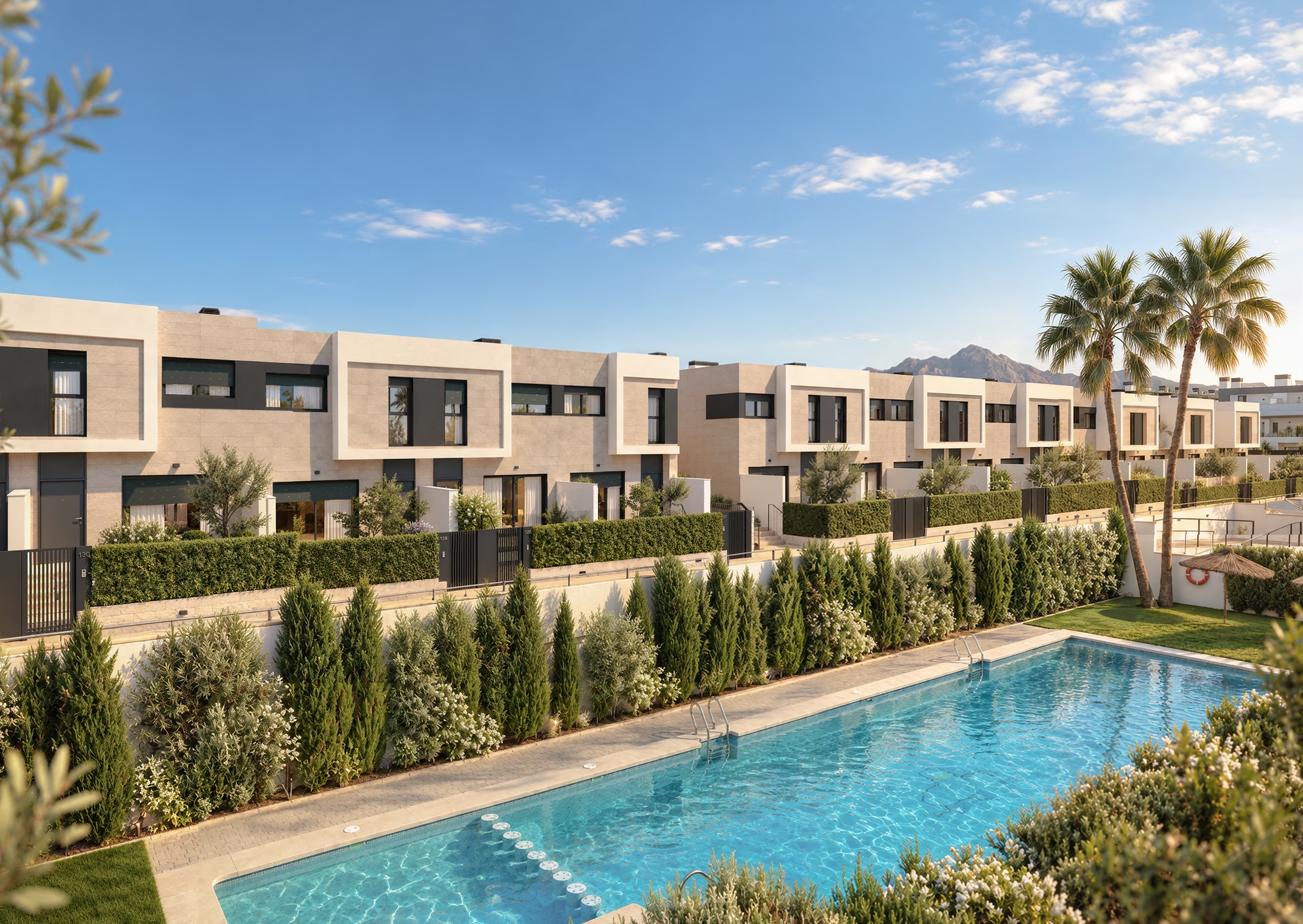
New Build vs Resale: What's Different
Buying a new build property in Spain involves a fundamentally different process from purchasing a resale home. The legal framework, payment structure, taxes, and timeline all work differently.
| Aspect | New Build | Resale Property |
|---|---|---|
| Taxes | 10% VAT (IVA) + 1.4% Stamp Duty (from 1 June 2026 (Ley 5/2025) — was 1.5%) | 6-10% Transfer Tax (ITP) |
| Payment Protection | Bank guarantee required by law | No guarantee protection |
| Customization | Choose finishes, modify layout | What you see is what you get |
| Timeline | Off-plan: 12-24 months | Complete within 2-3 months |
| Condition | Brand new, latest standards | May need renovation |
| Energy Rating | Typically A or B rating | Often D, E, or lower |
The tax difference is significant. New builds attract 10% VAT plus 1.4% stamp duty (Actos Jurídicos Documentados) (from 1 June 2026 (Ley 5/2025) — was 1.5%), totaling 11.4%. Resale properties are subject to transfer tax (Impuesto de Transmisiones Patrimoniales) ranging from 6% to 10% depending on the region and property value.
New build purchases benefit from mandatory bank guarantees that protect your payments if the developer fails to deliver. This protection doesn't exist for resale purchases, where you typically pay the full amount at completion.
Off-Plan vs Key-Ready New Build
Off-plan properties are purchased before construction is complete, often when only foundations are laid or even before construction begins. You're buying from architectural plans and marketing materials. The main advantages are lower prices (typically 10-20% below completion value) and the ability to customize finishes, layouts, and sometimes even structural elements.
The risks include construction delays, specification changes, and potential developer issues. Off-plan purchases require staged payments over 12-24 months, with each payment protected by bank guarantees.
Key-ready new builds are completed properties that have received their First Occupation License (Licencia de Primera Ocupación). You can inspect the actual property, move in immediately, and avoid construction risks. Prices are higher as the developer has completed their investment and absorbed construction risks.
Choose off-plan if you want maximum customization and are comfortable with the timeline uncertainty. Opt for key-ready if you need to move quickly or prefer to see exactly what you're buying.
| Off-plan | Key-ready | |
|---|---|---|
| Price | Typically 10-20% below completion value | Full market price |
| Move-in | After 12-24 months of construction | Immediately (First Occupation License granted) |
| Payments | Staged, each backed by a bank guarantee | Single payment at the notary |
| Customisation | Finishes, sometimes layout | As built |
| Main risk | Delays and specification changes | Minimal — you inspect the finished home |
| Mortgage | Arranged close to completion | Arranged straight away |
How Payments Work
New build purchases follow a structured payment schedule that differs significantly from the single payment typical in resale transactions.
Reservation Agreement: You'll pay €3,000-€10,000 to reserve the property. This is typically refundable if you withdraw during the due diligence period or if the developer cannot provide required documentation.
Private Purchase Contract: Signed within 30 days of reservation, you'll pay an initial percentage of the purchase price — typically 20-30%. This contract includes specifications, completion dates, and penalty clauses for delays.
Stage Payments: For off-plan purchases, some developers request additional payments at construction milestones. The exact schedule varies by developer — some split payments across multiple stages, while others require only the initial deposit and a large final payment.
Final Payment: The remaining balance — typically 60-70% of the purchase price — is paid at completion when you receive the keys and the property is transferred to your name at the notary. The exact split between stage payments and final payment depends on the developer's terms.
Critical: Every payment after the initial reservation must be backed by a bank guarantee (aval bancario) in your name. Never make payments without receiving the bank guarantee certificate. This is your legal protection if the developer fails to deliver.
| Stage | When | Typical amount |
|---|---|---|
| Reservation | At booking | €3,000-10,000 |
| Private purchase contract | Within ~30 days | 20-30% of the price |
| Stage payments | At construction milestones (varies by developer) | Part of the remaining balance |
| Completion at the notary | On handover of keys | Remaining 60-70% |
Bank Guarantees: Your Legal Protection
Bank guarantees (avales bancarios) are mandatory insurance policies that protect buyers in new build transactions. Introduced by Law 57/1968 and strengthened by Law 20/2015, these guarantees ensure you can recover your money if the developer fails to deliver the property as promised.
The guarantee works like an insurance policy. A bank or insurance company guarantees to refund your payments if the developer becomes insolvent, fails to deliver on time, or delivers a property that doesn't match the contracted specifications.
Each buyer receives an individual certificate specifying the exact amount guaranteed, which should match your cumulative payments. The certificate includes the developer's details, bank information, and expiry date (usually 6-12 months after planned completion).
Essential checks for your bank guarantee:
- Amount matches your payments exactly
- Your name is correctly spelled
- Property address matches your contract
- Developer's legal name and tax number
- Valid expiry date
- Bank or insurance company details
The bank guarantee is only valid if the developer has obtained a building license (licencia de obra) before you make payments. Without this license, the guarantee offers no protection.
Warning: If a developer cannot provide bank guarantees or offers excuses for delays in issuing them, walk away immediately. This is often the first sign of financial difficulties.
Essential Checks Before You Buy
Due diligence for new builds involves different checks than resale properties. Your lawyer should verify several critical documents before you sign any binding contracts.
Building License (Licencia de Obra): This is non-negotiable. The developer must have valid building permits before you make any payments. Without proper licenses, bank guarantees are invalid and the project may face legal challenges.
Developer's Track Record: Research the developer's previous projects. Visit completed developments, check online reviews, and verify they have successfully delivered projects on time. Ask for references from previous buyers.
Land Registry Check: Your lawyer should confirm at the Land Registry (Registro de la Propiedad) that the developer legally owns the land and there are no outstanding debts, mortgages, or legal disputes that could affect the project.
Community Charges Estimate: Request detailed estimates for monthly community fees. New developments often have higher charges initially due to extensive facilities and services.
Completion Date and Penalties: Ensure the contract includes realistic completion dates and penalty clauses if the developer delivers late. Standard penalties range from €6-12 per square meter per month of delay.
Specification List (Memoria de Calidades): This detailed document lists all materials, brands, and finishes included in your property. Any changes to specifications require written approval and may affect the price.
Completion and Handover
The completion process for new builds involves several steps that don't apply to resale properties. The developer must obtain specific licenses before you can legally occupy your new home.
First Occupation License (Licencia de Primera Ocupación): This certificate confirms the property meets building regulations and is safe for habitation. Without it, you cannot connect utilities or legally occupy the property. Never complete the purchase without seeing this license.
Snagging Inspection: Hire an independent surveyor to inspect your property before final completion. This typically costs €500-€1,000 but can save thousands in remedial work. Common issues include poorly fitted doors and windows, plumbing leaks, wall cracks, and electrical problems.
The developer has 30 days to remedy any snagging items identified during inspection. Serious structural issues may delay completion until resolved.
Final Notary Appointment: Once all snagging items are resolved and you're satisfied with the property condition, you'll attend the notary to sign the final deed (escritura) and receive your keys.
Warranty Periods: Spanish law provides three levels of warranty for new builds:
- 1 year: Finishes and minor defects (paint, tiles, fixtures)
- 3 years: Habitability issues (windows, doors, insulation)
- 10 years: Structural defects (foundations, walls, roof)
Total Costs for New Build
Understanding the complete cost breakdown helps you budget accurately for your new build purchase. Spanish new builds attract different taxes and fees compared to resale properties.
Primary Costs:
- Purchase Price: The agreed property price
- VAT (IVA): 10% of purchase price
- Stamp Duty (AJD): 1.4% of purchase price (from 1 June 2026 (Ley 5/2025) — was 1.5%)
- Notary Fees: €800-€1,500 depending on property value
- Land Registry: €400-€800
- Legal Fees: 1-1.5% of purchase price
Additional Costs:
- Snagging survey: €500-€1,000
- NIE number application: €10-€15 (plus legal fees)
- Bank account opening: Usually free
- Utility connections: €500-€1,500
- Building insurance: €200-€600 annually
Total additional costs typically range from 13-14% on top of the purchase price, significantly higher than resale properties due to VAT.
Tip: Use our buying costs calculator to get an accurate estimate of your total expenses based on your specific purchase price and location.
| Cost item | Rate | On a €300,000 new build |
|---|---|---|
| VAT (IVA) | 10% | €30,000 |
| Stamp duty (AJD, Valencian Community) | 1.4% (from 1 June 2026, Ley 5/2025) | €4,200 |
| Notary | €800-1,500 | ~€1,200 |
| Land registry | €400-800 | ~€600 |
| Legal fees | 1-1.5% | €3,000-4,500 |
| Total on top of the price | ≈13-13.5% | ≈€39,000-40,500 |
Advantages of Buying New Build
Energy Efficiency: New builds must meet current energy standards, typically achieving A or B energy ratings. This translates to significantly lower heating and cooling costs compared to older properties, which often have D, E, or F ratings.
Modern Standards: New properties incorporate the latest building regulations for insulation, accessibility, safety, and structural integrity. Features like double-glazed windows, thermal insulation, and efficient heating systems are standard.
Customization Opportunities: Off-plan purchases allow you to choose finishes, modify layouts (within structural limits), and sometimes add features like additional storage or upgraded fixtures. This level of personalization is impossible with resale properties.
No Renovation Required: Move in immediately without the cost, time, and stress of renovation work. Everything from plumbing to electrical systems is new and covered by warranty.
Financial Protection: Bank guarantees provide legal protection for your payments during construction. If the developer encounters financial difficulties, you can recover your money through the guarantee.
Long-term Warranty: The 10-year structural warranty provides peace of mind about major building components. This protection doesn't exist when buying older properties.
Risks and How to Avoid Them
Construction Delays: Spanish new builds frequently face delays due to weather, permit issues, or contractor problems. Protect yourself by insisting on penalty clauses in your contract that compensate you for late delivery. Standard penalties range from €6-12 per square meter per month of delay.
Developer Insolvency: While bank guarantees protect your payments, developer bankruptcy can still cause significant delays and stress. Research the developer's financial stability, completed projects, and current workload before committing.
Specification Changes: Developers sometimes change materials or finishes to control costs. Your contract should specify that any changes require written approval and may trigger price adjustments or penalty payments.
Hidden Costs: Request a complete breakdown of all costs before signing. Some developers add charges for items you might expect to be included, such as kitchen appliances, air conditioning, or parking spaces.
Location Disappointment: Off-plan purchases rely on plans and marketing materials. Visit the actual plot, research planned infrastructure development, and check for potential issues like noise from nearby construction or roads.
Quality Issues: Even new builds can have construction defects. Always conduct a thorough snagging inspection and don't accept the keys until all issues are resolved to your satisfaction.
For comprehensive information about the overall property buying process in Spain, including obtaining your NIE number and securing a Spanish mortgage, refer to our complete buying guide.
The energy class quoted in an off-plan brochure is the design-stage figure, calculated from the plans. The official one — certificado de obra terminada — is issued after completion and reflects what was actually installed. Our guide to the energy certificate explains the difference and what to check against it at handover.