The province of Alicante ended 2025 with a significant upturn in new residential construction approvals, though the statistical improvement sits alongside persistent market stress — particularly along the Mediterranean coastline. A total of 11,919 building permits were issued for new housing over the course of the year, a 36.8% increase on the 8,715 units approved in 2024, according to data from Spain's Ministry of Transport and Sustainable Mobility.
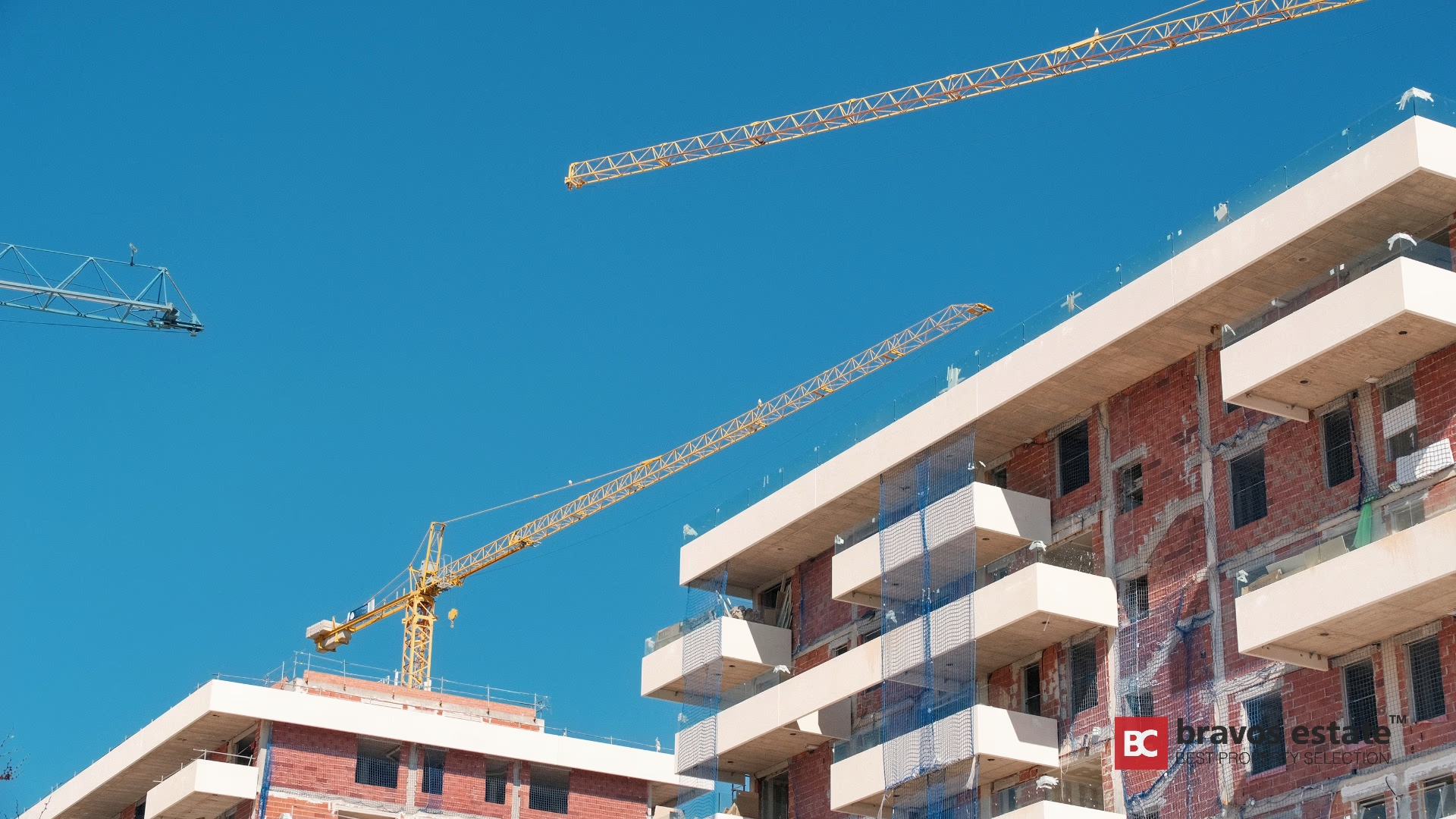
Apartment-block development dominated the pipeline: 8,832 permits, roughly 74% of the provincial total, corresponded to multi-family blocks, against 1,636 for detached and semi-detached homes. Growth in the block segment was particularly vigorous, rising 48.3% year-on-year from 5,954 units in 2024. Single-family permits also advanced, albeit at a more measured pace.
December 2025 closed the year on an expansionary note, with 912 new housing permits issued — 122 for single-family homes, 687 for apartment blocks, and 103 for extensions or refurbishments — compared with 497 in December 2024, representing an 83.5% year-on-year jump.
Average floor areas moved in opposite directions depending on property type. Detached homes averaged 202.97 square metres, up 4.3% from the prior year, while apartments shrank to an average of 96.74 square metres, a 4.8% decline. The divergence suggests intensifying pressure to maximise unit yield in the multi-family segment.
In terms of total consented floor space, the province approved 1,723,629 square metres of new construction in 2025, a 23% rise on the previous year. Residential use accounted for 93.8% of that total — 1,617,089 square metres — while non-residential uses added 106,540 square metres. December alone registered 133,452 square metres, up 62.6% on the same month in 2024.
The count of approved buildings also rose to 2,348 — up 18% from 1,990 in 2024 — with residential use representing 95% of the total. Completions confirmed that activity is moving beyond the planning stage: 2,174 buildings and 5,239 homes received end-of-works certificates during the year, gains of 17.8% and 27.9% respectively.
Yet the quantitative advance in permits coexists with unresolved affordability pressures. According to Tinsa Accumin data, municipalities such as Benidorm and Torrevieja record purchase-effort ratios approaching 63% of disposable income — far above the 35% threshold widely considered sustainable. Transaction volumes remained high across the province, with 54,767 residential sales completed in 2025.
The shortage of subsidised housing sharpens the picture further. Against an estimated stock of more than 50,000 vacant dwellings in the comarcas of l'Alacantí and Les Marines, the social housing supply stands at just 625 units, according to trade union CCOO. The gap between unused stock and genuinely affordable supply sits at the centre of the province's housing debate.
The picture that emerges from 2025 is one of two parallel realities: more construction in the pipeline and more homes completed, but deteriorating access in the areas of highest tourist and international demand. How permits and completions evolve through 2026 will be the key test of whether Alicante can move towards a genuine rebalancing, or whether the affordability gap continues to widen.