Summer is starting earlier than usual on the Costa Blanca. AEMET has flagged the possibility of Spain's first official heatwave of 2026 arriving in the last week of May, with coastal Alicante and Benidorm expected to stay above 25 °C overnight in the worst-affected pockets. The beach season opens at the same time as several municipalities tighten their by-laws — with fines that now reach €750-€1,200 for what used to be everyday holiday habits.
Here is what is actually changing on the sand this summer, what it costs to get it wrong, and how it affects anyone planning a stay — or a property purchase — near the coast.
What is banned (and what it costs)
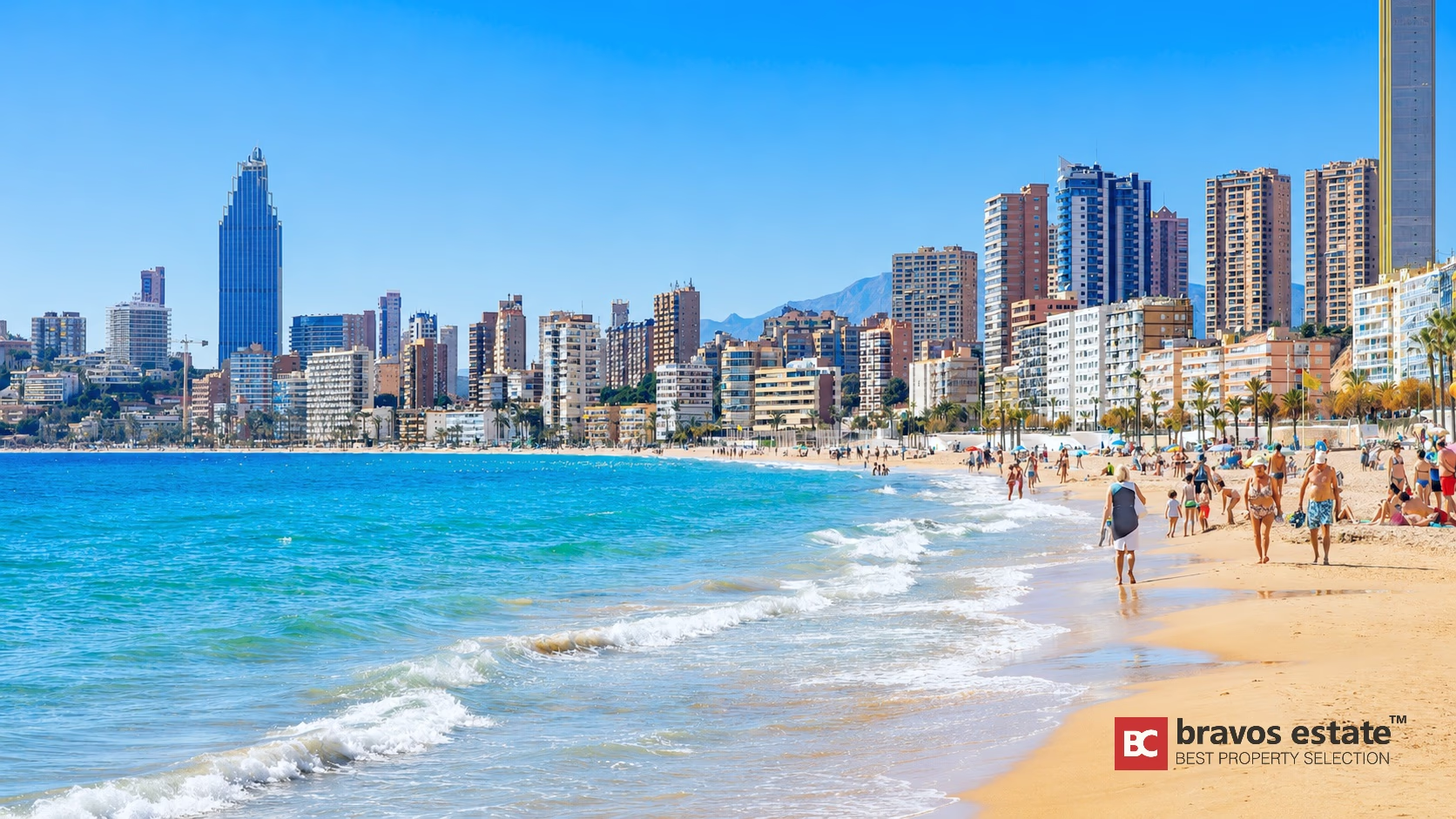
The most visible change is in Benidorm, which is treated as a flagship case under Spain's nationwide Playas Verdes ("Green Beaches") programme. The following are now actively penalised:
- Smoking and vaping on the sand — typical fine €750.
- Drinking alcohol outside licensed beach bars — and bringing glass bottles onto the beach at all.
- "Reserving" a spot with a towel, parasol or chair early in the morning. Unattended items are collected by the local police; recovery comes with a fine.
- Tents and gazebos larger than the standard beach umbrella.
- Night swimming in many municipalities (Benidorm, Calpe, Altea), typically after 22:00 or 23:00.
- Being on the beach during cleaning hours (usually 22:00–07:00) — fines from €750 to €1,200.
- Buying drinks or snacks from unlicensed sellers — both seller and buyer can be fined.
Why municipalities are tightening enforcement
Three factors converge: the Playas Verdes framework encourages smoke-free, glass-free shores; municipalities want to reduce broken-glass injuries and overnight rowdiness; and rising tourist numbers — Benidorm broke another arrivals record in 2025 — make the early-morning "towel wars" a genuine public-order issue.
Most fines are administrative rather than criminal, but they are issued on the spot and rarely waived. The Local Police can also confiscate equipment.
Rules differ by municipality
This is the most overlooked detail: by-laws are municipal, not national. Two neighbouring beaches in the same region can have completely different rules.
- Benidorm — the strictest enforcement on Costa Blanca, especially Levante and Poniente beaches.
- Calpe, Altea, Villajoyosa — broadly similar but vary on night-swimming and dog access.
- Jávea, Dénia, Moraira — calmer coves with their own quirks (some require dog tags, others ban music after a set hour).
- Torrevieja, Guardamar, Santa Pola — long sandy beaches with somewhat softer enforcement but the same smoking and glass rules.
Practical tip: the signage at the access points is the source of truth — read it before settling in. The fines for "I didn't know" are the same as for "I knew".
The good news: 95 Blue Flag beaches this summer
The flip side of stricter rules is better-managed shores. The 2026 Blue Flag results awarded 95 distinctions to the province of Alicante — the highest number in Spain — covering water quality, lifeguarding, accessibility and environmental management. Our full guide to the best beaches on the Costa Blanca covers which beaches earn the flag, which suit families, and which are quieter coves worth the detour.
For property buyers near the coast
For anyone considering a home on the Costa Blanca, the regulatory tightening is a quality signal more than a deterrent. A property within walking distance of a Blue Flag, smoke-free, well-policed beach commands a measurable lifestyle premium — and resale liquidity tends to follow. Buyers focused on year-round living often weight Blue Flag proximity above sea-view distance in metres.
If you are scoping locations, the 10 most beautiful coastal towns of the Costa Blanca and our best areas guide are useful starting points. For those moving from abroad, the 2026 relocation guide covers the practical paperwork.
Quick reference: typical 2026 beach fines
- Smoking on the sand — €750
- Glass bottle / drinking alcohol on the sand — €500-€1,000
- "Reserving" a spot before opening hours — fine + equipment confiscation
- Pitching a tent or gazebo — fine + removal
- Night swimming in restricted zone — €750+
- Being on the beach during cleaning hours — €750-€1,200
- Buying from unlicensed sellers — fines for both sides
The summer of 2026 on the Costa Blanca is shaping up to be hotter, busier and more regulated than the previous one. For visitors, the lesson is simple: read the signs at the access point. For property buyers, the same tightening signals the kind of well-managed shore that holds long-term value.