
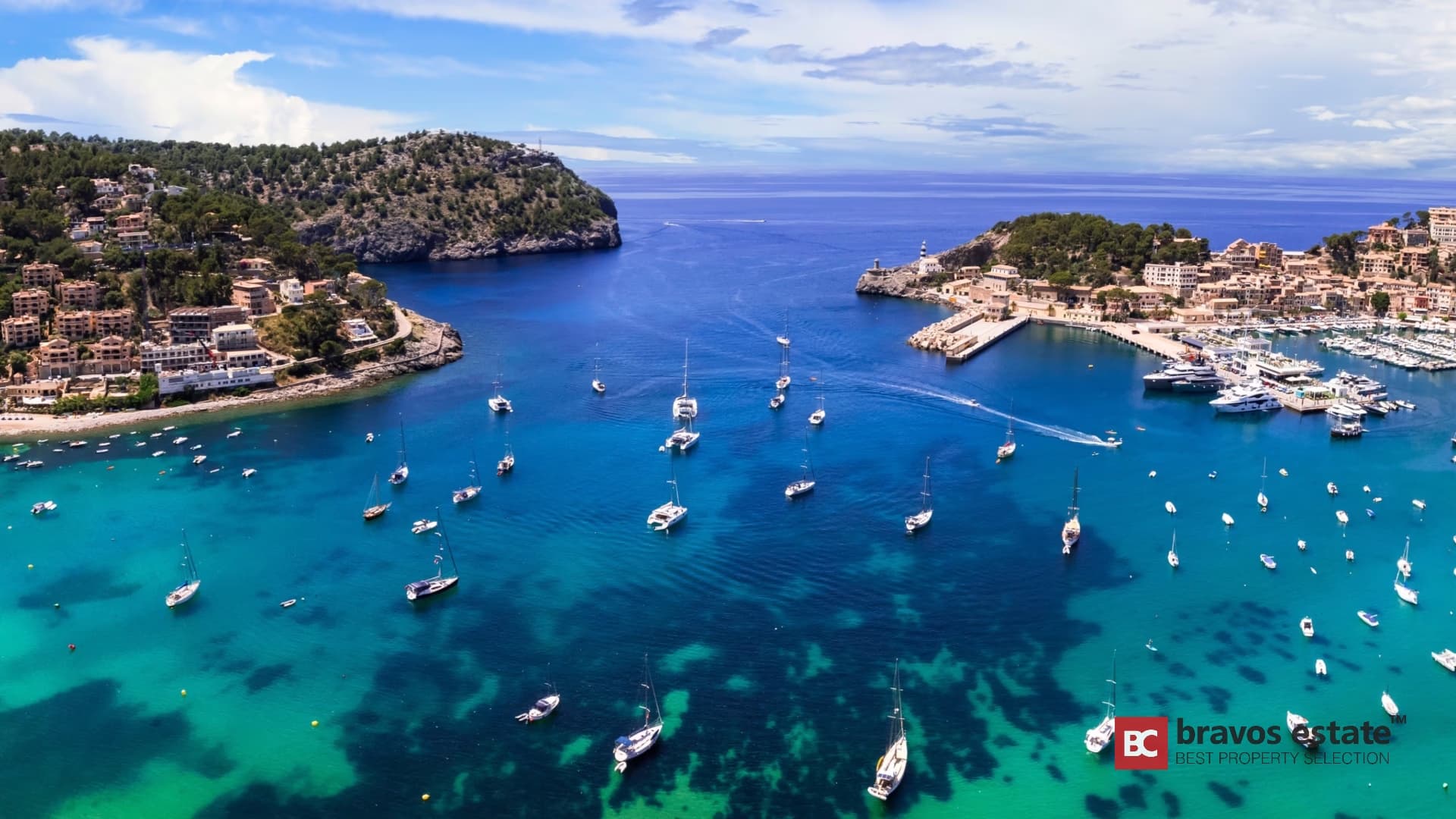
Balearic Islands, Spain
Mediterranean archipelago of Mallorca, Ibiza, Menorca and Formentera — Spain's highest foreign-buyer share at ~40%, ~10,500 international purchases per year, spanning entry-level to ultra-premium segments across four distinct island markets.
About Balearic Islands
The Balearic Islands form an archipelago of four main islands — Mallorca, Ibiza, Menorca and Formentera — sitting between 80 and 300 kilometres off Spain's eastern coast in the western Mediterranean. Each island has a distinct character: Mallorca is the largest and most diverse, ranging from the urban density of Palma to the limestone ridges of the Serra de Tramuntana; Ibiza combines a long-established international scene with rural inland villages; Menorca is quieter and more protected, with a Biosphere Reserve designation covering much of its coastline; and Formentera remains the smallest and least developed of the group. Together they account for approximately 10,500 foreign property purchases per year — around 40% of all transactions, the highest foreign-buyer share of any Spanish autonomous community.
German nationals lead foreign demand at around 35%, followed by British buyers at 20% and Nordic nationals at roughly 15%. The balance includes French, Swiss, Dutch and a growing share of American buyers, particularly at the upper end of the Ibiza and southwest Mallorca markets. Climate is consistently mild: winters are short and rarely cold, summers are hot and dry, and the shoulder months of April–May and September–October offer comfortable temperatures with reduced visitor numbers — a factor that increasingly shapes year-round rental performance and second-home usability.
Balearic Islands Property Market 2026
Prices across the archipelago span a wide range depending on island, location and property type. Entry points are lowest on Menorca at €2,500–€4,500/m², while prime Ibiza reaches €12,000/m² in the most sought-after coastal and hillside positions. Mallorca sits broadly in between, with Palma and the southwest commanding €4,000–€10,000/m² and inland or east-coast areas offering more accessible values. Mallorca's premium segment appreciated 28–40% between 2020 and 2024, and while the pace of growth has moderated, underlying demand from international buyers with significant purchasing power continues to support prices at the top end.
Apartments in Palma's historic centre, the Santa Catalina neighbourhood and the waterfront belt trade at €4,500–€8,000/m², attracting both urban lifestyle buyers and investors targeting short-term rental income. In Ibiza Town and Santa Eulalia, comparable apartments reach €5,500–€10,000/m². Menorca's main towns — Mahón and Ciutadella — offer apartment stock at €2,500–€4,000/m², appealing to buyers seeking lower entry costs and a more local residential environment. New-build apartment supply across all islands is constrained by planning restrictions, which underpins values in well-located existing stock.
Villas represent the dominant asset class for international buyers. In Andratx, Deià and Sóller on Mallorca's southwest and northwest coasts, detached villas are priced between €1.5M and €20M depending on sea views, plot size and finish. The east coast corridor — Capdepera, Cala Ratjada and Santanyí — has emerged as a recognised growth zone with villas at €3,000–€5,500/m², attracting buyers who find the southwest fully priced. On Ibiza, villas near the town and Santa Eulalia regularly reach €3M–€30M, with the island's tightly restricted new-build pipeline keeping supply scarce. Menorca villa values are typically €1M–€4M for well-positioned coastal properties.
Townhouses and bungalows occupy a smaller share of the Balearic market but are relevant in Palma's older residential districts, in the village cores of Pollença and Alcúdia in northern Mallorca, and across Menorca's historic towns. Pollença and the north of Mallorca sit at €2,800–€4,500/m² for this property type, with restored village townhouses in Menorca available from €350,000 upwards. Bungalow-style resale stock in older tourist urbanisations on the east coast of Mallorca and in quieter Ibizan zones offers lower entry points, typically €200,000–€500,000, and attracts buyers focused on rental yield rather than capital appreciation.
Short-term rental yields reach 6–8% on Mallorca during the tourist season, with year-round yields of 4–5% for longer-let strategies. Ibiza yields are similarly strong in summer but more compressed on an annual basis given the island's shorter peak season. Liquidity is strongest in Palma and southwest Mallorca, where international demand continues outside peak summer. The Balearic Islands apply Spain's most progressive ITP scale on resale purchases: 8% on the first €400,000, rising in bands to 13% above €3,000,000 — on an €800,000 purchase, ITP totals €70,000. New-build property is exempt from ITP and instead attracts IVA at 10% plus AJD stamp duty at 1.5%; total acquisition costs on new build typically reach around 12% of the purchase price including legal and registration fees.
Lifestyle in the Balearic Islands
Climate — The islands share a Mediterranean pattern of hot, dry summers and mild winters, with average July temperatures of 29–31°C across all four islands and January averages of 10–13°C. Mallorca's mountain interior records cooler temperatures and occasional winter frost, but coastal and lowland areas remain temperate year-round. Menorca is more exposed to the Tramontana wind from the north in winter, which shapes its landscape and keeps it greener than its neighbours.
Healthcare — Mallorca has the most developed healthcare infrastructure, centred on the Hospital Universitari Son Espases in Palma, the island's main public facility and one of Spain's larger university hospitals. The private sector is well represented by Hospital Quirónsalud Palmaplanas and Clínica Rotger, both in Palma. Ibiza Town is served by Can Misses Hospital (public) and the private Policlínica Nuestra Señora del Rosario. Menorca's public provision centres on the Hospital Mateu Orfila in Mahón, with specialist care requiring transfer to Mallorca or mainland Spain.
Transport — Palma's Son Sant Joan Airport (PMI) handles 33 million passengers annually, making it Spain's third busiest, and connects to over 100 European destinations year-round with significant capacity increases in summer. Ibiza Airport (IBZ) adds around 9 million passengers. Menorca's Mahón Airport (MAH) operates year-round with seasonal route expansion. There is no AVE high-speed rail connection to the islands; inter-island and mainland access depends on air or ferry. Baleària and Trasmediterránea operate daily ferry services connecting Palma, Ibiza, Mahón and Valencia, Barcelona and other mainland ports, with crossing times of 5–9 hours on overnight services.
International communities — The German-speaking community is the most visible and longest-established foreign presence on Mallorca, concentrated in Palma, the southwest coast and Pollença in the north, with German-language schools, press and commercial infrastructure well developed. British residents are distributed more broadly across Mallorca and Ibiza, with notable clusters in Palma, Santa Ponsa and the Calvià municipality. Nordic nationals — predominantly Swedish and Norwegian — have a strong presence in northern Mallorca and in quieter parts of Ibiza. Ibiza's international community is more mixed and younger in demographic profile, with significant French, Italian and increasingly American representation at the top of the market. Menorca attracts a smaller, more settled foreign population, with British and German buyers predominating, drawn by the island's lower density and protected natural environment.
Why Balearic Islands?
One of Europe's sunniest regions with year-round mild climate
Strong tourist demand drives consistent rental income
Competitive pricing compared to other Mediterranean destinations
Quick access from all major European cities
Cities & Areas in Balearic Islands

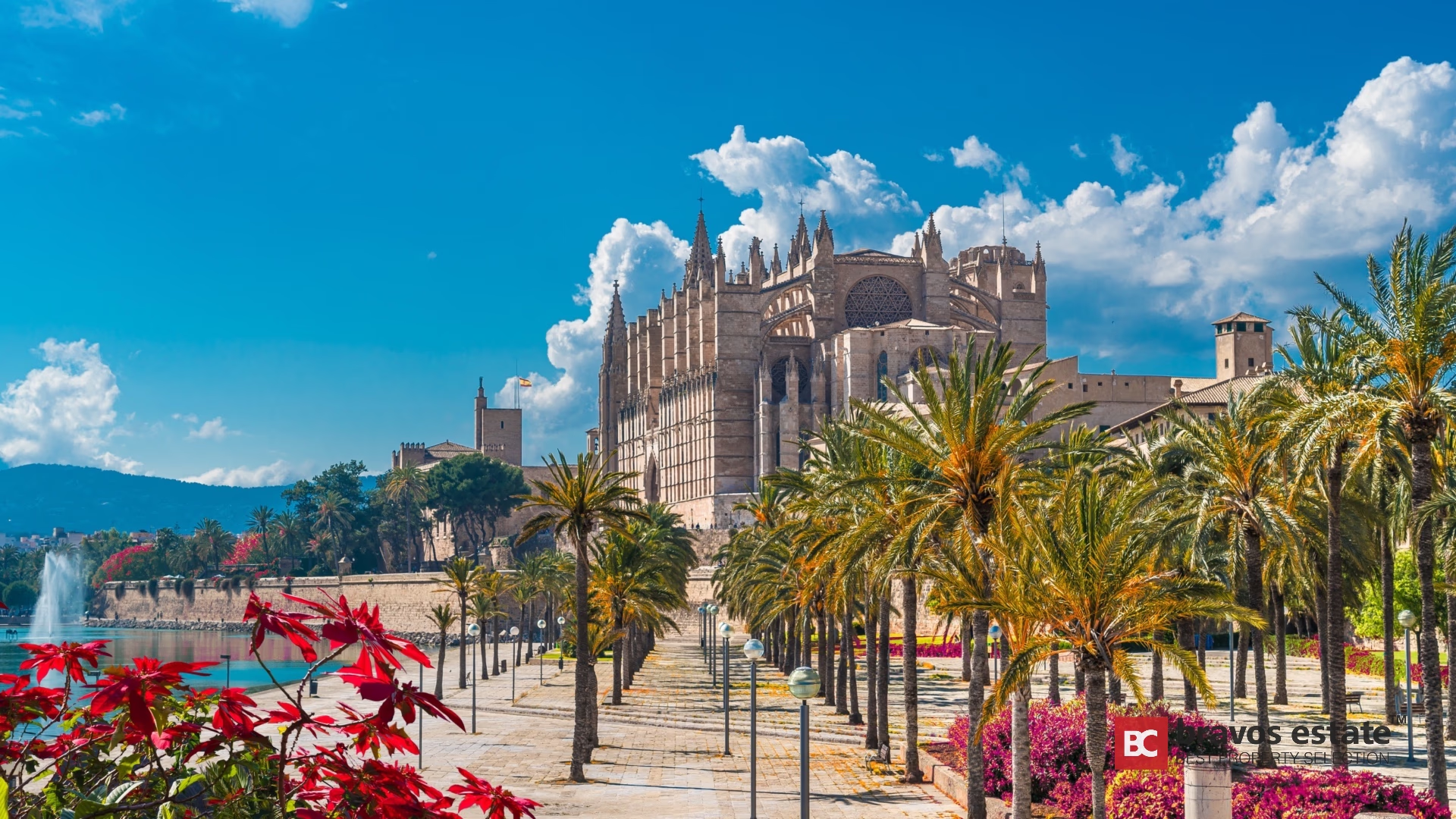
Properties in Balearic Islands
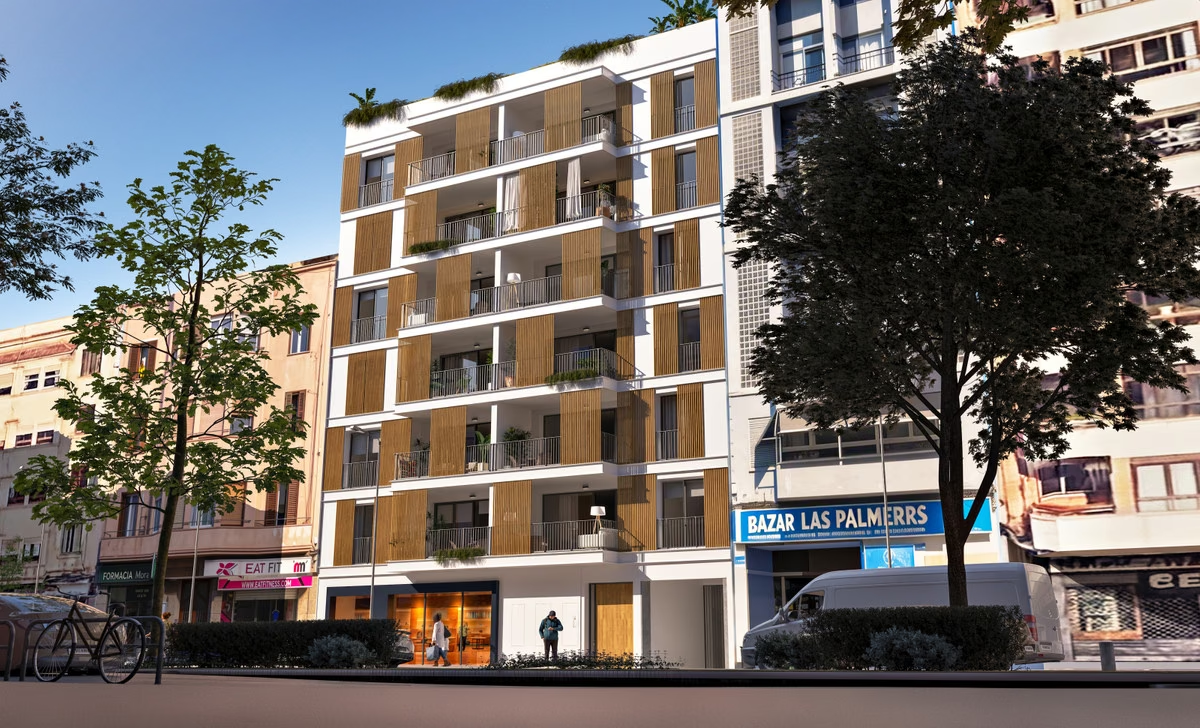
Cor 39 — 2 & 3 Bedroom Apartments in Palma de Mallorca
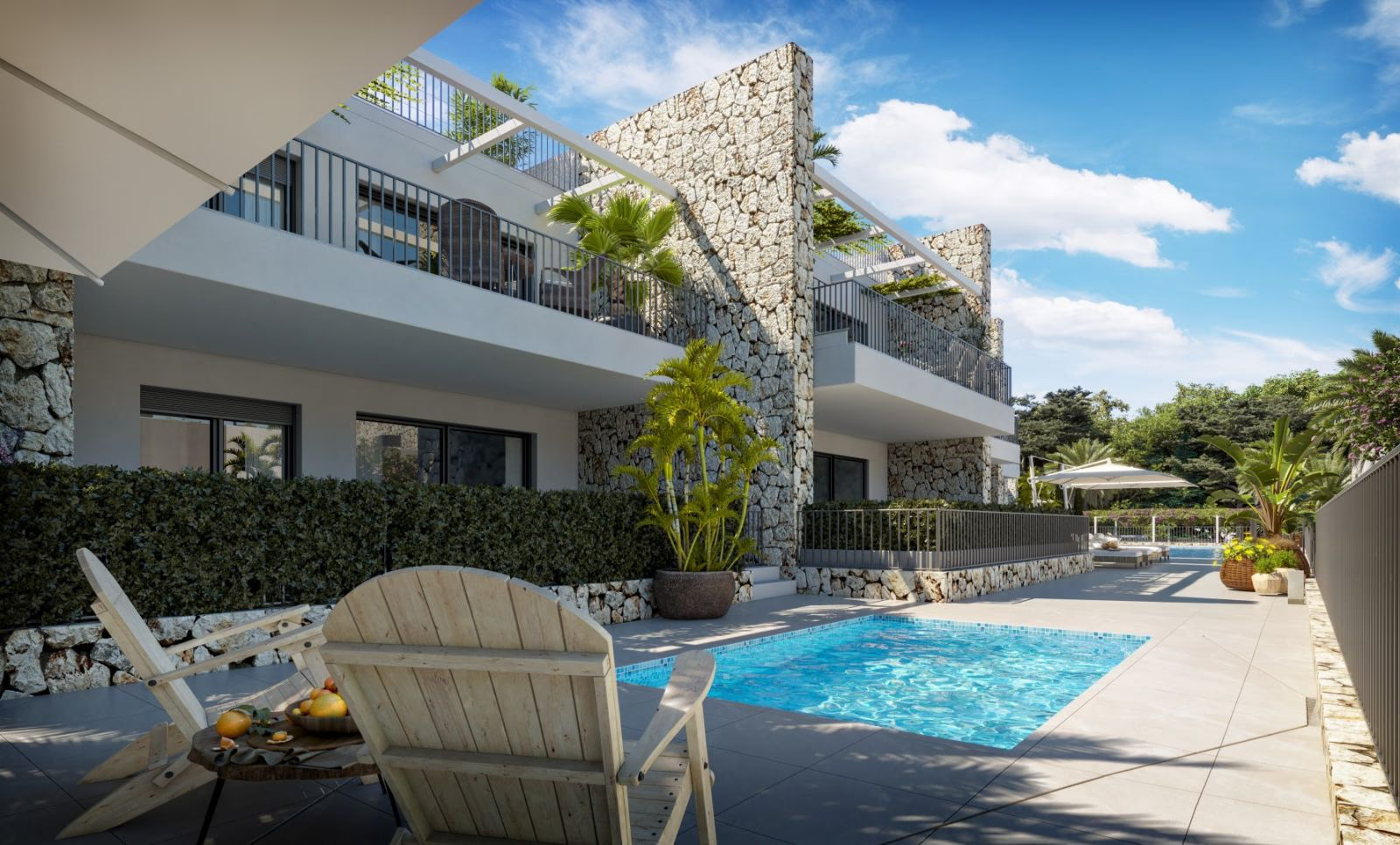
Eclipse — 3-Bedroom Apartments in Sant Elm, Mallorca
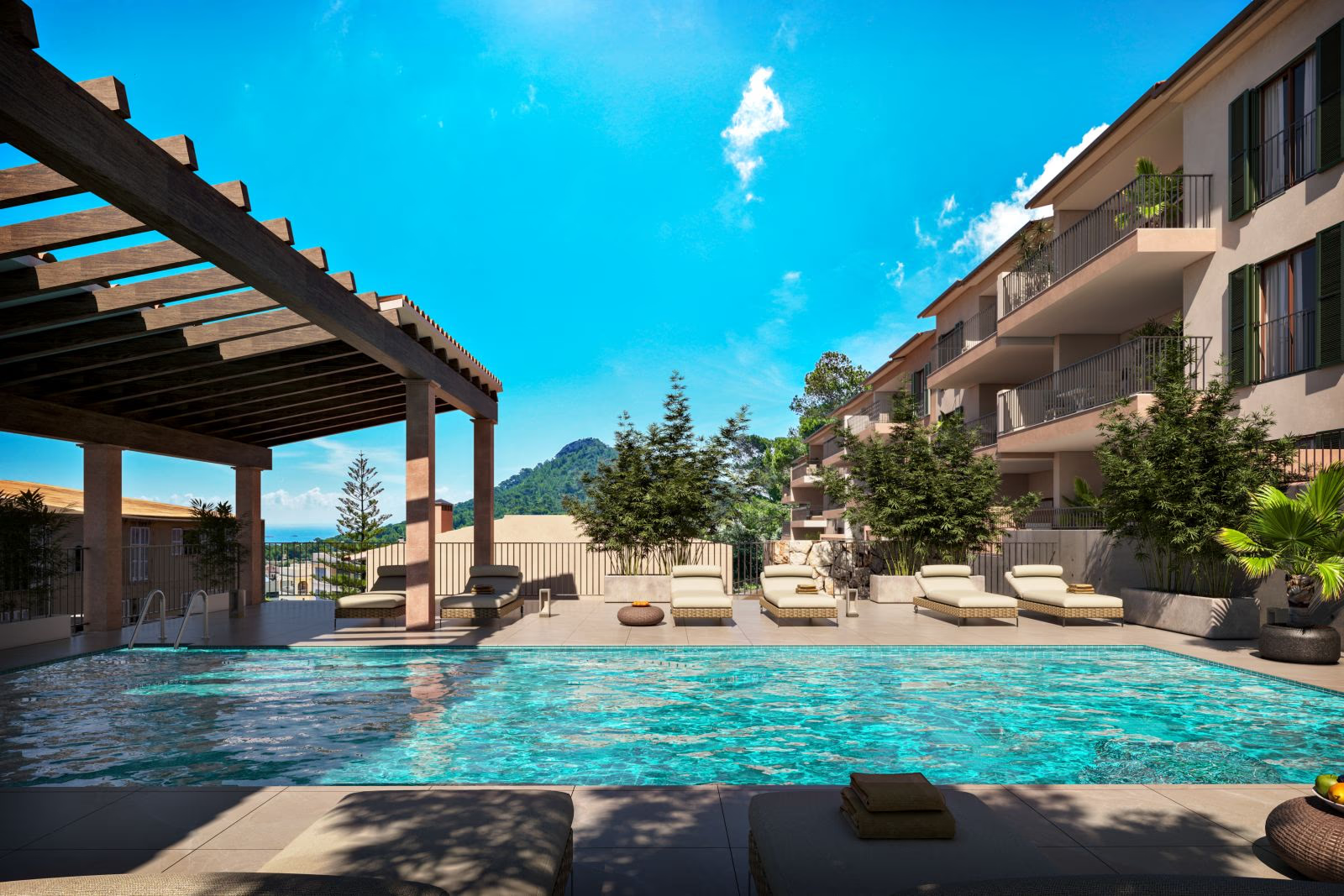
Oliu — 2-Bedroom Duplex Apartments in Capdepera, Mallorca
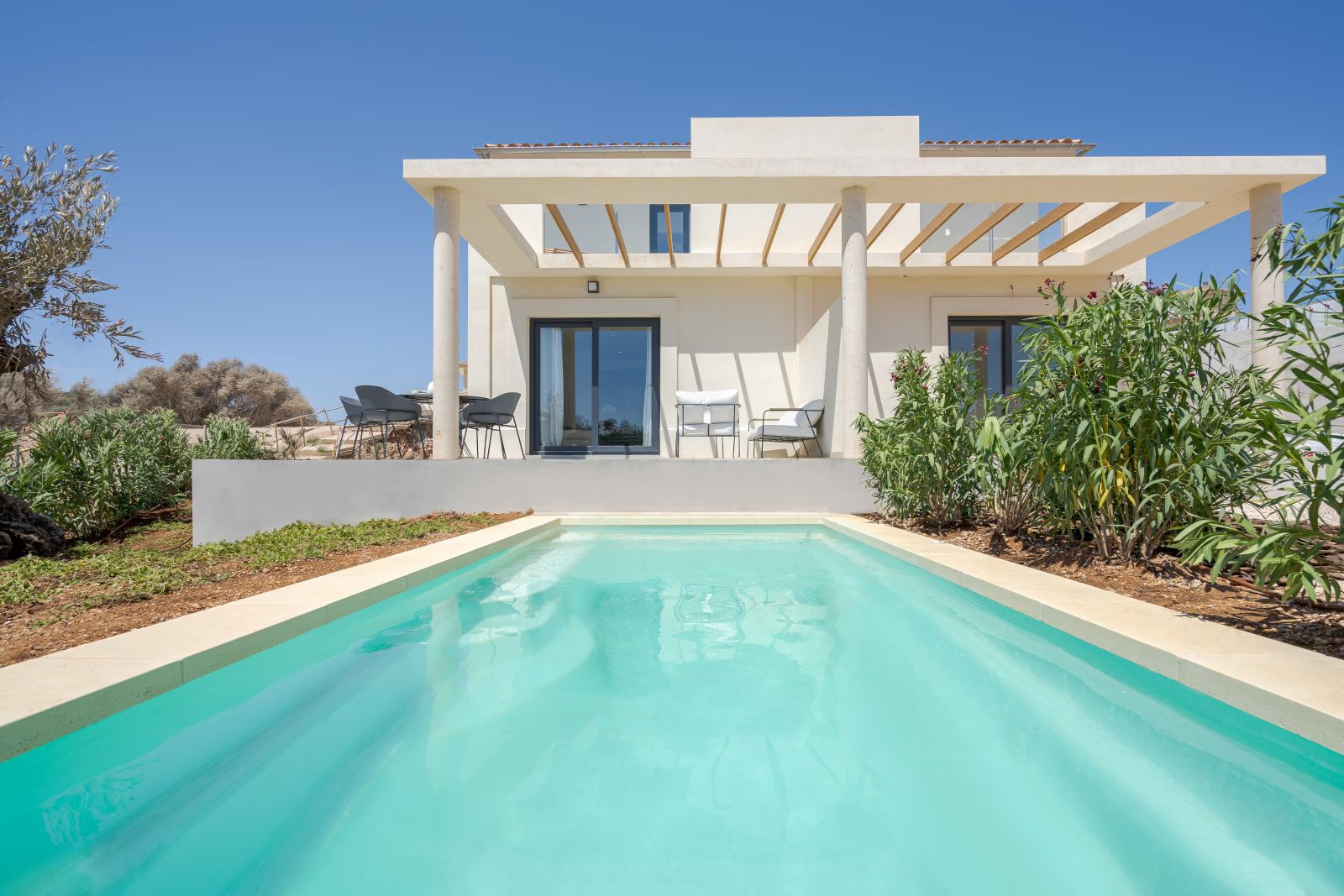
Sunrise Bay Residences — Villas in Cala Romántica, Mallorca
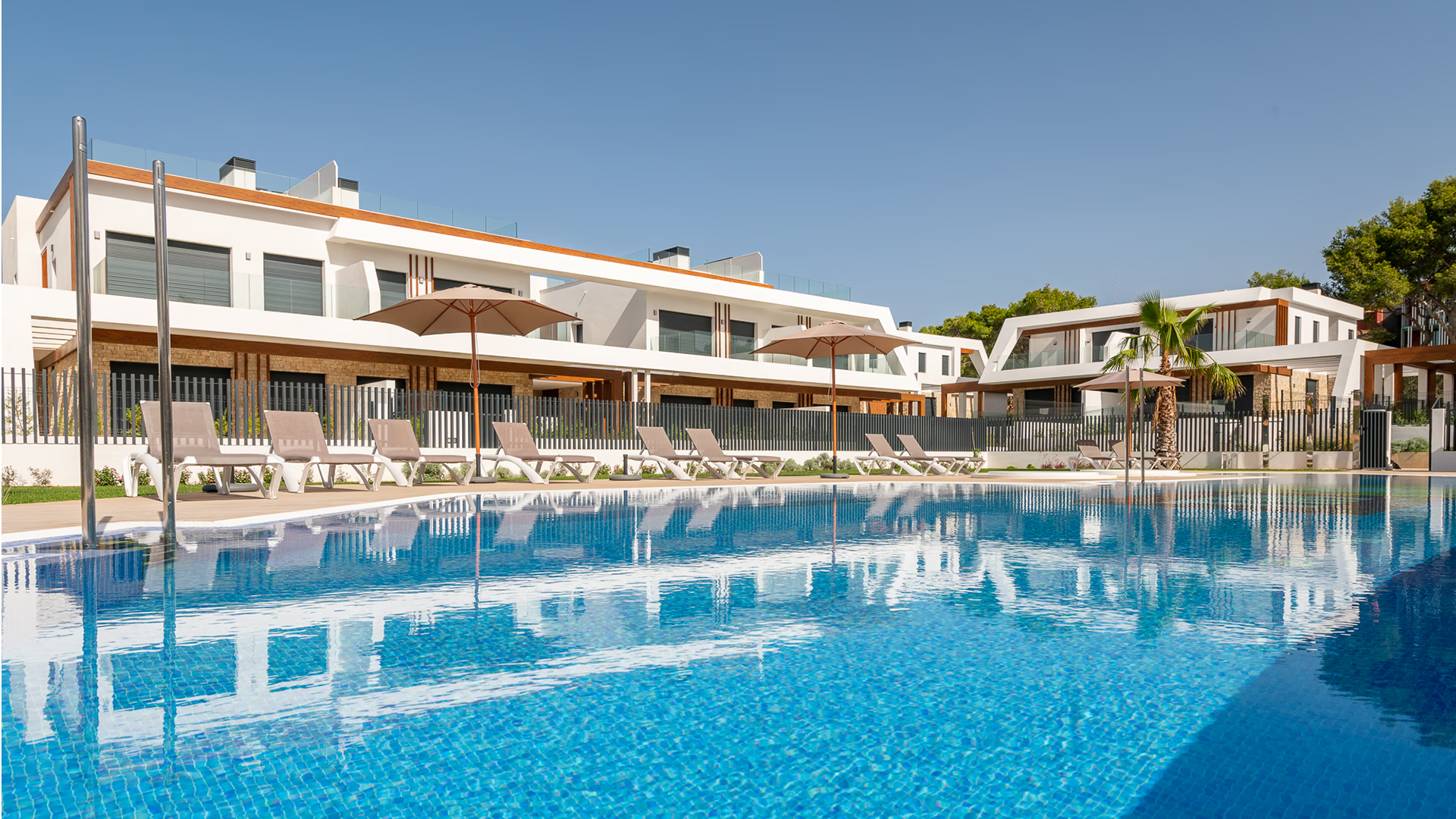
Luz de Cala Ratjada — 3-Bedroom Villas in Cala Ratjada, Mallorca
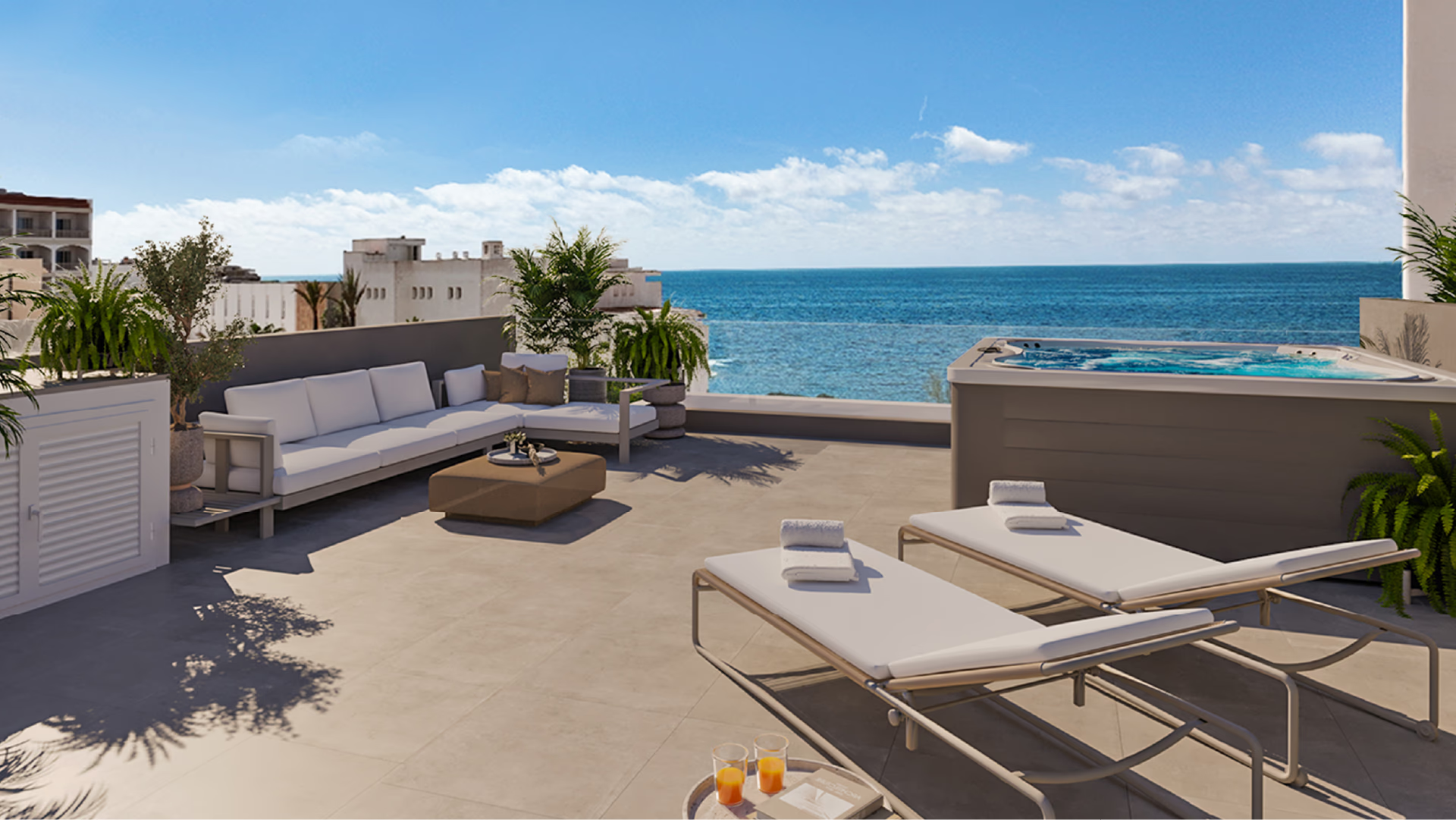
FAQ about Balearic Islands
Answers to the most common questions about buying property
At €400,000–€600,000, buyers can access apartments in Palma's established neighbourhoods or village houses in inland Mallorca towns such as Sóller and Pollença. Menorca offers notable value: €2,500–€3,500/m² can bring detached rural properties (fincas) near Mahón or Ciutadella at price points that would buy only a flat in southwest Mallorca. Ibiza entry level for a two-bedroom apartment near Santa Eulalia starts at around €450,000–€600,000 in our current selection, while villa land plots begin above €1M. For a detached villa with pool, Mallorca's east coast — Capdepera, Santanyí — is one of the more accessible premium zones, with properties at €800,000–€1.5M offering sea proximity and solid rental demand.
The Balearic Islands apply a progressive ITP (transfer tax) on resale purchases: 8% on the first €400,000, 9% on €400,001–€600,000, 10% on €600,001–€1,000,000, 11% on €1,000,001–€2,000,000, 12% on €2,000,001–€3,000,000, and 13% above €3,000,000. Example: an €800,000 resale property incurs ITP of approximately €70,000 (8% × €400,000 + 9% × €200,000 + 10% × €200,000). Notary and land registry fees add approximately 1–1.5%. For new-build purchases, ITP is replaced by IVA at 10% plus AJD stamp duty at 1.5%, bringing total acquisition costs to roughly 12–13%. The Balearic ITP scale is among the highest in Spain and should be factored into your budget from the outset. Tax rates are set by regional government and may change; we recommend confirming current rates with a local tax adviser before committing to any purchase.
Yield-focused buyers tend to perform well in Palma city centre and southwest Mallorca coastal zones (Andratx, Portals Nous), where short-term rental licences — though subject to local restrictions — can generate around 6–8% gross during the May–October season in our current selection. Capdepera and the east coast offer lower entry costs with comparable summer yields. Buyers purchasing for retirement consistently favour Pollença in north Mallorca for its year-round resident community and access to private medical facilities in Palma within approximately 60 minutes. Menorca — particularly around Mahón — appeals to those seeking lower density and a quieter lifestyle; holiday-let yields there are more modest at around 3–5%, though the purchase price base is considerably lower.
Non-residents can typically borrow 60–70% LTV from Spanish lenders on Balearic properties. The process begins with obtaining a NIE (tax identification number), which takes two to four weeks and can be arranged in person on the islands, via your home-country Spanish consulate, or through a Spanish lawyer with power of attorney. Once the NIE is in place, the purchase follows three stages: reservation contract (contrato de arras, typically a 10% deposit), due diligence period (four to six weeks), and final signing before a Spanish notary. Mortgage pre-approval typically requires six months of bank statements, proof of income, and a property valuation by a lender-approved tasador. See the full process at /guide/buying-process-spain.
The Balearics offer a fundamentally different risk-return profile. Foreign buyers account for around 40% of transactions here versus 25–30% on the Costa del Sol, sustaining demand even in slower domestic cycles. Price growth on premium Mallorca assets reached 28–40% between 2020 and 2024, outperforming most mainland coastal markets over that period. The Serra de Tramuntana (UNESCO World Heritage, Mallorca), Cap de Formentor, Es Vedrà (Ibiza) and Cala Macarella (Menorca) give the islands a landscape character that the mainland does not replicate. Island geography naturally limits new supply, providing structural price support. The buyer pool — around 35% German, 20% British, 15% Nordic — is wealthier on average than typical Costa Blanca demand, supporting resale liquidity at the upper end of the market.
Buyer Guides
Essential reading before purchasing property in Spain
Interested in Balearic Islands?
Our experts will help you find the perfect property — from selection to key handover