
Costa Cálida, Spain
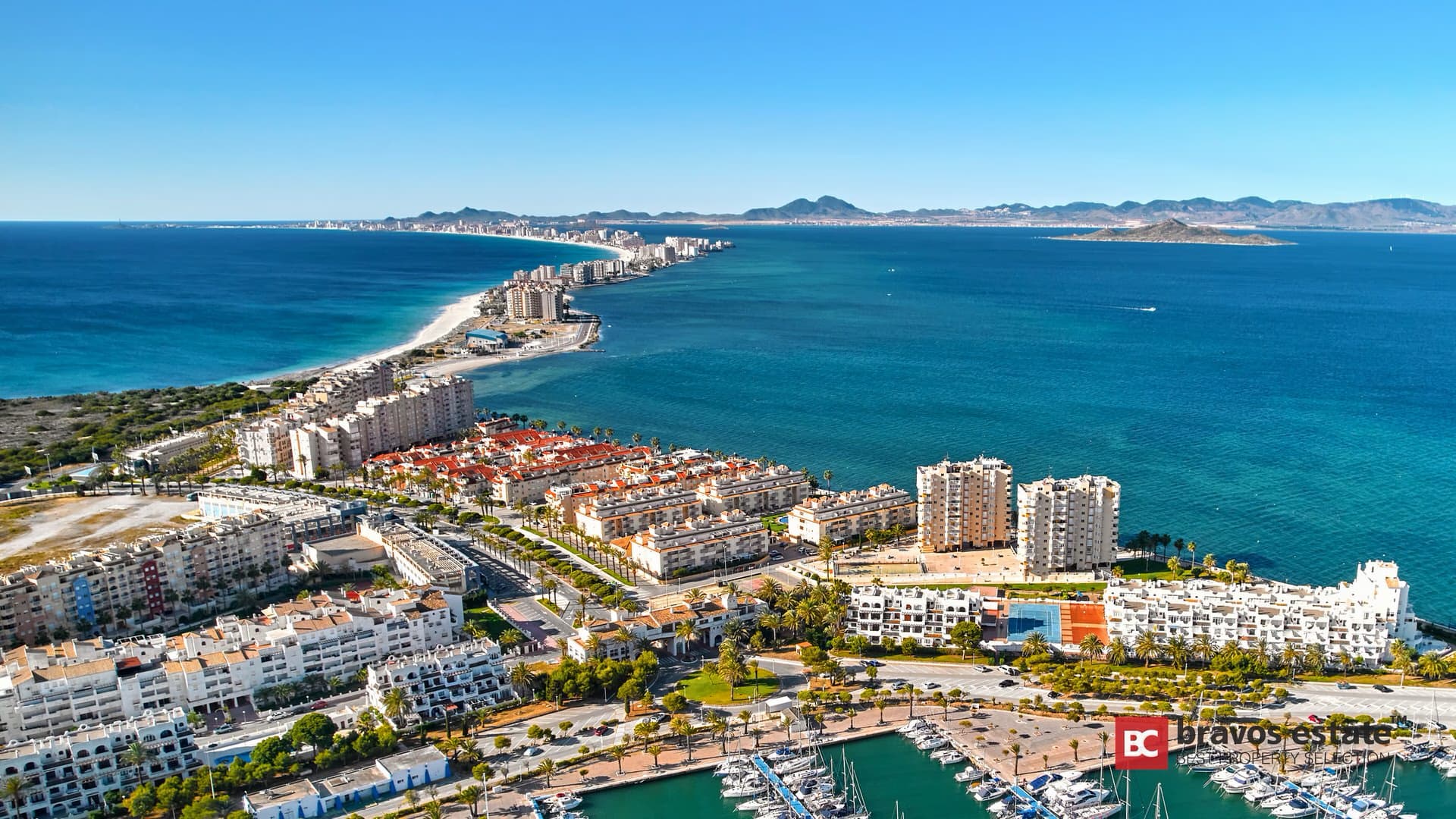
Murcia's Costa Cálida combines Mar Menor's sheltered lagoon with La Manga's 24 km sandbar peninsula, offering entry-level pricing and a flat 8% ITP — among the most straightforward tax structures on Spain's Mediterranean coast.
About Costa Cálida
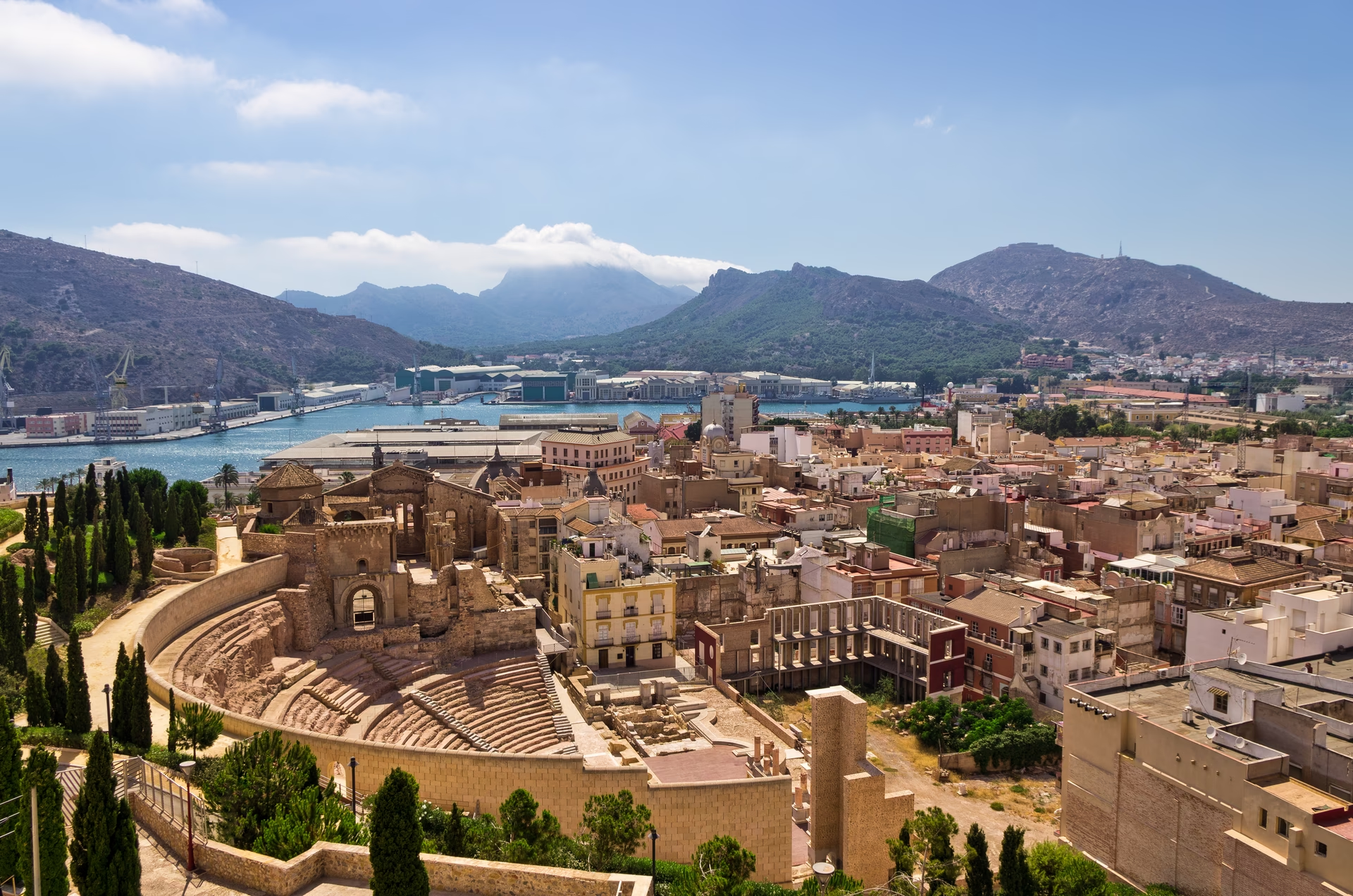
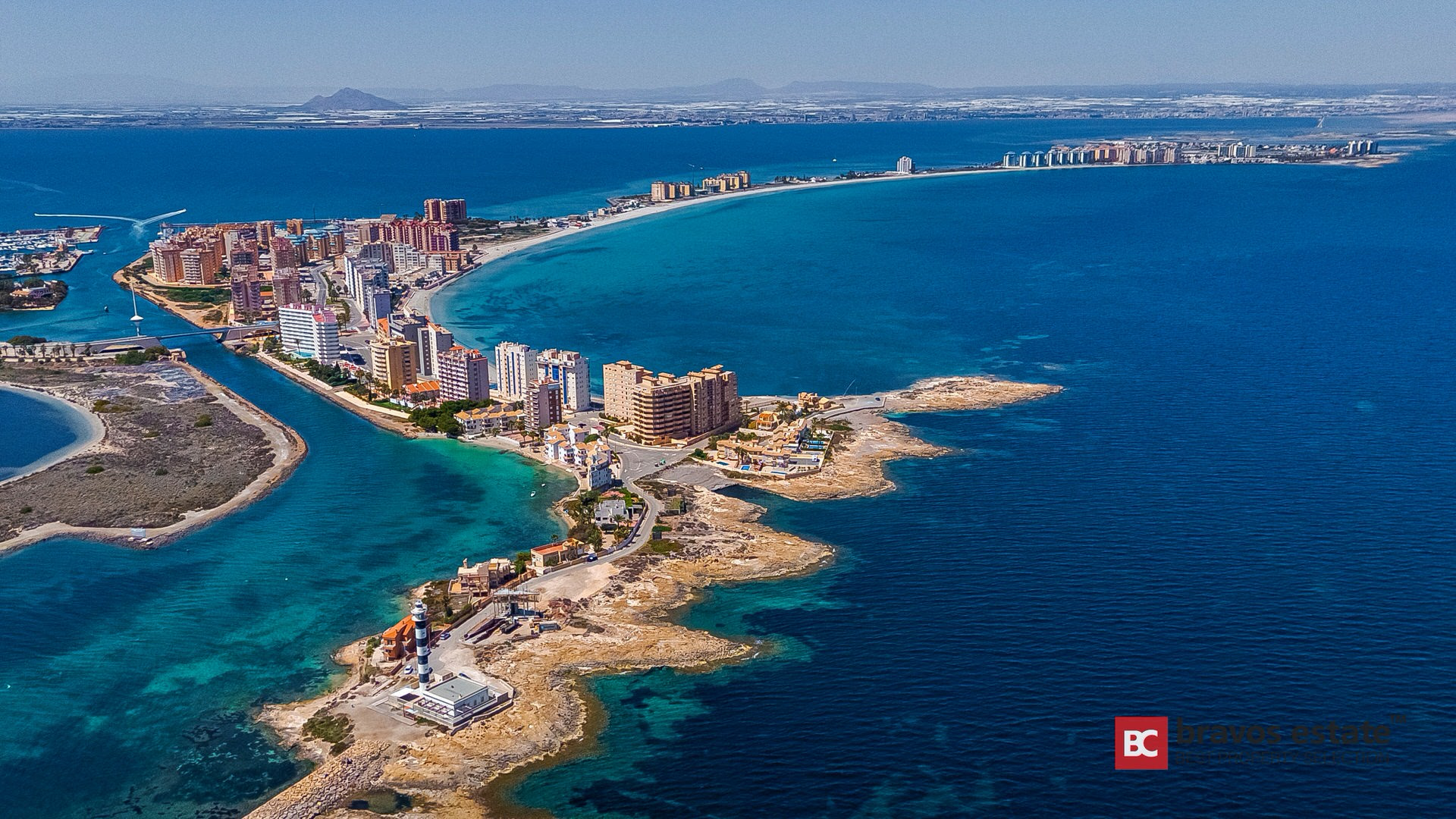
Costa Cálida stretches along the Murcia coastline from the sandy flats of the Mar Menor lagoon south to the rugged coves around Águilas, covering roughly 250 kilometres of Mediterranean shoreline. The region divides into distinct zones: the broad, shallow lagoon of Mar Menor with its resort towns of Los Alcázares, San Javier and Santiago de la Ribera; the narrow La Manga strip separating lagoon from open sea; the historic port city of Cartagena; and the quieter, more agricultural southern coast around Mazarrón and Águilas. This variety means Costa Cálida draws a wide range of buyers, from families seeking affordable permanent residences to retirees targeting golf resort communities and investors focused on short-term rental income from the Mar Menor resort belt.
Foreign buyers account for approximately 2,800 transactions per year across the Region of Murcia. UK and Irish purchasers lead at around 35% of foreign sales, followed by Dutch and Belgian buyers at 20% and Nordic nationalities at roughly 15%. The region sits at a lower price point than neighbouring Costa Blanca and Costa del Sol, which attracts both first-time overseas buyers and those trading out of pricier coastal markets. Summers are hot and dry, with July and August averaging above 30 °C, while winters are mild and largely frost-free, making the area workable as a year-round base rather than a purely seasonal destination.
Costa Cálida Property Market 2026
Prices across Costa Cálida range from around €1,400/m² for urban apartments in Cartagena to €3,800/m² at established golf resort developments. Between 2020 and 2024, nominal values rose 18–25% across the region, with Mar Menor resort towns and La Manga recording stronger gains than the Cartagena urban core. The northern resort strip remains the highest-demand zone for foreign buyers; Cartagena offers the deepest value for owner-occupiers and domestic investors. The southern coast around Mazarrón and Águilas trades at intermediate levels with thinner liquidity.
Apartments make up the majority of foreign buyer transactions on Costa Cálida. On the Mar Menor shoreline — Los Alcázares, San Javier, Lo Pagán — apartments trade at €1,800–€2,800/m², with newer or front-line units pushing toward the upper end. La Manga peninsula commands €2,000–€3,500/m² for apartments given its constrained land supply and dual-sea frontage. Cartagena urban apartments sit at €1,400–€2,200/m², providing the lowest entry point in the region, and attract a mix of domestic buyers and value-oriented foreign purchasers. Golf resort apartments at La Manga Club, Roda Golf and Hacienda del Álamo typically price at €2,200–€3,200/m² within gated community settings.
Villas on Costa Cálida concentrate in the urbanisations ringing the Mar Menor — Murcia Hills, Roda, Torre-Pacheco — and in the golf resort estates inland from the coast. Detached villa pricing in these locations runs roughly €250,000–€600,000 depending on plot size, build quality and proximity to water or fairways. Front-line Mar Menor villas with direct lagoon access reach €700,000–€1,200,000. Southern coast villas near Mazarrón and Águilas, typically on larger rural plots, offer more space at lower price-per-metre values, often €1,400–€2,000/m², though the resale market is thinner and days-on-market longer.
Townhouses and bungalows are the dominant property type across the mid-range golf and beach urbanisations. La Manga Club, Roda Golf and similar developments carry extensive stock of two- and three-bedroom townhouses at €180,000–€350,000 and bungalow-style ground-floor units in the same bracket. These attract mainly retired couples from the UK, Ireland and the Netherlands who want lower maintenance obligations than a detached villa. The bungalow format — single-storey with a small private garden inside a managed community — is particularly popular with buyers in the 60–75 age range planning extended stays or permanent relocation.
Short-term rental yields run 4–6% at La Manga and the Mar Menor resort strip, with peak weeks in July and August driving the bulk of annual income. Long-term residential lets return 3–5%, with Cartagena city slightly outperforming resort areas on long-let yield given stronger domestic rental demand from the city's university and naval base population. New-build supply is concentrated within golf resort estates; resale stock dominates the Mar Menor shoreline and Cartagena. The Region of Murcia applies a flat 8% ITP transfer tax on resale purchases, making acquisition cost modelling straightforward; new-build transactions carry IVA at 10% plus AJD stamp duty at 1.5%.
Lifestyle on Costa Cálida
Climate — Costa Cálida records some of the lowest annual rainfall figures on mainland Spain, typically 300–350 mm per year, concentrated in brief autumn episodes. Summer temperatures average 30–34 °C with low humidity compared with the southern Andalusian coast. The Mar Menor lagoon warms to around 28–29 °C by August, making it one of the warmest seawater swimming environments in Europe. Winters are mild with average January daytime temperatures around 16–17 °C, though overnight lows can reach 5–8 °C inland.
Healthcare — Public healthcare in the region is administered through the Murcian Health Service (SMS). The main public referral hospital is Hospital General Universitario Reina Sofía in Murcia city, a 900-bed facility covering complex cases across the region. Hospital General Universitario Santa Lucía in Cartagena serves the southern coast. Private hospital provision includes Hospital Los Arcos del Mar Menor in San Javier — the primary private facility closest to the Mar Menor resort belt — and Hospital Quirónsalud Murcia in the capital, both widely used by foreign residents and offering English-speaking staff in key departments.
Transport — Murcia International Airport (MJV, also called Región de Murcia International) at Corvera handles scheduled and charter services, primarily from the UK, Ireland and northern Europe, and has progressively replaced the former San Javier airport. Alicante-Elche Airport (ALC) lies around 50–60 minutes north of Los Alcázares and gives access to a broader low-cost network covering more European destinations. The A-7 Mediterranean motorway runs the length of the coast, linking Cartagena to Águilas in the south and connecting north to Alicante. AVE high-speed rail serves Murcia city, with journey times to Madrid under two hours, supporting permanent residents who combine Murcia-based living with mainland work travel.
International communities — British and Irish residents form the largest established foreign community on Costa Cálida, concentrated in the golf urbanisations of Torre-Pacheco, Roda and the La Manga resort estates, where English is the working language of most community administration and local commerce. Dutch and Belgian buyers have developed a strong presence in Los Alcázares and Lo Pagán. Nordic buyers — predominantly Swedish and Norwegian — tend to cluster around San Javier and Santiago de la Ribera. Despite these established international populations, Costa Cálida remains more domestically Spanish in character than the Torrevieja-to-Benidorm stretch of Costa Blanca, which gives the region a different social texture and generally lower density of foreign-facing retail and service businesses outside the main resort zones.
Why Costa Cálida?
One of Europe's sunniest regions with year-round mild climate
Strong tourist demand drives consistent rental income
Competitive pricing compared to other Mediterranean destinations
Quick access from all major European cities
Cities & Areas in Costa Cálida



Properties in Costa Cálida
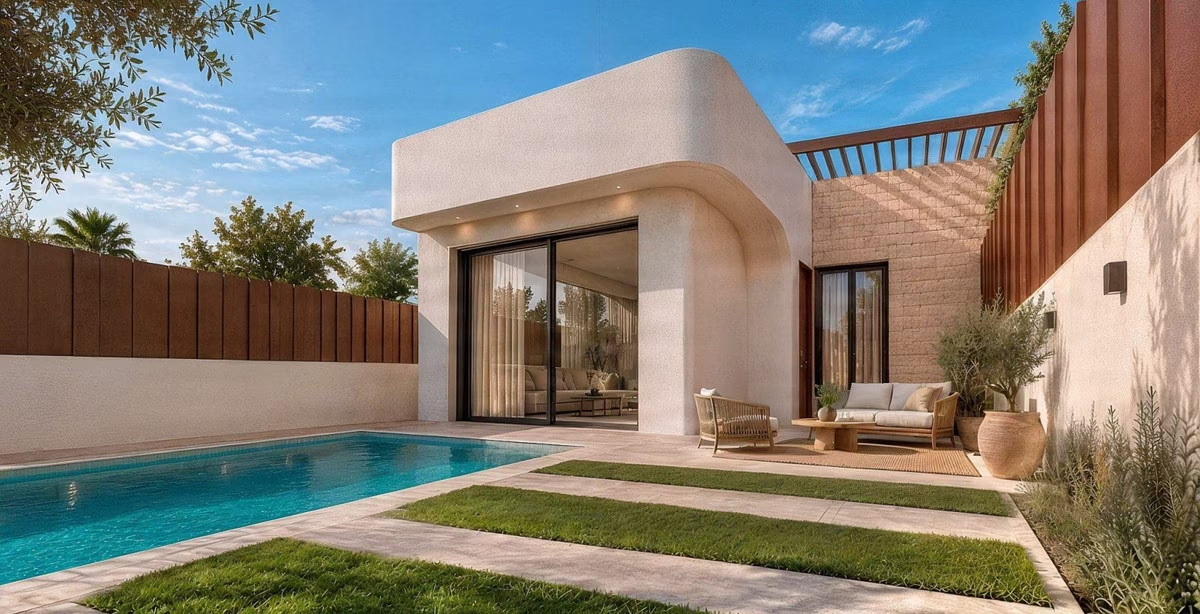
Residencial Bruselas — Single-Level Houses with Private Pools, San Pedro del Pinatar
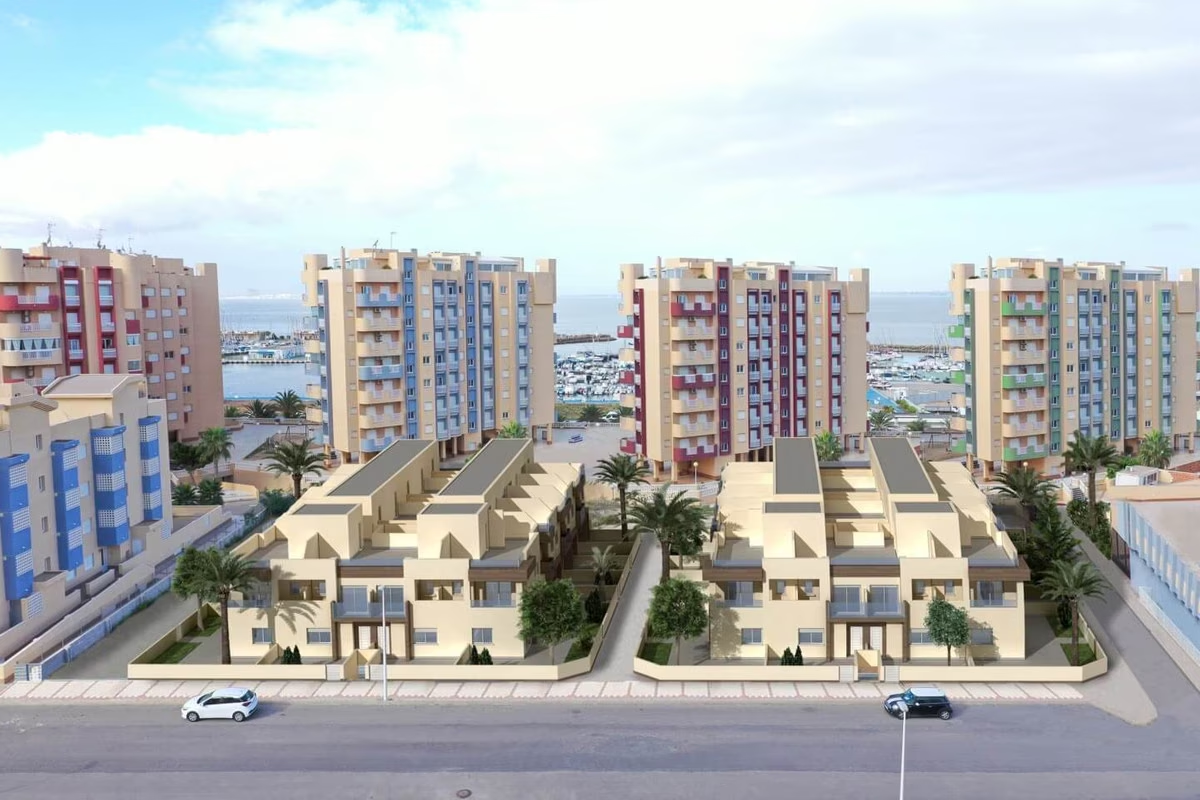
Los Miradores del Puerto — 2- and 3-Bedroom Duplexes in La Manga del Mar Menor
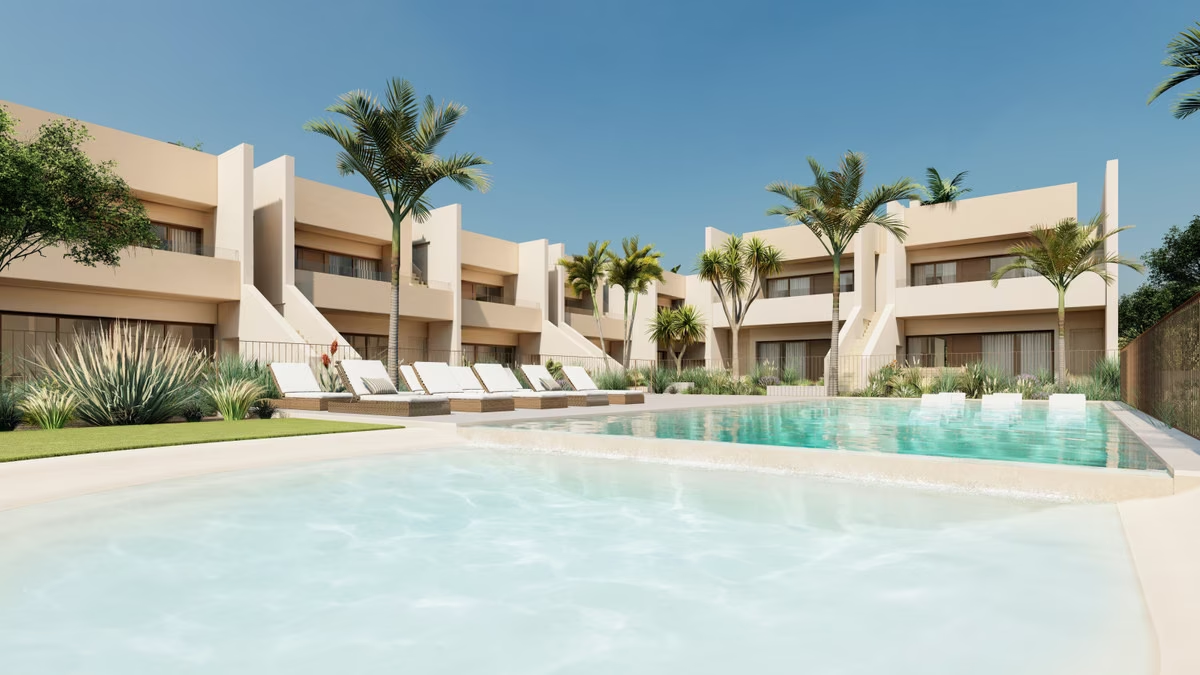
Roda Residences — 3-Bedroom Garden Apartments and a Penthouse at Roda Golf, San Javier
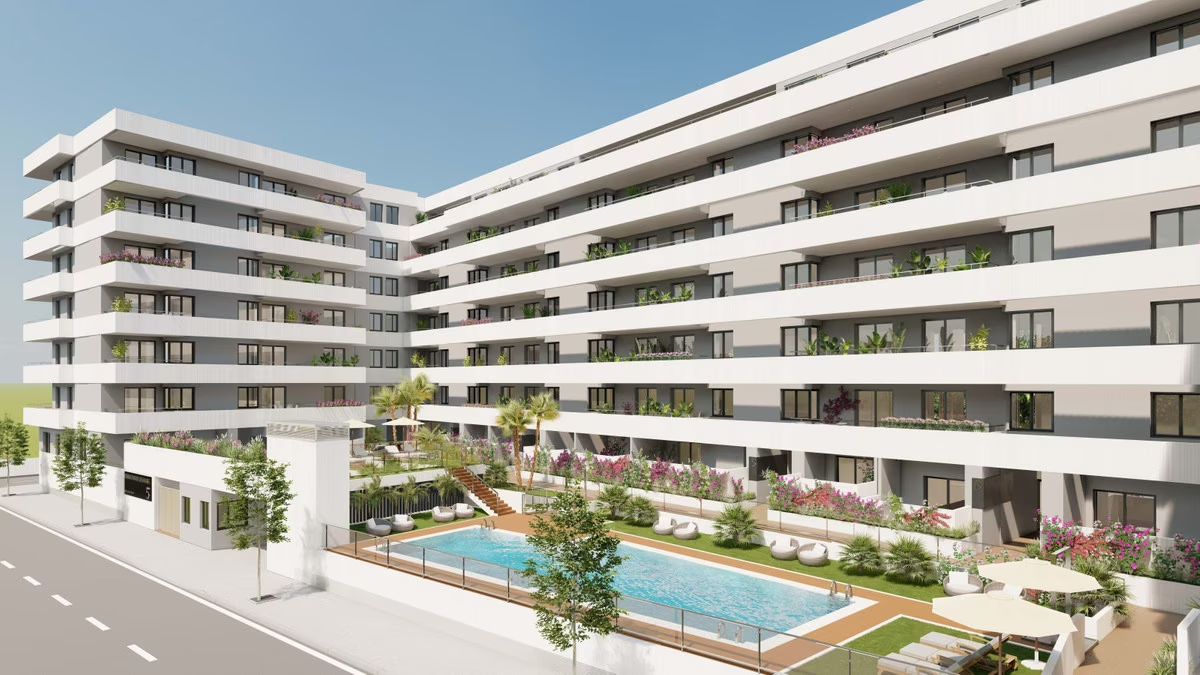
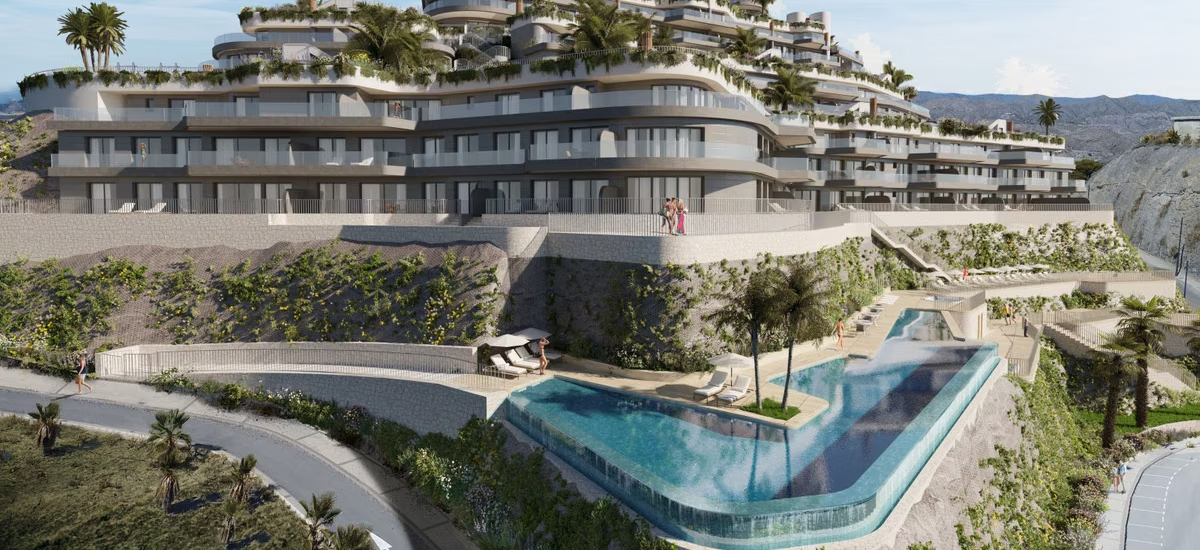
Terrazas de Levante — 3-Bedroom Apartments in Las Majadas, Águilas
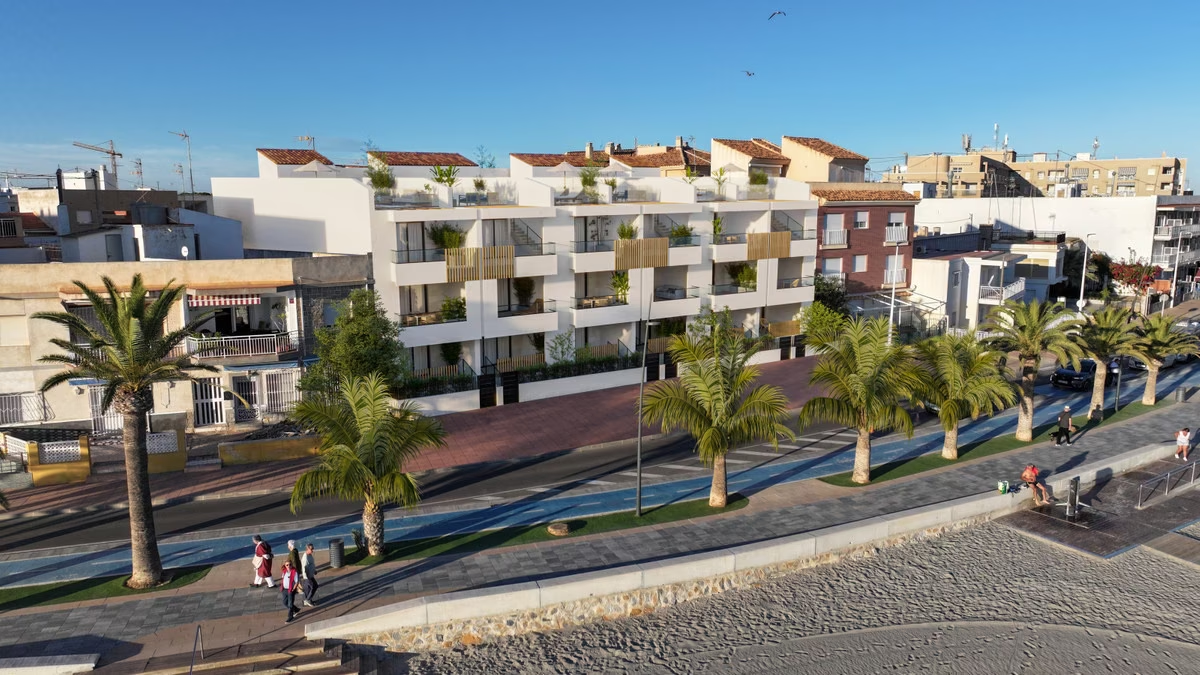
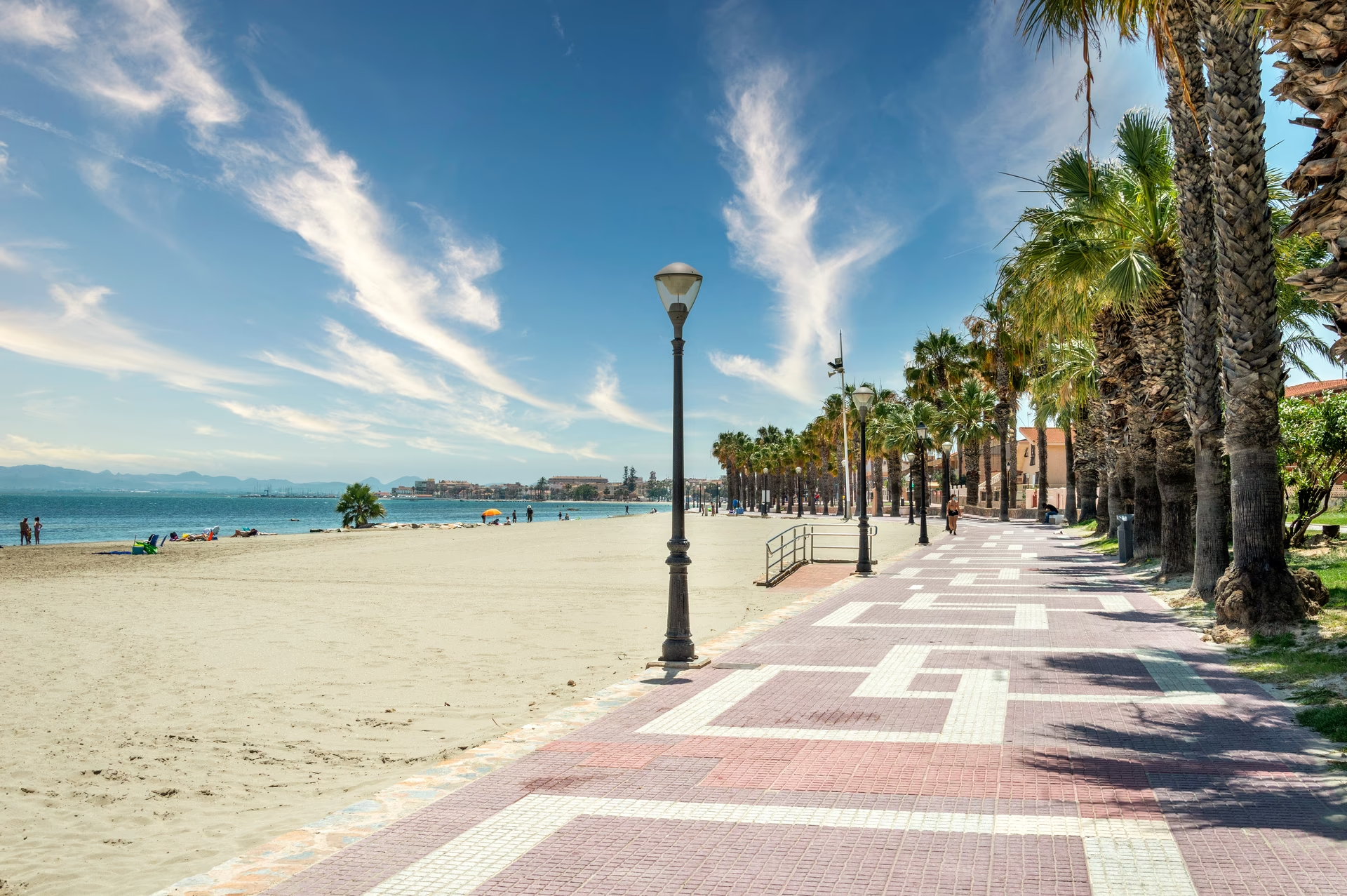
Azure Beach — 1- to 3-Bedroom Apartments in Lo Pagán, San Pedro del Pinatar
Browse by lifestyle
FAQ about Costa Cálida
Answers to the most common questions about buying property
At €150,000–€200,000 you are realistically looking at a one- or two-bedroom resale apartment in the Mar Menor north shore towns — Los Alcázares or San Javier — or a small apartment in Cartagena's urban centre, where prices in our current selection sit at around €1,400–€2,200/m². La Manga peninsula and golf resort communities such as Roda Golf or Hacienda del Álamo start materially higher, typically requiring €220,000+ for a comparable unit. Budget an additional 10% on top of the purchase price to cover ITP at 8%, notary, registry and legal fees on a resale transaction.
Murcia applies a flat 8% ITP on resale property — there is no sliding scale. For a €200,000 resale apartment, ITP alone comes to €16,000. Add notary fees (roughly €800–€1,200), land registry (€400–€700) and legal/gestor costs (€1,500–€2,500) and total acquisition costs sit at approximately 10% of the purchase price. For new-build, substitute ITP with 10% IVA plus 1.5% AJD, taking total costs to around 12%. Murcia's flat rate makes it one of the more straightforward regions in which to budget acquisition tax accurately. If you are looking to buy property in our current selection on the Costa Cálida, our team can provide a detailed cost breakdown for any specific listing.
Retirees consistently favour the northern Mar Menor shore — particularly Los Alcázares and San Javier — for the combination of calm lagoon swimming, flat terrain, established healthcare infrastructure at Hospital Los Arcos, and lower entry prices compared with La Manga. For short-term rental yield, the La Manga peninsula produces the strongest returns, with holiday-let yields in our current inventory typically running 4–6% gross, driven by its 24 km sandbar geography and constrained accommodation supply. Buyers at golf resorts such as La Manga Club or Roda Golf benefit from on-site management programmes, though purchase prices in our current selection of around €2,200–€3,800/m² raise the effective yield floor.
Non-resident buyers — including post-Brexit British nationals — can obtain Spanish mortgages at 60–70% LTV from major lenders such as Sabadell, CaixaBank and Bankinter. A €250,000 purchase therefore requires roughly €75,000–€100,000 in equity plus acquisition costs. The bank commissions an independent tasación (valuation) before making a formal offer. Separately, your NIE must be in place before signing the escritura; the fastest route in this region is an in-person appointment at the Comisaría in Cartagena or Murcia city, or via a local gestor with power of attorney, typically completed in 2–4 weeks. See our step-by-step buying guide for the full purchase timeline.
Costa Cálida's main advantages are price and tax simplicity. Entry-level prices in our current selection sit at around €1,400/m² in Cartagena and €1,800/m² on the Mar Menor north shore — roughly 20–35% below comparable Costa Blanca south or Marbella properties. Murcia's flat 8% ITP removes the complexity of Valencia's or Andalucía's banded transfer-tax rates. The Mar Menor lagoon offers sheltered, warm, low-wave water distinct from open-sea coastlines, which supports steady retiree demand. The main trade-off is airport connectivity: Murcia-MJV handles around 1.5 million passengers versus Alicante-ELC's 15 million+, though Alicante is reachable in roughly 50 minutes from northern Murcia locations.
Buyer Guides
Essential reading before purchasing property in Spain
Interested in Costa Cálida?
Our experts will help you find the perfect property — from selection to key handover