Spain's Alicante province claimed more Blue Flag beaches in 2026 than any other province in the country — 95 in total, out of 677 awarded nationally (announced by FEE/ADEAC on 5 May 2026). The Comunitat Valenciana as a whole led all Spanish autonomous communities with 174 distinctions, representing 22 per cent of the national total. Stretched across roughly 244 kilometres of coastline and blessed with more than 300 days of sunshine per year, Costa Blanca is not merely one of Europe's most popular riviera destinations — it is, by objective measure, its most Blue Flag-dense. This guide is organised in two ways: a Top 5 for first-time visitors, followed by a detailed area-by-area breakdown for anyone seriously considering where to buy property along this coast. For a full breakdown of which beaches gained and lost their flags this year, see our 2026 Blue Flag report.
Top 5 beaches on Costa Blanca — overall
If you only see five beaches on Costa Blanca, see these. Each one was selected on the basis of water quality, setting, distinctiveness, and the kind of experience that remains in the memory long after a visit.
#1 — Playa de la Granadella, Jávea
Tucked inside a protected natural park between limestone cliffs, Granadella is a horseshoe of turquoise water so vivid it looks digitally enhanced. The surrounding pine forest runs almost to the waterline, and the absence of high-rise development on the surrounding headlands sets it apart from virtually every other beach on the coast. Access requires either a steep road with limited parking or a short boat taxi from Jávea's port — a logistical barrier that keeps crowds manageable even in high summer.
Best for: snorkelling, photography, nature-lovers, those wanting seclusion
Practical notes: Limited parking at the top of the access road; arrive before 9 a.m. in July and August or use the boat service from the port. Lifeguard service in summer. Blue Flag status held consistently. Open in Google Maps
Nearest property area: Jávea — browse Jávea properties. The premium villa market here is among the most established on the northern Costa Blanca.
#2 — Playa de San Juan, Alicante
Seven kilometres of broad, fine sand running north from the city of Alicante into the residential districts of San Juan and Muchamiel — this is the benchmark for what a well-managed urban beach can achieve. San Juan holds Blue Flag status, operates full lifeguard coverage during the bathing season, and is served by tram from the city centre, making it accessible without a car. The beach is wide enough that even on a July weekend it absorbs crowds without feeling claustrophobic.
Best for: families, year-round residents, urban convenience, watersports
Practical notes: Multiple car parks along the paseo; tram stop at Urbanova/Agua Amarga end. Full amenities including disabled access, showers, and beach bars open from spring through autumn. Open in Google Maps
Nearest property area: Playa de San Juan — browse Playa de San Juan properties. San Juan sits at the premium end of the urban market.
#3 — Cala del Moraig, Benitatxell
This is Costa Blanca at its most dramatic: a pebble cove backed by sheer white cliffs that rise well above the waterline, with the Cova dels Arcs sea arch punctuating the cliff face at the eastern end. The water is extraordinarily clear, fed by freshwater springs that create unusual optical effects near the shore. Scuba divers and snorkellers rate it among the best accessible dive sites on the entire Mediterranean coast of Spain.
Best for: diving, snorkelling, dramatic photography, experienced swimmers
Practical notes: Pebble beach — water shoes recommended. Paid car park at the clifftop; a steep path leads down to the cove. Summer lifeguard. Not suitable for young children playing in surf. Open in Google Maps
Nearest property area: Benitatxell — browse Benitatxell properties. A premium villa enclave, quieter than Jávea but comparable in character.
#4 — Playa Levante, Benidorm
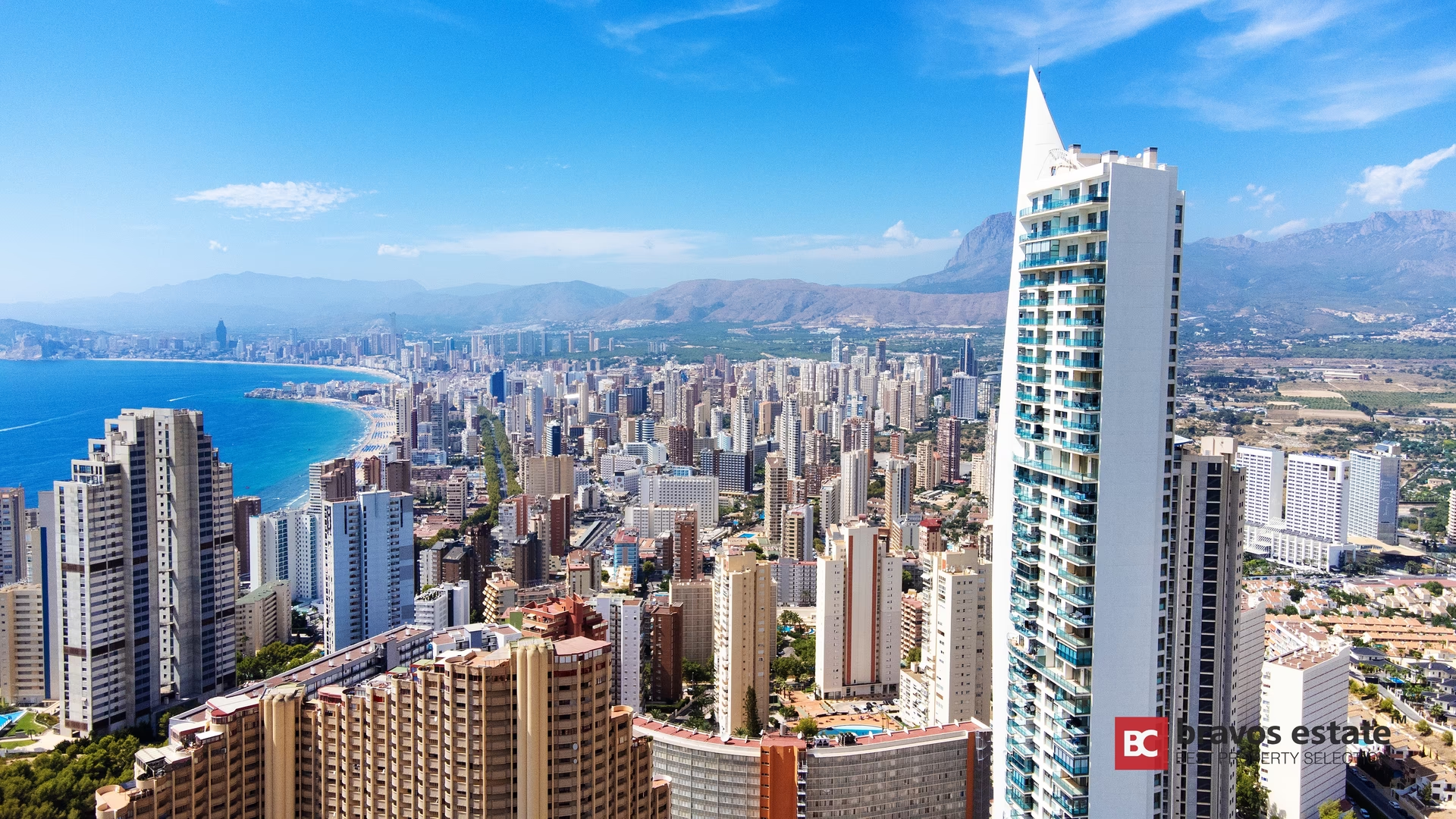
No list of Costa Blanca beaches is complete without Levante. Two kilometres of fine golden sand curving in front of one of Europe's most recognisable skylines, with a promenade that operates as a functioning city street twelve months of the year. Levante holds Blue Flag status, runs comprehensive lifeguard coverage from June through September, and is equipped with full disabled-access infrastructure. It is noisy, busy, and deliberately so — and for buyers interested in rental yield, it is unmatched in footfall.
Best for: rental investors, families, year-round beach access, vibrant atmosphere
Practical notes: Paid parking in the town; beach accessed on foot from most central hotels and apartments. Full amenities. Peak season (July–August) sees high density. Open in Google Maps
Nearest property area: Benidorm — browse Benidorm properties. Apartments at every price tier.
#5 — Playa Arenal-Bol, Calpe
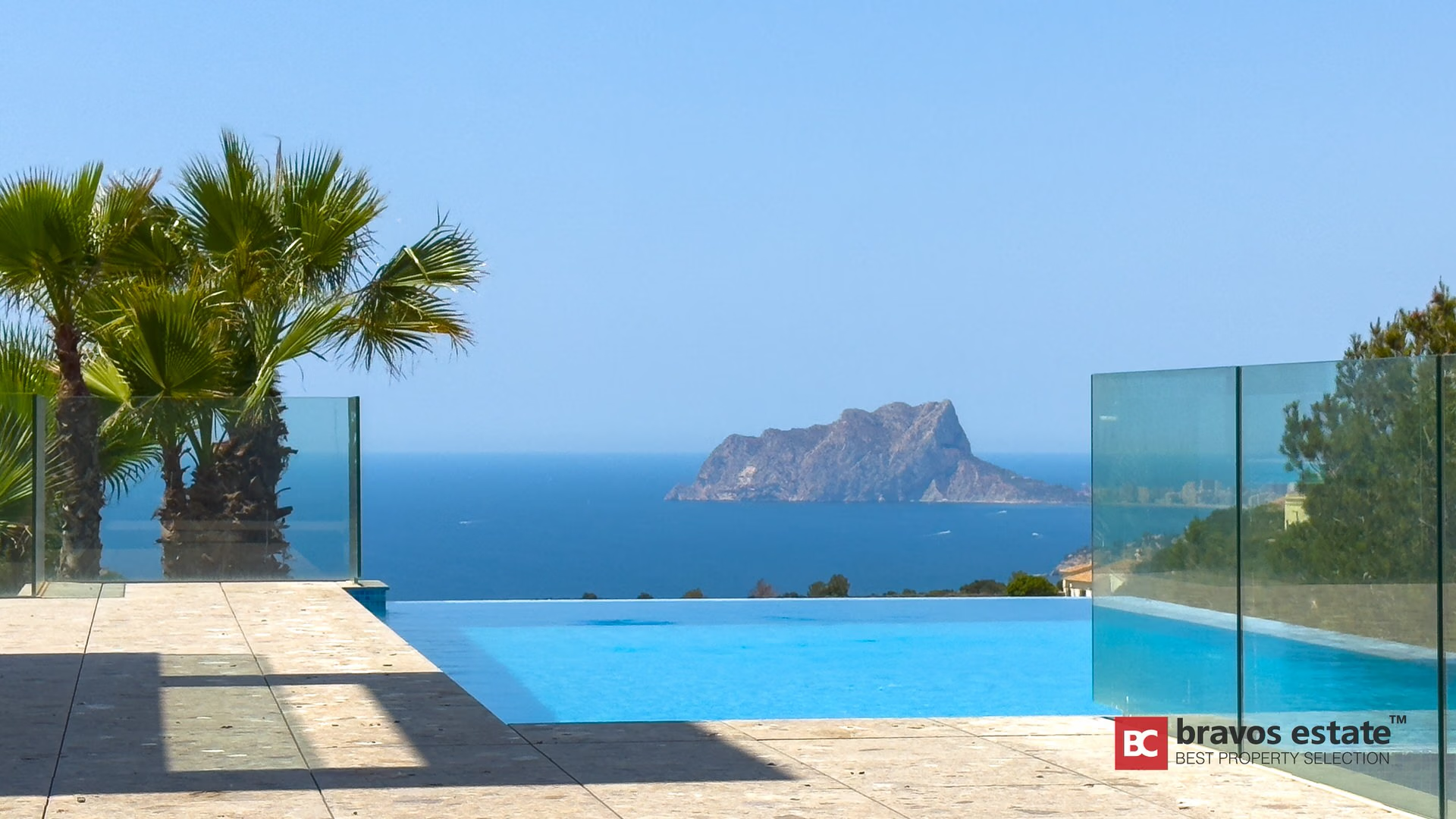
Sitting at the base of the Peñón de Ifach — the 332-metre volcanic rock that is Costa Blanca's most recognisable natural landmark — Arenal-Bol delivers a backdrop that photographers rarely need to edit. The beach itself is sandy and well-serviced, with the rocky headland visible from almost every point on the sand. The combination of the Blue Flag beach, the natural park climbing the Peñón, and the old town a short walk inland makes Calpe one of the most complete coastal resorts on the coast.
Best for: photography, families, active visitors who also want hiking, varied beach types
Practical notes: Large car park near the marina; summer lifeguard and full amenities. The Peñón de Ifach natural park entrance is a short walk. Open in Google Maps
Nearest property area: Calpe — browse Calpe properties. Mid-tier market with premium pockets near the headlands.
Key insight: The five beaches above span four distinct property markets — premium villa territory (Jávea, Benitatxell), urban premium (Alicante), mid-tier apartments (Calpe), and high-volume rental (Benidorm). Your ideal beach and your ideal property investment are almost certainly in the same zone.
| # | Beach | Town | Type | Known for |
|---|---|---|---|---|
| 1 | Playa de la Granadella | Jávea | Pebble cove in a natural park | Turquoise water, pine-clad cliffs, no high-rise around |
| 2 | Playa de San Juan | Alicante | 7 km of urban sand, Blue Flag | Tram from the city, full services and lifeguards |
| 3 | Cala del Moraig | Benitatxell | Cliff-backed pebble cove | Crystal water, Cova dels Arcs sea arch, diving |
| 4 | Playa Levante | Benidorm | 2 km of city sand, Blue Flag | Year-round promenade, full accessibility |
| 5 | Playa Arenal-Bol | Calpe | Sandy town beach, Blue Flag | Sits beneath the Peñón de Ifach |
Beaches by area — find your coastline
Now zoom in by area. Each section pairs the beaches with the towns where you would actually live. Costa Blanca runs roughly north to south, and the character of the coast shifts considerably as you move along it — from the rocky, forested calas of the Marina Alta in the north, through the urbanised centre, to the long flat sandy strands of the southern Vega Baja.
Alicante & San Juan — urban premium
Alicante city and its northern extension into San Juan offer the most urban beach experience on the coast — not a compromise, but a genuine asset for those who want to walk from a restaurant to the sea in five minutes. The city's beaches are managed to a high standard and are accessible year-round.
Playa del Postiguet — The city's own beach, 700 metres of sand running directly below the Santa Bárbara castle hill. Postiguet holds Blue Flag status and sits within walking distance of the old town, the port, and the main shopping streets. Compact by comparison with San Juan, but its central location makes it the most used beach in the city. Best for: city-breakers, evening swims, convenience. Open in Google Maps
Playa de San Juan — The seven-kilometre flagship (detailed in the Top 5 above). The northern end, closest to El Campello, tends to be quieter than the southern end nearest the city. Best for: families, long walks, watersports, year-round use. Open in Google Maps
Playa de la Albufereta — A quieter residential beach between Postiguet and San Juan, backed by low-rise apartment buildings rather than hotels. Largely used by local residents rather than tourists. Best for: those seeking a quieter local atmosphere within the city. Open in Google Maps
Property profile: Alicante city and San Juan represent the premium urban market on Costa Blanca. Browse Alicante properties.
El Campello — Mediterranean fishing town
El Campello is a Mediterranean fishing town just north of Alicante, mid-tier in pricing, with five Blue Flag-quality beaches stretching from the village centre northwards along the coast. It has a functioning fishing village at its heart, a weekly market, and a string of beaches and coves that reward those who explore on foot or by kayak. Notably, 2026 brought the area its newest Blue Flag recognition.
Playa de Muchavista — A long, sandy, north-facing beach running several kilometres from the village towards El Campello's residential zones. Family-friendly, with calm water and full seasonal services. Best for: families, long beach walks, calm swimming. Open in Google Maps
Cala Lanuza — The headline for El Campello in 2026: this cove received its first-ever Blue Flag this year, a formal recognition of water quality improvements and beach management. A smaller, more sheltered option than Muchavista. Best for: snorkelling, quieter swimming, those who prefer a cove to an open beach. Open in Google Maps
Playa Carrer la Mar — The central beach of the village, close to the tram stop and the fish market. Best for: convenience, evening swims, local atmosphere. Open in Google Maps
Coveta Fumà — A small rocky cove at the southern end of El Campello's coastline, popular with snorkellers and those who prefer rockier, less-sandy shorelines. Best for: snorkelling, rock pooling, a quieter alternative. Open in Google Maps
Cala de Cantalars — One of the best-kept secrets on the northern Alicante coast, Cantalars is rated among the finest snorkelling spots within easy reach of the city. Access requires a short walk along the coastal path. Best for: snorkelling, underwater photography, experienced swimmers. Open in Google Maps
Property profile: El Campello sits at the mid-tier of the Costa Blanca market — coastal apartments are more accessible in price than equivalent properties in San Juan, and the local infrastructure is more Spanish in character than resort-oriented. Browse El Campello properties.
Benidorm & Marina Baixa — year-round rental engine
Benidorm divides opinion among property buyers, but the data is unambiguous: it is the most consistently occupied rental market on the coast, with a tourism infrastructure — hotels, tram links, restaurants, and attractions — that operates twelve months of the year rather than four. The beaches here are genuinely excellent by any objective measure, and Benidorm's Marine Reserve means that just outside the main resort lies some of the clearest water in the western Mediterranean.
Playa Levante — Detailed in the Top 5 above. The headline beach, two kilometres of Blue Flag sand, fully serviced. Best for: rental investors, families, year-round beach use, vibrant atmosphere. Open in Google Maps
Playa Poniente — On the quieter western side of Benidorm's bay, Poniente holds its own Blue Flag and tends to attract a slightly older, less party-oriented demographic than Levante. Still well-equipped and busy in summer, but the character is calmer. Best for: families, those wanting Blue Flag without Levante's intensity. Open in Google Maps
Mal Pas — A small pocket beach in the centre of Benidorm between the two main bays, backed directly by the old town. Limited in size but atmospheric. Best for: a quick dip, photography of the old town, convenience. Open in Google Maps
Cala del Tio Ximo — The premium hidden cove in the Benidorm area: accessed via a coastal path from the Rincon de Loix district, it offers clear water and a rocky-sandy shore that feels worlds away from the main resort, despite being minutes from it. Popular with locals and those in the know. Best for: escaping the resort, snorkelling, premium beach experience near Benidorm. Open in Google Maps
Property profiles: Benidorm — apartments at every price level. Browse Benidorm properties. For a more premium, quieter alternative in the same comarca, browse Altea properties — villas and seafront apartments in a town with strict planning regulations that have preserved its whitewashed hilltop character.
Calpe & Altea — mid-tier with premium pockets
Calpe punched well above its weight in 2026, gaining three new Blue Flag awards (Puerto Blanco, El Racó, and a port designation) while retaining its existing flags. Combined with the Marina Baixa area, the broader zone around Calpe accounts for 18 Blue Flag awards — more than entire autonomous communities. For property buyers, Calpe sits in a sweet spot: mid-tier pricing with genuine scenic drama courtesy of the Peñón de Ifach, and a range of beach types from broad sandy bays to intimate coves.
Playa Arenal-Bol — Detailed in the Top 5 above. Sandy, Blue Flag, backed by the Peñón. Best for: photography, families, mix of beach and hiking. Open in Google Maps
Playa Cantal Roig — A Blue Flag beach near Calpe's old town, with a different aspect to Arenal-Bol and a more local clientele in shoulder season. Best for: quieter visits, off-season use, those staying near the town centre. Open in Google Maps
Cala Bassetes — A small cove near the marina, with rocky edges and clear water. Limited in size but pleasant for a swim away from the main beaches. Best for: a quick swim near the port, families with small children. Open in Google Maps
Puerto Blanco — One of Calpe's three new Blue Flag beaches in 2026. The first-time award reflects improving water quality and management standards. Best for: early adopters, those seeking newer-recognised beaches before they become crowded. Open in Google Maps
El Racó — Also a new Blue Flag recipient in 2026. A quieter, more sheltered option within the Calpe municipality. Best for: quieter swimming, local experience. Open in Google Maps
L'Espigó, Altea — Across the border into Altea municipality, L'Espigó returned its Blue Flag in 2026 after losing it the previous year. Altea's beaches are predominantly pebbled, which deters some visitors but keeps them quieter and the water exceptionally clear. Best for: those who prefer pebble beaches, snorkelling, the Altea premium buyer seeking a beach close to home. Open in Google Maps
Property profiles: Calpe — mid-tier market with premium pockets near headlands. Browse Calpe properties. Altea — premium villas and seafront apartments. Browse Altea properties.
Jávea, Benitatxell & Moraira — premium villa territory
This stretch of the northern Costa Blanca — the Marina Alta coast between the Cap de la Nau and the Montgó massif — is where the scenery becomes genuinely exceptional and where the property market reflects it. Jávea (Xàbia in Valencian) alone has a coastline that shifts between sandy family beaches, rocky snorkel bays, and sheer cliff coves within a few kilometres. Benitatxell and Moraira extend this character south and north respectively, with Moraira being the smallest and most discreet of the three resorts.
Platja de la Granadella, Jávea — Detailed in the Top 5 above as the number one overall. Best for: snorkelling, photography, nature-lovers, premium experience. Open in Google Maps
Cala Blanca, Jávea — A pool-shaped cliff cove where the rock walls funnel into a compact bathing area with exceptional water clarity. Access is on foot. Best for: adventurous swimmers, those comfortable with a scramble, photography. Open in Google Maps
Portichol / La Barraca, Jávea — A protected cove in the natural park zone, snorkel-friendly and generally less visited than Granadella. Best for: snorkelling, nature walks, quieter swimming. Open in Google Maps
L'Arenal, Jávea — The main sandy beach of Jávea, near the port and resort area, which returned its Blue Flag in 2026 after losing it the previous year. More family-oriented and accessible than the calas. Best for: families, Blue Flag reassurance, proximity to port amenities. Open in Google Maps
Cala del Moraig, Benitatxell — Detailed in the Top 5 above as the third-ranked beach overall. Best for: diving, snorkelling, dramatic photography, experienced swimmers. Open in Google Maps
L'Advocat, Benissa — A new Blue Flag beach in 2026, notable because it sits within the Benissa municipality — which also lost Cala Fustera's flag this year. L'Advocat's first-time recognition marks a shift in this stretch of coast. A relatively undiscovered cove that now carries official water quality endorsement. Best for: those wanting a newly recognised, less-visited Blue Flag cove. Open in Google Maps
Cala Lebeig, Benitatxell — A quieter alternative to Moraig in the same municipality, with a tradition of naturist use and generally fewer visitors. Best for: total seclusion, naturist swimmers, those who want Moraig's character without the crowds. Open in Google Maps
Property profiles: All three towns represent the premium villa market on Costa Blanca. Browse Jávea properties. Browse Benitatxell properties. Browse Moraira properties.
Dénia & the North — mid-to-premium family coast
Dénia sits at the northern tip of the Alicante province, where Costa Blanca meets the foot of the Montgó natural park. As a municipality it ranked second in Alicante for Blue Flag awards in 2026, with seven beaches and two ports recognised — a total of nine distinctions. The town has a year-round population, a functioning port with ferry connections to Ibiza and Formentera, and a rice-growing agricultural hinterland that gives it a more grounded character than a pure resort town.
Las Marinas — Dénia's long, sandy northern beach zone, stretching for several kilometres in a largely low-rise residential setting. The beach is broad, the water shallow and calm — ideal for families. Multiple Blue Flag sections across the Las Marinas strip. Best for: families, long walks, calm sea, residential buyers. Open in Google Maps
Las Rotas — Dénia's southern coast, running beneath the Montgó massif towards the Cap de Sant Antoni. Rocky and pebbled rather than sandy, with numerous small coves and rock platforms. The water here is exceptionally clear and rich in marine life — it borders a marine protected zone. Snorkelling is among the best in the province. Best for: snorkelling, rock swimming, marine wildlife, experienced swimmers. Open in Google Maps
Key insight: Dénia's nine Blue Flag distinctions in 2026 — more than any municipality except Orihuela — reflect the range of its coastline: long sandy family beaches to the north, and rocky marine-rich coves to the south. A buyer choosing Dénia can access genuinely contrasting beach characters within the same municipality.
Property profile: Dénia sits in the mid-to-premium range — coastal apartments and inland villas within reach of the sea. Browse Dénia properties.
South Costa Blanca: Orihuela Costa, Torrevieja, Santa Pola & Pilar de la Horadada — budget to mid
The southern section of Costa Blanca — the Vega Baja del Segura — is characterised by wide, flat, sandy beaches, calmer sea conditions than the rocky north, and a property market that represents the most accessible entry points on the coast. This is where a significant proportion of British and Northern European buyers have historically purchased first properties in Spain, and where Blue Flag awards have continued to grow year on year. Orihuela as a municipality was the leader in all of Spain in 2026, with ten Blue Flag beaches and one port.
Punta Prima, Orihuela Costa — A well-maintained Blue Flag beach in a predominantly residential zone, with a compact promenade and full seasonal services. Best for: residential buyers, families, calm swimming. Open in Google Maps
La Caleta, La Glea, and Cala Capitán, Orihuela Costa — A cluster of Blue Flag beaches within Orihuela's municipality, each with slightly different character — La Caleta being the most sheltered, Cala Capitán offering a rockier, more intimate setting. Together they illustrate why Orihuela holds the top position nationally in 2026. Best for: variety-seeking buyers who want multiple Blue Flag options within easy reach of one home. Open in Google Maps
Los Locos, La Mata, and Acequión, Torrevieja — Torrevieja gained six Blue Flag beaches and three port awards in 2026 — a substantial haul for a town whose beaches are broad, sandy, and backed by one of Europe's largest salt lakes. Los Locos is the livelier option; La Mata borders the natural park of the same name and has a more open, unspoilt character; Acequión is the most central. Best for: buyers on a budget, families, those interested in Torrevieja's salt lake natural park. Los Locos: Open in Google Maps. La Mata: Open in Google Maps. Acequión: Open in Google Maps
Tamarit, Santa Pola — Tamarit returned its Blue Flag in 2026 after losing it the previous year. Santa Pola sits between Alicante and Torrevieja, with a working fishing port that supplies much of the region's fresh fish and a coastline backed by a regional natural park. Tamarit is one of several Blue Flag beaches within the municipality. Best for: buyers who want a working town rather than a pure resort, fresh seafood proximity, natural park access. Open in Google Maps
Mil Palmeras, Pilar de la Horadada — At the very southern tip of Alicante province, Mil Palmeras is a long, calm, family-oriented beach with the palm-lined promenade that gives the area its name. The sea is shallow and warm, and the resort is less developed than Torrevieja — an advantage for those seeking quiet without sacrificing services. Best for: families with young children, buyers wanting the quietest end of the south coast. Open in Google Maps
Property profiles: Torrevieja and Pilar de la Horadada — budget entry points, apartments dominant. Browse Torrevieja properties. Orihuela Costa — budget to mid, modern apartments and townhouses. Browse Orihuela Costa properties. Santa Pola — budget to mid. Browse Santa Pola properties. Pilar de la Horadada — browse properties.
Blue Flag 2026 premium clusters — at a glance
| Municipality | Blue Flag beaches | Blue Flag ports | Total awards | Property profile |
|---|---|---|---|---|
| Orihuela | 10 | 1 | 11 | Budget to mid — apartments, townhouses |
| Dénia | 7 | 2 | 9 | Mid to premium — apartments and villas |
| Torrevieja | 6 | 3 | 9 | Budget — apartments dominant |
| Calpe | Multiple (incl. 3 new 2026) | 1+ | Part of 18 (Marina Baixa + Calpe) | Mid with premium pockets |
| El Campello | Multiple (incl. Cala Lanuza new 2026) | — | Part of Alicante cluster | Mid-tier coastal apartments |
| Jávea (Xàbia) | Multiple (incl. L'Arenal returned 2026) | — | High density per km of coast | Premium villa market |
| Benissa | L'Advocat (new 2026); lost Cala Fustera | — | Net neutral in 2026 | Premium, rural coastal |
| Santa Pola | Multiple (incl. Tamarit returned 2026) | — | Stable | Budget to mid |
Key insight: Alicante province's 95 Blue Flag beaches in 2026 make it the highest-ranked province in Spain — ahead of every other province in a country that itself leads Europe in total Blue Flag awards. For a property buyer, this means that whichever area of Costa Blanca you choose, certified high-quality beaches are unlikely to be far away.
What to look for when choosing a beach — and a town
Blue Flag certification is the most reliable single indicator of water quality and beach management standards. It is awarded annually and requires ongoing compliance — a beach can lose its flag and regain it (as Tamarit and L'Arenal demonstrated in 2026). When viewing a property, it is worth checking not just whether nearby beaches hold flags currently, but whether they have held them consistently. One-year gains and losses are common; multi-year holders are a stronger signal.
Sand versus pebble is a matter of preference, but it affects property values. Sandy beaches generally attract higher tourist footfall and support more extensive rental markets. Pebble and rocky coves tend to have clearer water, more marine life, and a quieter character — they appeal to buyers who are buying primarily for personal use rather than rental income.
Crowding varies dramatically by season and by beach type. Levante in Benidorm on a July Saturday is a fundamentally different experience from Granadella on a Tuesday in May. Buyers planning year-round residency should visit their preferred beach in October and February as well as August — it tells a very different story.
Accessibility matters more than it initially seems. A clifftop cove that requires a 20-minute walk may be glorious at 35, but worth considering over a 20-year property ownership horizon. The best urban beaches — San Juan, Levante, Postiguet — are accessible by public transport and have disabled-access infrastructure. Coves require more planning.
Family-friendliness is primarily about shallow water gradient and sea conditions. The south coast's beaches (Mil Palmeras, La Mata, Punta Prima) tend to be calmer and shallower than the northern calas. The north's appeal lies in scenery and water clarity, not gentle paddling shallows.
Best time to visit — and to live — by the beach
The honest answer is that Costa Blanca has no truly bad months, but the experience varies considerably across the calendar. July and August are peak season: beaches are at maximum occupation, water temperatures are warmest (typically 26–28°C), and the full range of beach services operates. The density at popular beaches — particularly Levante in Benidorm and the main Jávea beaches — requires early arrival or acceptance of crowds.
Late May through June and September through early October represent the sweet spot for most visitors and residents. Water temperatures remain high (22–26°C in September), crowds thin noticeably, and the light — lower in the sky than in midsummer — is better for photography. September in particular combines warm sea temperatures with comfortable air temperatures and a return to normal restaurant reservations.
October through April sees most Blue Flag services suspended and lifeguard coverage removed from all but a handful of beaches. However, the coast itself remains quietly beautiful and the water is swimmable for acclimatised swimmers well into November. Daytime temperatures in January average 15–18°C — cool enough for a coat in the morning, warm enough for a seafront lunch without one by midday. For year-round residents, this is one of the least-discussed genuine advantages of Costa Blanca living: the winter months on a quiet promenade are not a hardship, they are a different kind of pleasure.
For buyers specifically, visiting in winter removes the flattering effect of a summer visit and reveals how a town actually functions for residents — which restaurants stay open, how the market operates, whether the beach promenade is used as a living space or mothballed until June. The towns that retain genuine year-round vitality — Alicante, Dénia, El Campello, Altea — tend to be the ones where long-term owners report the highest satisfaction.
A final observation
Costa Blanca's 2026 Blue Flag performance — 95 beaches in one province, leading all of Spain, in a country that itself leads all of Europe — is not a marketing slogan. It is the output of annual independent water quality testing, beach management assessment, and public environmental education programmes carried out by FEE and ADEAC. The fact that Alicante has increased its tally for the second consecutive year, and that new municipalities such as El Campello are entering the Blue Flag register for the first time, suggests that the trend is one of improving standards rather than resting on existing reputation. For anyone making a property purchase decision partly on the basis of coastal quality, that trajectory matters as much as this year's number. Read our full breakdown of which beaches gained and which lost their flags in the 2026 Blue Flag news report.