American property purchases in Spain have tripled over the past six years, with US citizens now representing nearly 2% of all foreign property transactions in the country. This surge isn't just about favorable exchange rates or post-pandemic lifestyle changes — it's about Americans discovering that Spain offers something unique: European sophistication at a fraction of the cost, world-class healthcare, and a quality of life that's hard to match. The good news? As an American citizen, you can buy property in Spain without any restrictions, no minimum investment thresholds, and no requirement to obtain residency first.
Why Americans Are Choosing Spain in 2026
The numbers tell a compelling story. American property purchases in Spain increased by 312% between 2018 and 2024, making US citizens one of the fastest-growing foreign buyer segments. This isn't just coincidence — it's the result of several converging factors that make Spain particularly attractive to American buyers.
Cost of Living Advantage: Spain is consistently 30-40% cheaper than major US cities for everyday expenses. A quality dinner for two in Valencia costs around €35-45, compared to $80-120 in comparable US cities. Healthcare is world-class and costs a fraction of US prices — private health insurance averages €80-150 per month.
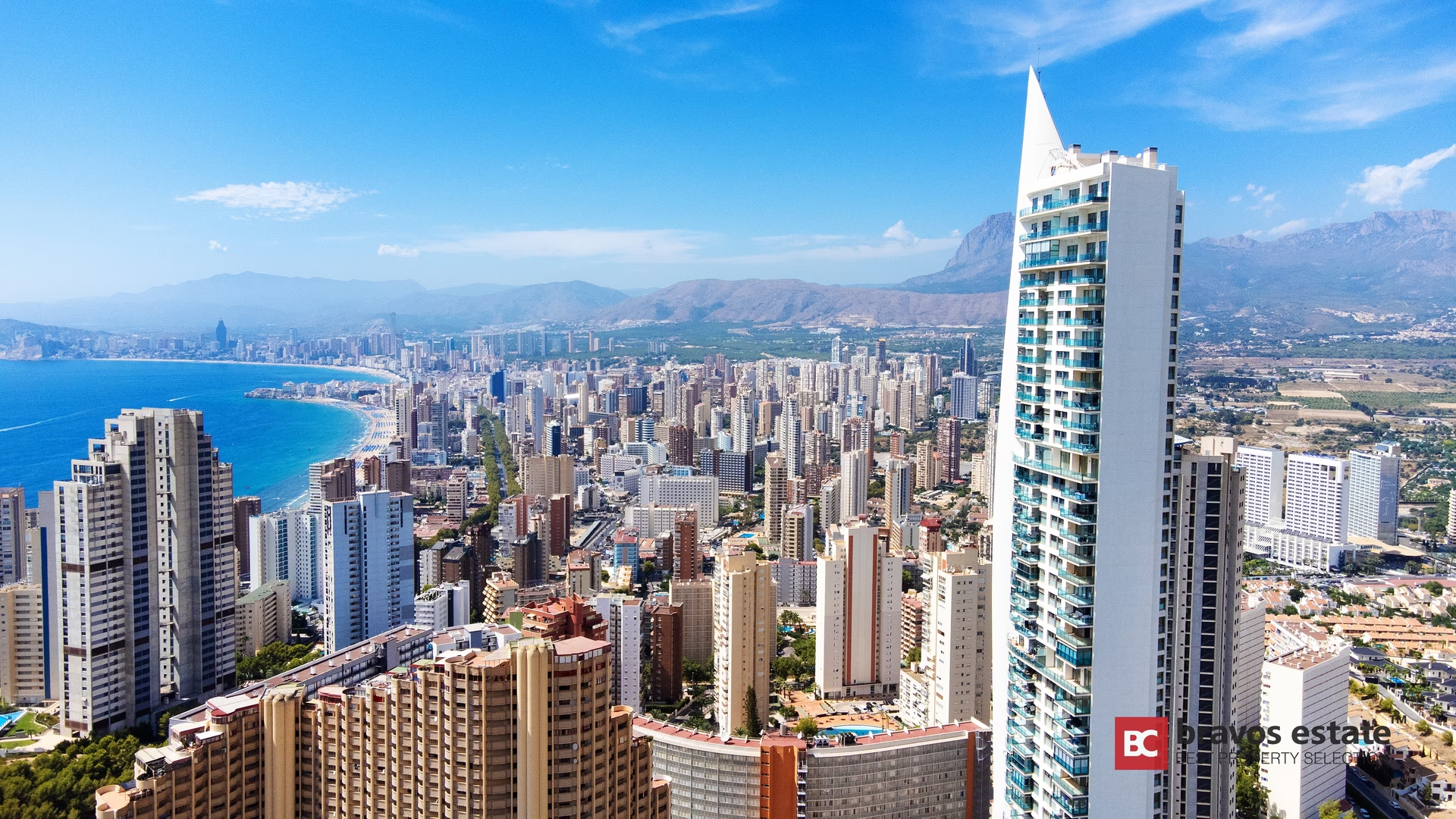
Climate and Location: Costa Blanca boasts 320 sunny days per year with average temperatures of 18°C (64°F). Unlike Florida's hurricane risk or California's wildfire concerns, Spain's Mediterranean coast offers stable, predictable weather. The region is also perfectly positioned — two hours from major European capitals, yet maintaining the relaxed Mediterranean lifestyle Americans crave.
Safety and Stability: Spain ranks as the 6th safest country globally according to the Global Peace Index. Violent crime rates are significantly lower than most US cities, and the country offers political stability within the European Union framework.
The value proposition is straightforward: Spain delivers what many Americans seek — better weather than most US locations, lower costs than Florida or California, superior safety compared to popular expat destinations like Mexico, and easier bureaucracy than Portugal's residence programs.
The Buying Process: How It Differs from the US
Understanding Spain's property purchase process is crucial because it operates fundamentally differently from the US system. The differences aren't just procedural — they reflect different legal traditions and consumer protections.
| Aspect | United States | Spain |
|---|---|---|
| Escrow System | Third-party escrow company holds funds | No escrow — direct buyer-seller transaction |
| Title Protection | Title insurance protects against defects | Nota simple from Property Registry shows legal status |
| Legal Professional | Real estate attorney (recommended) | Notario (state-appointed legal authority, mandatory) |
| Process Steps | Offer → Inspection → Closing | Reserva → Arras → Escritura |
| Identification | Social Security Number | NIE (Número de Identificación de Extranjero) |
| Legal Representation | Optional | Optional but recommended for peace of mind |
| Deposit Structure | Earnest money (1-3%) | Reserva (€3,000-6,000) + Arras (10%) |
The most critical difference is the absence of escrow. In the US, a neutral third party holds your funds until all conditions are met. In Spain, you deal directly with the seller through legally binding contracts. This makes having an independent Spanish lawyer non-negotiable.
Spain's notario system also differs significantly from US notary publics. A Spanish notario is a state-appointed legal authority (similar to a magistrate) who ensures the transaction's legality. They're neutral parties who verify identities, confirm legal capacity, and ensure the deed complies with Spanish law. However, they don't represent your interests — that's your lawyer's job.
Tip: Never use the seller's lawyer or one recommended by the seller. Hire your own independent Spanish lawyer who specializes in real estate transactions. This typically costs €800-1,500 but can save you thousands in avoided problems.
Step-by-Step: From Decision to Keys
Spain's property purchase process follows a structured sequence that, once understood, provides good protection for buyers. Here's exactly what happens:
Step 1: Obtain Your NIE Number
Before you can buy property, open a bank account, or sign any legal document in Spain, you need a NIE (Número de Identificación de Extranjero). This is your Spanish tax identification number, similar to a Social Security Number. You can obtain it at Spanish consulates in the US or directly in Spain. The process typically takes 2-4 weeks and costs around €12. For detailed instructions, see our NIE guide.
Step 2: Open a Spanish Bank Account
Most Spanish banks require you to open an account to facilitate the property purchase. Major banks like BBVA, CaixaBank, and Banco Sabadell have English-speaking staff and experience with foreign buyers. You'll need your NIE, passport, proof of income, and typically a minimum deposit of €600-1,000.
Step 3: Find Your Property
Whether you're working with a local agency (like Bravos Estate for Costa Blanca properties) or searching independently, this stage involves viewing properties and making your selection. Take time to understand the local market, neighborhood dynamics, and future development plans that might affect your investment.
Step 4: Make a Reserva (Holding Deposit)
Once you've found your property, you'll sign a reserva contract and pay a holding deposit of €3,000-6,000. This removes the property from the market for 10-15 days while you arrange financing and legal review. The reserva is typically refundable if you withdraw for specific reasons outlined in the contract.
Step 5: Sign the Arras Contract
The arras is the serious commitment stage. You'll pay 10% of the purchase price as a deposit, and both parties sign a legally binding contract. This contract includes the final sale price, completion date (usually 4-8 weeks), and conditions. Once signed, backing out without valid legal grounds means forfeiting your deposit.
Step 6: Due Diligence Period
During the weeks between arras and completion, your lawyer conducts essential checks: obtaining a nota simple from the Property Registry to confirm ownership and check for liens, verifying cadastral information matches the property, confirming community fees are current, and checking for any outstanding debts or legal issues.
Step 7: The Escritura (Deed Signing)
At the notario's office, you'll sign the escritura pública (public deed), pay the remaining balance, and receive the keys. The notario reads the deed aloud (or provides translation), verifies all parties' identities, and ensures the transaction complies with Spanish law. Both parties must be present or represented by poder (power of attorney).
Step 8: Pay Taxes and Register
Within 30 days of signing, you must pay transfer taxes and register the property in your name at the Property Registry. Your lawyer typically handles this process.
Tip: The entire process from reserva to keys typically takes 6-12 weeks. Don't rush — the due diligence period exists to protect your interests. Use this time to arrange insurance, utilities transfers, and any renovation permissions you might need.
Taxes and Costs for American Buyers
Spanish property purchase costs are higher than most Americans expect, but they're transparent and predictable. Understanding these costs upfront prevents unpleasant surprises at completion.
Purchase Tax (the big one):
For resale properties, you'll pay ITP (Impuesto de Transmisiones Patrimoniales) at rates varying by region. In Valencia (which includes Costa Blanca), the rate is 9% (from 1 June 2026 (Ley 5/2025) — was 10%). For new construction, you'll pay IVA (VAT) at 10% plus AJD (stamp duty) at 1.4% (from 1 June 2026 (Ley 5/2025) — was 1.5%).
Additional Costs:
Notary fees: €600-1,200 depending on property value
Property Registry: €400-800
Lawyer fees: €800-1,500
Bank charges: €300-500
Gestor (administrative agent): €200-400
Total additional costs typically run 2-3% of the purchase price, bringing your total acquisition costs to 12-14% above the property price for resale properties.
| Cost Item | Amount | Notes |
|---|---|---|
| Property Price | €250,000 | Example resale property, Costa Blanca |
| ITP (Transfer Tax) | €22,500 | 9% in Valencia region (from 1 June 2026 (Ley 5/2025) — was 10%) |
| Notary | €900 | Based on property value scale |
| Property Registry | €600 | Registration in your name |
| Lawyer | €1,200 | Independent legal representation |
| Bank/Admin | €400 | Various processing fees |
| Total Cost | €275,600 | 10.24% above asking price |
For detailed breakdowns of all costs and regional variations, check our comprehensive costs guide and use our costs calculator for specific scenarios.
Tip: Budget an additional 15% above the advertised property price to cover all purchase costs, initial furnishing, and a small contingency. This prevents the all-too-common situation of falling short at completion.
US Tax Obligations: FATCA, IRS, and Double Taxation
This section is crucial for American buyers: your US tax obligations don't disappear when you buy property abroad. In fact, they become more complex. The US taxes its citizens on worldwide income regardless of where they live, and Spanish property ownership creates several ongoing obligations.
FATCA Reporting:
The Foreign Account Tax Compliance Act requires your Spanish bank to report your account information directly to the IRS. This isn't optional — it's automatic. Your Spanish bank will ask for your US Social Security Number and will report account balances and transactions annually.
FBAR Filing:
If your Spanish bank accounts exceed $10,000 in aggregate at any point during the year, you must file Form 114 (FBAR) by April 15th. The penalties for non-compliance are severe — up to $12,921 per account for non-willful violations.
Form 8938 (FATCA):
You must also report foreign financial assets on Form 8938 if they exceed $50,000 on the last day of the year or $75,000 at any time during the year (thresholds are higher if you're married filing jointly). This includes your Spanish bank accounts and potentially the property itself if held through a Spanish company.
Annual Property Tax Reporting:
Spain imputes rental income on non-resident owned properties at approximately 1.1% of the cadastral value annually, even if you don't rent the property. You'll pay around 19-24% tax on this imputed income. You must report this income to the IRS as well, but you can use the Foreign Tax Credit (Form 1116) to offset US tax liability.
Capital Gains Implications:
When you eventually sell, you'll face capital gains tax in both countries. Spain charges non-residents 19% on gains, while the US rate depends on your income bracket and holding period. The US-Spain tax treaty allows you to credit Spanish taxes against US liability, preventing true double taxation.
The Double Taxation Treaty:
The US-Spain tax treaty, ratified in 2013, prevents double taxation through foreign tax credits. However, you still must file returns in both countries and may need to pay the higher of the two tax rates.
Tip: Hire a cross-border tax advisor — a US CPA with Spanish tax experience. Annual compliance typically costs $800-2,000 but prevents costly mistakes. Don't rely on general tax preparers who lack international expertise.
For ongoing property tax obligations and calculations, refer to our detailed property tax guide.
Visa and Residency Options After Buying
This is where many Americans get confused: buying property in Spain does not automatically grant you any visa or residency rights. Spain eliminated its Golden Visa program in April 2025, meaning property investment alone no longer provides a pathway to residency.
However, several visa options remain available for Americans who want to spend extended time in Spain:
| Visa Type | Who It's For | Key Requirement | Beckham Law Eligible? |
|---|---|---|---|
| Digital Nomad Visa | Remote workers, freelancers | €2,849+/month income from non-Spanish sources | Yes (24% flat tax rate) |
| Non-Lucrative Visa | Retirees, financially independent | €2,400+/month passive income, cannot work in Spain | No |
| Entrepreneur Visa | Business owners, investors | Viable business plan, €50,000+ investment | Yes |
| Student Visa | Those pursuing education | Acceptance at Spanish institution | No |
| Schengen Tourist | Vacation home owners | 90 days maximum in any 180-day period | Not applicable |
The Digital Nomad Visa has become particularly popular among American buyers. It allows remote workers to live in Spain for up to five years while working for employers or clients outside Spain. The income requirement is approximately €2,849 per month (twice the Spanish minimum wage), and beneficiaries can qualify for the Beckham Law tax regime — a flat 24% tax rate instead of Spain's progressive rates that can reach 47%.
The Non-Lucrative Visa appeals to retirees and those with investment income. You must prove passive income of around €2,400 per month and cannot work in Spain. However, you can manage rental properties, making it suitable for Americans buying investment properties.
The Beckham Law deserves special mention. Named after footballer David Beckham, this regime allows certain new residents to pay a flat 24% tax rate on Spanish-source income for six years, rather than progressive rates. You qualify if you haven't been a Spanish tax resident in the five years prior to moving. For high earners, this can provide substantial savings.
For comprehensive information about the Digital Nomad Visa application process, requirements, and benefits, see our detailed DNV guide.
Tip: If you're planning to spend significant time in Spain, research visa options before buying property. Your residency status affects tax obligations, healthcare access, and banking options. Many Americans successfully combine a Digital Nomad Visa with property ownership for the perfect lifestyle setup.
Financing: Can Americans Get a Spanish Mortgage?
Yes, American citizens can obtain Spanish mortgages, though the process requires more documentation than domestic borrowers and terms are less favorable than for residents. Several Spanish banks actively work with US citizens, particularly those buying properties above €200,000.
Typical Mortgage Terms for Americans
| Parameter | Non-Resident (US Citizen) | Resident |
|---|---|---|
| Loan-to-Value (LTV) | 60–70% | Up to 80% |
| Interest Rate | 3.5–4.5% | 3.0–3.5% |
| Maximum Term | 20–25 years | Up to 30 years |
| Minimum Loan | €100,000 | No minimum |
Banks That Work with Americans
- BBVA — dedicated international departments, experienced with US tax documentation
- CaixaBank — competitive rates, English-speaking mortgage advisors
- Banco Sabadell — operates Sabadell International specifically for foreign buyers
- Banco Santander — international divisions familiar with US credit systems
Required Documentation
- US tax returns for the past 2–3 years
- Bank statements for 6–12 months
- Employment letter or proof of income source
- Spanish NIE number
- Spanish bank account (usually required to be opened first)
- Property valuation (arranged by the bank)
The Process Timeline
| Stage | Duration |
|---|---|
| Pre-approval | 2–3 weeks after submitting documents |
| Property valuation | 1–2 weeks |
| Final approval | 2–4 weeks |
| Mortgage deed signing | Same notario appointment as property purchase |
Many American buyers choose to pay cash for properties under €300,000, avoiding mortgage complications and strengthening their negotiating position. Cash buyers can often negotiate 5–10% discounts.
For detailed mortgage information, visit our foreign buyer mortgage guide and try our mortgage calculator to estimate payments.
Tip: Get mortgage pre-approval before house hunting seriously. Spanish sellers prefer buyers with financing already arranged, and pre-approval gives you a realistic budget. The process takes longer than in the US, so start early.
Best Regions in Spain for American Buyers
American buyers gravitate toward specific regions in Spain, each offering distinct advantages depending on lifestyle preferences, budget, and long-term goals.
| Region | Avg Price per m² | Main Airport | American Community | Best For |
|---|---|---|---|---|
| Costa Blanca (Alicante) | €1,800-3,500 | ALC (well-connected to Europe) | Growing rapidly | Value, year-round weather |
| Costa del Sol (Málaga) | €2,500-5,000+ | AGP (international hub) | Established, large | Luxury lifestyle, golf |
| Barcelona | €3,500-5,500 | BCN (direct US flights) | Large expat community | Urban culture, business |
| Madrid | €3,000-5,000 | MAD (direct US connections) | Large business community | Career opportunities, culture |
| Balearic Islands | €3,500-7,000+ | PMI (seasonal flights) | Seasonal residents | Summer retreats, sailing |
| Valencia | €2,200-3,800 | VLC (limited international) | Small but growing | City living, lower costs |
Why Costa Blanca Stands Out for Americans:
Costa Blanca has emerged as the sweet spot for American buyers, and the numbers support this trend. The region attracts about 40% foreign buyers — the highest percentage in Spain — creating truly international communities where English is commonly spoken.
The weather is exceptional: 320 sunny days per year with average temperatures of 18°C (64°F). Unlike Costa del Sol's intense summer heat, Costa Blanca maintains comfortable temperatures year-round. The Alicante-Elche airport offers excellent European connections, with direct flights to major hubs and budget airlines serving most European capitals.
Most compelling for Americans is the value proposition. Property prices run 30-40% below comparable Costa del Sol locations, while offering similar amenities and weather. Towns like Torrevieja, Orihuela Costa, and Dénia offer beachfront apartments from €180,000-350,000, while similar properties in Marbella or Puerto Banús start around €400,000.
The region also benefits from excellent infrastructure: high-speed internet (crucial for Digital Nomad Visa holders), modern healthcare facilities, and well-developed transportation networks. The AP-7 autopista connects the entire coast, making it easy to explore from your base.
Costa del Sol: The Premium Choice
Costa del Sol remains popular among affluent American buyers seeking luxury lifestyle and established international communities. Puerto Banús, Marbella, and Estepona offer world-class amenities, championship golf courses, and sophisticated dining scenes. However, prices reflect this premium positioning — expect to pay 50-100% more than Costa Blanca for comparable properties.
Madrid and Barcelona: Urban Opportunities
Spain's major cities attract Americans seeking business opportunities or urban cultural experiences. Both offer direct flights to the US, large expat communities, and career prospects. However, rental yields are lower, and lifestyle differs significantly from the coastal experience most Americans seek.
For detailed area comparisons and specific town recommendations, visit our Costa Blanca area guide and our Costa Blanca vs Costa del Sol comparison.
Tip: Visit different regions during different seasons before buying. Summer on Costa del Sol can be oppressive (40°C+), while Costa Blanca remains pleasant. Winter reveals which areas maintain active communities versus seasonal ghost towns.
Common Mistakes Americans Make When Buying in Spain
Learning from others' mistakes can save you significant money and frustration. These are the most frequent errors American buyers make in Spanish property transactions:
1. Assuming the US Process Applies
The biggest mistake is expecting escrow, title insurance, and other US-standard protections. In Spain, you're dealing directly with sellers through legally binding contracts. There's no neutral third party holding funds or conducting title searches on your behalf. This makes proper legal representation absolutely essential.
2. Using the Seller's Lawyer or Recommended Attorney
Never use legal representation suggested by the seller or real estate agent. Spanish law allows lawyers to represent both parties in property transactions, but this creates obvious conflicts of interest. Hire your own independent lawyer who works exclusively for your interests. The €800-1,500 cost is insignificant compared to potential problems.
3. Ignoring US Tax Obligations
Many Americans mistakenly believe buying property abroad somehow shields them from IRS reporting requirements. The opposite is true — foreign property ownership creates additional reporting obligations. FATCA compliance, FBAR filings, and ongoing tax reporting are mandatory, with severe penalties for non-compliance.
4. Buying Without Visiting First
Online photos and virtual tours can't capture neighborhood dynamics, noise levels, or seasonal variations. Some areas become ghost towns in winter, while others suffer from excessive tourist crowds in summer. The €2,000-3,000 cost of a property-hunting trip is minor compared to buying in the wrong location.
5. Underestimating Community Fees
Spanish urbanizations (gated communities) and apartment blocks charge community fees for maintenance, security, pools, and common areas. These fees can range from €50-400 monthly and are legally binding. Some luxury developments charge €500+ monthly. Always verify current fees and review the community's financial health before buying.
6. Skipping the Nota Simple Check
The nota simple is Spain's equivalent of a title search, showing legal ownership, mortgages, and liens. Unlike the US, where title insurance protects buyers, Spanish law allows certain debts to transfer with properties. Your lawyer must verify the nota simple shows clear title before completion.
7. Rushing the Process
American buyers, accustomed to 30-45 day closings, sometimes pressure for faster completion in Spain. This is counterproductive. The 6-12 week timeline allows proper due diligence, document verification, and legal review. Rushing increases the risk of overlooking problems that could cost thousands later.
8. Forgetting About Ongoing Costs
Property ownership in Spain involves ongoing costs beyond the mortgage: annual property taxes (IBI), community fees, insurance, utilities, and potentially property management if you're not resident. Budget at least €200-400 monthly for a typical apartment's ongoing costs.
9. Inadequate Insurance Coverage
Spanish homeowner's insurance typically provides less coverage than US policies. Many Americans discover their policies don't cover theft of personal belongings, water damage from community areas, or liability for injuries on their property. Review coverage carefully and consider supplemental policies.
10. Ignoring Future Resale Considerations
Properties in purely tourist areas or those requiring significant renovation may be difficult to resell. Consider factors like year-round community activity, proximity to airports and amenities, and potential for rental income. What appeals to you personally might not appeal to future buyers.
Tip: Before signing any contract, verify that all community fees, property taxes, and utility bills are current. In Spain, outstanding debts can legally transfer to new owners, making you responsible for previous owners' obligations. Your lawyer should confirm all accounts are settled before completion.
Working with Bravos Estate: Your Costa Blanca Specialists
Spain's property market offers tremendous opportunities for American buyers, but success requires understanding the local market, legal requirements, and cultural differences. The process is straightforward when you have proper guidance, but the learning curve can be expensive for those who navigate it alone.
Costa Blanca represents exceptional value in today's European property market. The combination of year-round sunshine, affordable prices, excellent infrastructure, and growing American community makes it an ideal choice for vacation homes, retirement planning, or investment properties. With proper planning, American buyers can enjoy European lifestyle at a fraction of US coastal property costs.
The key is working with professionals who understand both American expectations and Spanish requirements. At Bravos Estate, we specialize in helping American buyers navigate Costa Blanca's property market. Our team understands the unique challenges US citizens face, from NIE applications and tax obligations to visa requirements and cultural differences.
Whether you're seeking a beachfront apartment in Torrevieja, a golf course villa in Las Colinas, or an investment property in Alicante, our local expertise ensures you make informed decisions. We work with trusted Spanish lawyers, tax advisors, and mortgage brokers who have extensive experience with American clients.
For more information about buying property in Spain, explore our comprehensive step-by-step buying guide, or use our buying costs calculator to estimate your total acquisition costs. Planning the exit years ahead? Our selling costs calculator shows the seller-side taxes and fees.