When searching for property in Spain's popular coastal regions, foreign buyers often encounter unfamiliar terminology that can make the buying process confusing. Terms like "villa," "bungalow," "adosado," and "urbanización" may seem straightforward, but their meanings in the Spanish property market differ significantly from what buyers from the UK, Netherlands, Germany, France, and Poland might expect. What's called a bungalow in Spain, for instance, bears little resemblance to the single-story holiday chalets many Northern Europeans associate with the term.
This comprehensive guide breaks down the main property types available on the Costa Blanca, Costa del Sol, and Costa Cálida, explaining their characteristics, typical features, price ranges, and who they're best suited for. Whether you're considering a retirement home, holiday property, or investment opportunity, understanding these distinctions will help you make an informed decision and communicate effectively with Spanish estate agents and sellers.
Villas
A villa in Spain represents the pinnacle of residential property ownership, offering maximum privacy, space, and independence. Unlike apartments or townhouses, Spanish villas are completely detached properties that sit on their own private plot of land, known as a parcela. These properties typically feature one or two stories, though some modern designs incorporate three levels, and almost invariably include a private swimming pool as a standard feature.
The plot sizes for villas vary considerably, ranging from compact 400-square-meter parcelas in densely developed areas to expansive 2,000-square-meter or larger plots in rural or semi-rural locations. The house itself usually ranges from 150 to 500 square meters of built area, with luxury properties extending well beyond these figures. Most villas feature three to six bedrooms, multiple bathrooms, spacious living areas, and often include additional amenities like outdoor kitchens, barbecue areas, and landscaped gardens.
Spanish villa architecture varies by region and era of construction. Traditional styles might feature terracotta roof tiles, whitewashed walls, and arched doorways, while contemporary villas often showcase clean lines, large glass facades, and modern materials. Many villas also include practical Spanish features like covered terraces (naya or porche), storage rooms (trastero), and separate utility areas.
Privacy is a key selling point for villas, as owners aren't subject to the community rules and fees that govern apartment complexes. However, this independence comes with responsibility – villa owners must maintain their own pools, gardens, and all exterior areas of the property.
Villa prices on Spain's coasts start around €200,000 for smaller, older properties in less prestigious areas and can reach well into the millions for luxury homes in prime locations. On the Costa Blanca, the average villa price sits around €1.2 million, reflecting strong demand for high-end detached properties. Those interested in this property type can browse our villa listings to see current market offerings.
Villas are ideal for buyers seeking maximum privacy, families with children who want garden space, and those who don't mind taking on property maintenance responsibilities. They're also popular with buyers planning to rent out their property, as villas typically command higher rental rates than apartments.
Tip: Budget €1,500–3,000 per year for pool maintenance alone, plus gardening and general upkeep. If you won't be living full-time, consider hiring a property management company — it typically costs 10–15% of rental income or a fixed monthly fee.
Apartments
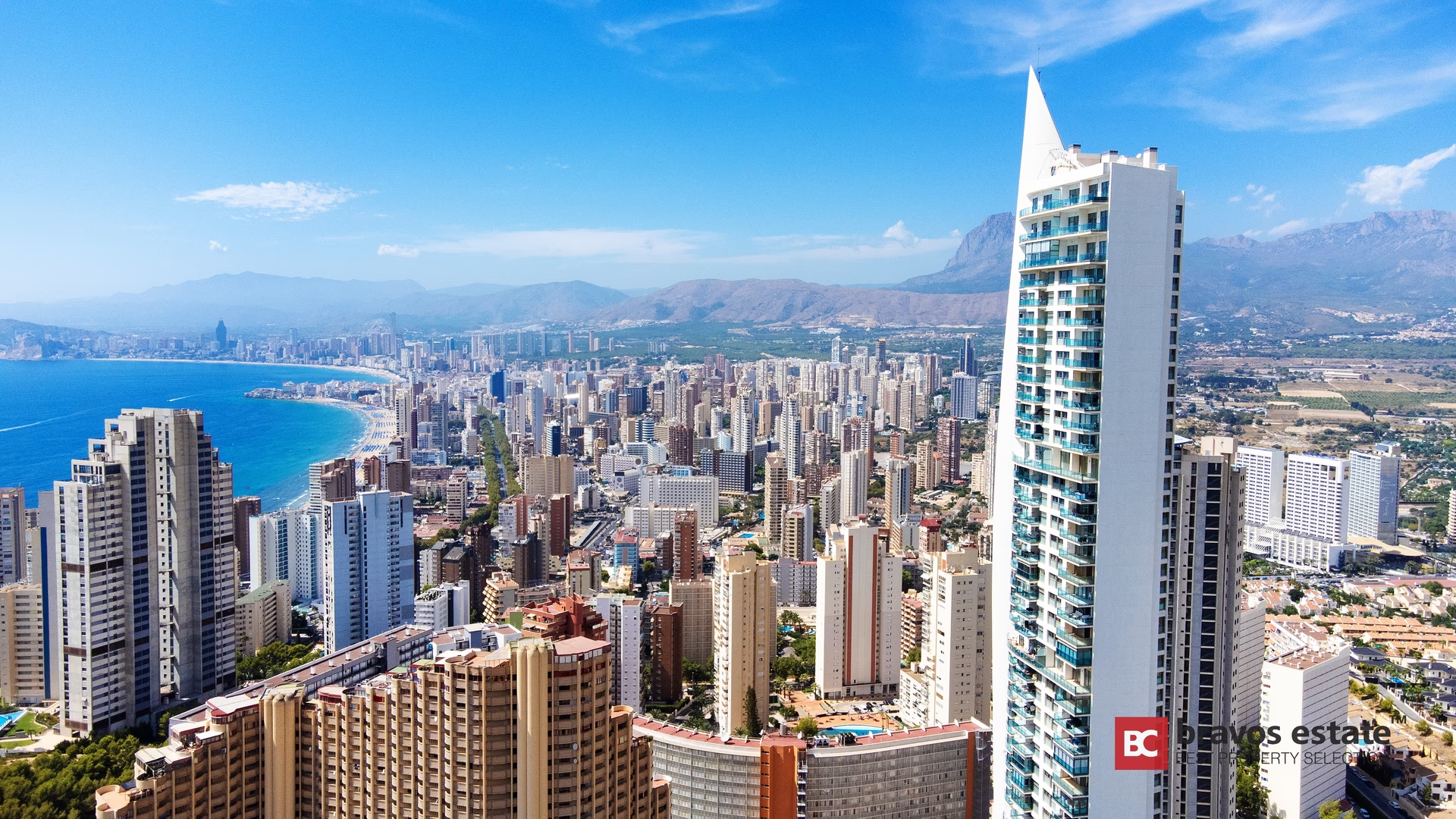
Spanish apartments (apartamentos or pisos) range from compact studio units to spacious four-bedroom family homes, typically located within multi-unit buildings or complexes. These properties can be found in high-rise towers, low-rise blocks, or sprawling resort-style developments, each offering different advantages and lifestyle experiences.
Most apartment complexes in Spain's coastal areas are built around the concept of an urbanización – a self-contained community with shared facilities and common areas. These urbanizaciones typically feature community swimming pools, landscaped gardens, and often additional amenities like tennis courts, gymnasiums, or children's play areas. Some larger developments include on-site bars, restaurants, or small supermarkets.
Apartment sizes vary dramatically, from 40-square-meter studios perfect for holiday use to 150-square-meter four-bedroom units suitable for permanent residence. Most apartments include terraces or balconies, which are highly valued features in the Spanish climate. Ground-floor apartments often feature small private gardens or patios, while upper-floor units typically offer better views and more privacy.
Community fees (gastos de comunidad) are an essential consideration for apartment buyers. These monthly charges cover maintenance of common areas, pool cleaning, gardening, insurance, and sometimes utilities for shared spaces. Fees typically range from €50 to €200 monthly, depending on the complex's size and amenities. While these fees add to ownership costs, they ensure professional maintenance of shared facilities.
Penthouses represent a premium apartment subcategory, typically located on the top floors of buildings with expansive terraces or roof solariums. These properties often feature panoramic views and significantly more outdoor space than standard apartments, commanding price premiums of 20-30% over comparable lower-floor units.
Apartment prices on Spain's coasts start around €195,000 for smaller units and can exceed €1 million in premium beachfront developments. On the Costa Blanca, most apartments fall within the €250,000 to €500,000 range. Prospective buyers can view apartments for sale to explore current options.
Apartments suit buyers who prefer low-maintenance ownership, enjoy community amenities, and want the security that comes with living in managed complexes. They're particularly popular with holiday home buyers and retirees who want to lock up and leave without worrying about property maintenance.
Important: Before buying an apartment, request the community's financial records (actas de la comunidad). Check for outstanding debts, planned special assessments (derramas), and any legal disputes. Under Spanish law, unpaid community fees transfer to the new owner.
Bungalows (Townhouses)
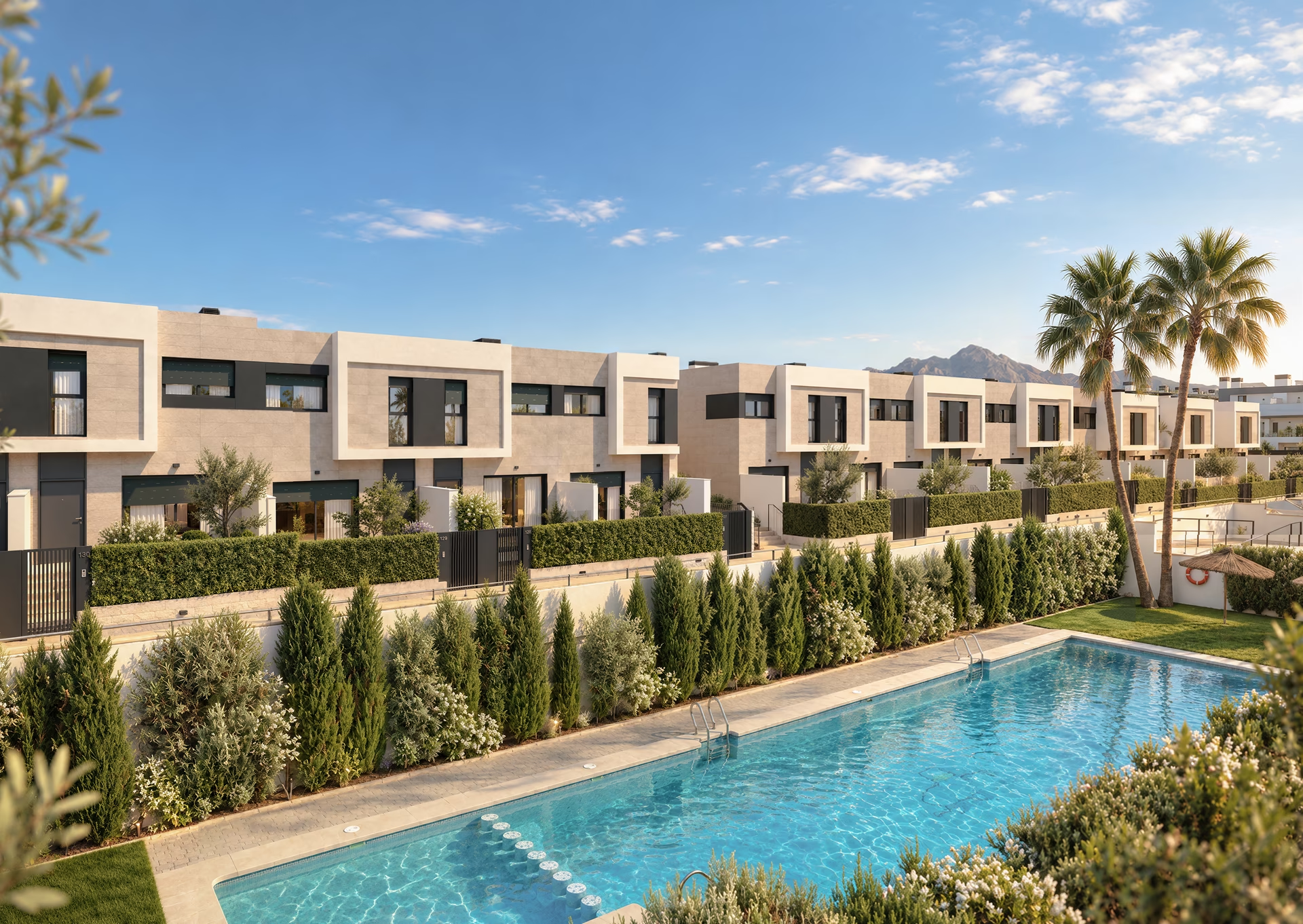
The term bungalow in Spanish real estate differs significantly from its English meaning. Rather than single-story holiday chalets, Spanish bungalows are essentially townhouses – multi-level properties that share one or more walls with neighboring units. These properties offer a middle ground between villa privacy and apartment convenience.
Spanish bungalows come in several configurations. Adosados are terraced houses that share side walls with neighbors, similar to UK townhouses. Pareados are semi-detached properties sharing just one wall with a neighbor. Both types typically feature two levels, though single-story versions exist, particularly in resort-style developments.
Most bungalows include small private gardens or courtyards, usually ranging from 20 to 100 square meters. While modest compared to villa plots, these spaces provide enough room for outdoor dining, sunbathing, or even small private pools. Many bungalow complexes also feature community pools and gardens, combining private outdoor space with shared amenities.
Interior space in bungalows typically ranges from 80 to 150 square meters, with two to four bedrooms across multiple levels. Common layouts include living areas and kitchens on the ground floor, with bedrooms and bathrooms upstairs. Many feature roof terraces or solariums that provide additional outdoor space and often spectacular views.
Bungalows are usually part of urbanizaciones with community fees, though these are typically lower than apartment complex fees since there are fewer shared facilities to maintain. Monthly community costs usually range from €30 to €100, covering basic maintenance of common areas and any shared amenities.
These properties offer more space and privacy than apartments while requiring less maintenance than villas. They're popular with families who want garden space without villa-level responsibility, and with buyers who appreciate having neighbors nearby but still desire some independence.
Price-wise, bungalows typically fall between apartments and villas. On the Costa Blanca, prices start around €200,000, with most quality bungalows priced between €300,000 and €750,000 depending on location, size, and condition. Interested buyers can explore bungalow options available in our current inventory.
Penthouses and Duplexes
Penthouses and duplexes represent premium apartment categories that offer enhanced space, privacy, and outdoor areas compared to standard apartments. Understanding these property types is crucial for buyers seeking apartment convenience with additional luxury features.
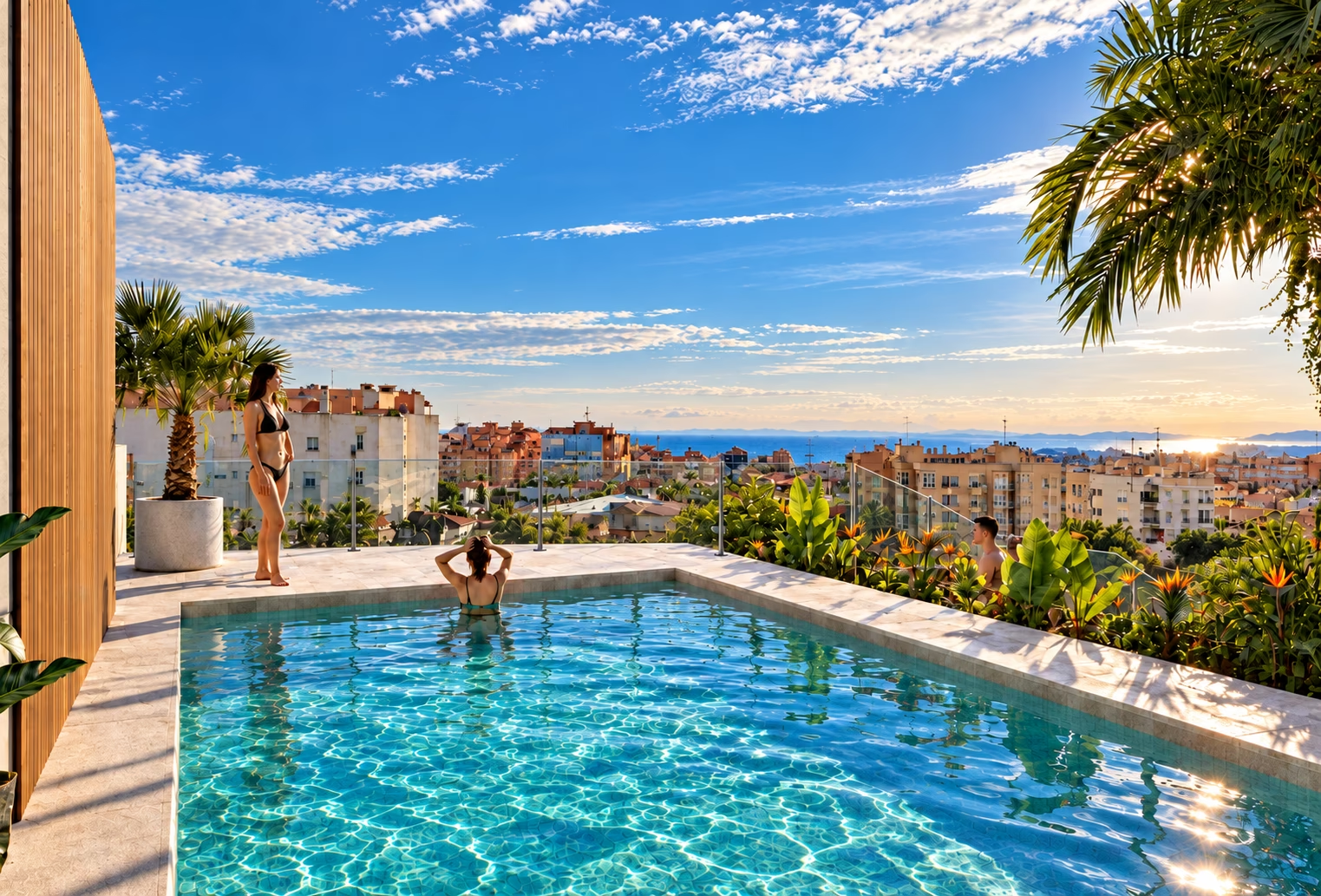
Penthouses are typically located on the top floors of apartment buildings or complexes, featuring significantly larger terraces or roof solariums than standard units. These outdoor spaces often equal or exceed the interior living space, providing extensive areas for entertaining, sunbathing, or outdoor dining. Many penthouses include outdoor kitchens, pergolas, and sometimes private pools on their terraces.
The elevated position of penthouses usually guarantees superior views, whether of the Mediterranean Sea, surrounding mountains, or cityscape. This positioning also provides enhanced privacy, as there are no upstairs neighbors and often greater distance from adjacent properties. Many penthouses feature unique architectural elements like vaulted ceilings, skylights, or exclusive access via private elevators.
Duplexes refer to two-level apartments within larger buildings, offering the spacious feel of a house while maintaining apartment-style community living. These properties typically feature living areas on one level and bedrooms on another, providing natural separation between public and private spaces. Some duplexes are configured as maisonettes with private entrances, while others are accessed through building common areas.
The two-level design of duplexes allows for more creative interior layouts and often results in higher ceilings and more natural light than single-level apartments. Many feature terraces on multiple levels, and top-floor duplexes often include roof terraces similar to penthouses.
Both property types command significant price premiums over standard apartments – typically 20-30% more than comparable single-level units in the same complex. This premium reflects the additional space, enhanced privacy, superior views, and prestige associated with these properties.
Penthouses and duplexes are subject to the same community fees as other apartments in their complexes, though some developments charge higher fees for these premium units to account for exclusive amenities or services. Maintenance of private terraces and any penthouse-specific features remains the owner's responsibility.
These properties appeal to buyers who want apartment convenience and security but desire more space, privacy, and outdoor areas. They're particularly popular with buyers who entertain frequently or spend extended periods at their Spanish properties.
New Build vs Resale
The Spanish property market offers two main categories: new build (obra nueva) and resale (segunda mano) properties. Each category has distinct advantages, costs, and processes that significantly impact the buying experience and long-term ownership.
New build properties are either under construction or recently completed (typically within 2-3 years). Many are sold off-plan, meaning buyers purchase before construction completion. This approach often allows buyers to secure lower prices and sometimes customize finishes, fixtures, and layouts. Developers typically require payment in stages throughout construction, spreading the financial commitment over 12-24 months.
New builds come with mandatory builder warranties under Spanish law (Ley de Ordenación de la Edificación): 10 years for structural defects (foundations, load-bearing walls, pillars) and up to 3 years for habitability issues (plumbing, electrical, waterproofing, insulation). These warranties are backed by a seguro decenal — a compulsory 10-year insurance policy. Properties feature modern construction standards, contemporary designs, and current building codes including enhanced insulation and energy efficiency. Many new developments also incorporate modern amenities like underground parking, elevators, and smart home technology.
However, new builds carry risks including construction delays, developer financial problems, or final properties not matching marketing materials. Off-plan purchases require careful due diligence on developer credibility and financial stability. Our step-by-step buying guide provides detailed advice on evaluating new build opportunities.
Important: When buying off-plan, all stage payments must go into a special bank guarantee account (cuenta especial). By law, the developer must provide a bank guarantee or insurance for every payment — if they fail to deliver, you get your money back. Never pay directly to the developer's regular account.
Resale properties offer immediate availability and established communities. Buyers can inspect the actual property, understand the neighborhood character, and often negotiate prices. Many resale properties feature mature gardens, established communities, and proven rental histories for investors.
Resale properties may require updates or renovations, and buyers should budget for potential maintenance issues. However, they often offer unique architectural features, larger plot sizes, or prime locations no longer available in new developments.
The tax implications differ significantly between categories — and vary by region:
| Region | Resale — ITP (Transfer Tax) | New Build — IVA (VAT) + AJD (Stamp Duty) |
|---|---|---|
| Comunidad Valenciana (Costa Blanca) | 10% | 10% + 1.5% |
| Andalucía (Costa del Sol) | 7% | 10% + 1.2% |
| Región de Murcia (Costa Cálida) | 8% | 10% + 1.5% |
Notary fees, registry fees, and legal costs apply in all cases. To estimate total buying costs for a specific property price, use our buying costs calculator or consult our detailed costs breakdown.
Legal processes also vary. New builds require additional documentation including building licenses, completion certificates, and first occupation licenses. Resale properties need different legal checks including community fee status, urban planning compliance, and existing debt verification.
The choice between new build and resale depends on individual priorities: budget flexibility, desired move-in timeline, preference for modern versus established properties, and risk tolerance. Both categories offer valid paths to Spanish property ownership when approached with proper planning and professional guidance.
Which Type is Right for You?
Choosing the right property type depends on your specific circumstances, preferences, and intended use of the Spanish property. Different buyer profiles have distinct needs that align better with certain property types.
Investors seeking rental income should consider properties with strong rental demand. Villas typically generate higher rental rates but require more management and maintenance. Apartments in well-located complexes with good amenities often provide steady rental income with lower management overhead. Penthouses can command premium rates but may have smaller target markets. Research local rental markets and consider hiring property management companies to handle day-to-day operations.
Retirees planning permanent or semi-permanent residence often prioritize low maintenance and community amenities. Apartments in well-managed complexes provide security, social opportunities, and professional maintenance services. Ground-floor apartments or bungalows eliminate stair concerns, while penthouses might offer impressive entertaining spaces. Consider proximity to healthcare facilities, public transport, and expatriate communities.
Families with children typically need more space and outdoor areas. Villas provide maximum privacy and garden space but require significant maintenance commitment. Bungalows offer a compromise with modest gardens and community amenities. Family-friendly apartment complexes with pools and play areas can work well for holiday homes, especially when combined with larger terraces or ground-floor gardens.
Holiday home buyers should consider how often they'll visit and whether they want rental income during unused periods. Apartments offer security and low maintenance for occasional visits, while villas provide space for hosting friends and family. Location becomes crucial – proximity to beaches, airports, and tourist amenities affects both personal enjoyment and rental potential.
Digital nomads and remote workers need reliable internet, comfortable workspaces, and flexibility. Modern apartments or new build properties typically offer better connectivity. Consider noise levels, especially in apartment complexes, and availability of dedicated workspace areas. Proximity to airports for regular travel might outweigh other location factors.
Budget-conscious buyers should remember that purchase price represents just one cost element. Factor in community fees, maintenance costs, insurance, and local taxes when comparing options. Sometimes a higher purchase price with lower ongoing costs provides better long-term value. Our buying costs calculator can help estimate the full picture.
Consider also your comfort level with Spanish bureaucracy and property management. Apartment living involves community meetings and shared decision-making, while villa ownership provides independence but requires dealing with all maintenance issues personally.
| Villa | Apartment | Bungalow / townhouse | |
|---|---|---|---|
| Starting price (coasts) | from ~€200,000 | from ~€195,000 | from ~€200,000 |
| Typical Costa Blanca band | wide — well into the millions in prime spots | €250,000-500,000 | €300,000-750,000 |
| Community fees | usually none; pool upkeep €1,500-3,000/year | €50-200 per month | €30-100 per month |
| Privacy and space | Highest — own plot and pool | Lowest — shared building | In between — small garden or terrace |
| Upkeep effort | Highest (pool, garden) | Lowest — lock-up-and-leave | Moderate |
| Fits best | Families and privacy seekers; top rental rates | Holiday use and steady rental | Space-for-value buyers, winter stays |