Spain's developed coastlines are never short of new-build homes. But narrow the search to a place that genuinely works as a home — a town with real infrastructure, shops, schools, a promenade, life all year round — then ask for something on the seafront itself, and the list collapses to almost nothing. The paradox is built in: the very things that make a stretch of coast worth living on are what leave no room for new frontline.
"Frontline" — and what it usually isn't
The word gets used loosely. Many homes marketed as "frontline" or "sea view" actually sit a road, a promenade or a block back from the water. There is nothing wrong with them — but they are not the same product as a home that looks straight out over the shore, and the price gap between the two reflects exactly that. True first line — what the Spanish call primera línea — is a category of its own, and a small one.
Why developed coasts run out of frontline
Two forces work together. The first is law. Spain's Ley de Costas (Law 22/1988, reformed by Law 2/2013) defines the beach and shoreline as dominio público marítimo-terrestre — public maritime-terrestrial domain that cannot be privately owned or built on — and adds a servidumbre de protección, a protection easement of up to 100 metres (20 on already-urban land) where new residential construction is heavily restricted or prohibited. You simply cannot create new beachfront.
The second is time. The coastal areas with the best infrastructure are precisely the ones that were developed first, and their seafronts were built out decades ago — long before today's buyers arrived. So in exactly the places people most want to live, the front row is already taken, and the law guarantees that no more can be added. What a genuine first line offers instead is the row immediately behind the protected strip: open sea frontage that, because it is public domain, can never be built on. That permanence is the point.
What scarcity does to price
Fixed supply against steady demand has a predictable result. First-line homes command a premium, hold it through softer markets, and tend to be the last to fall and the first to recover. They also rent more easily and for more, and resell faster — buyers who want the front row rarely settle for the second.
| First line | Second / third line | |
|---|---|---|
| Supply | Effectively fixed by law | Continually added |
| View | Open sea, nothing can be built in front | Partial, can be lost to new building |
| Price premium | Highest, most resilient | Lower, more cyclical |
| Rental demand | Strong, year-round | Good but more seasonal |
| Resale | Faster, deeper buyer pool | Competes with new supply |
Where it still comes up
The exceptions are the rare pockets that an otherwise built-up area never developed. A town can be fully established — marina, beaches, promenade, services — and still keep one stretch of coast that history or terrain left alone. That is where a new frontline project can appear.
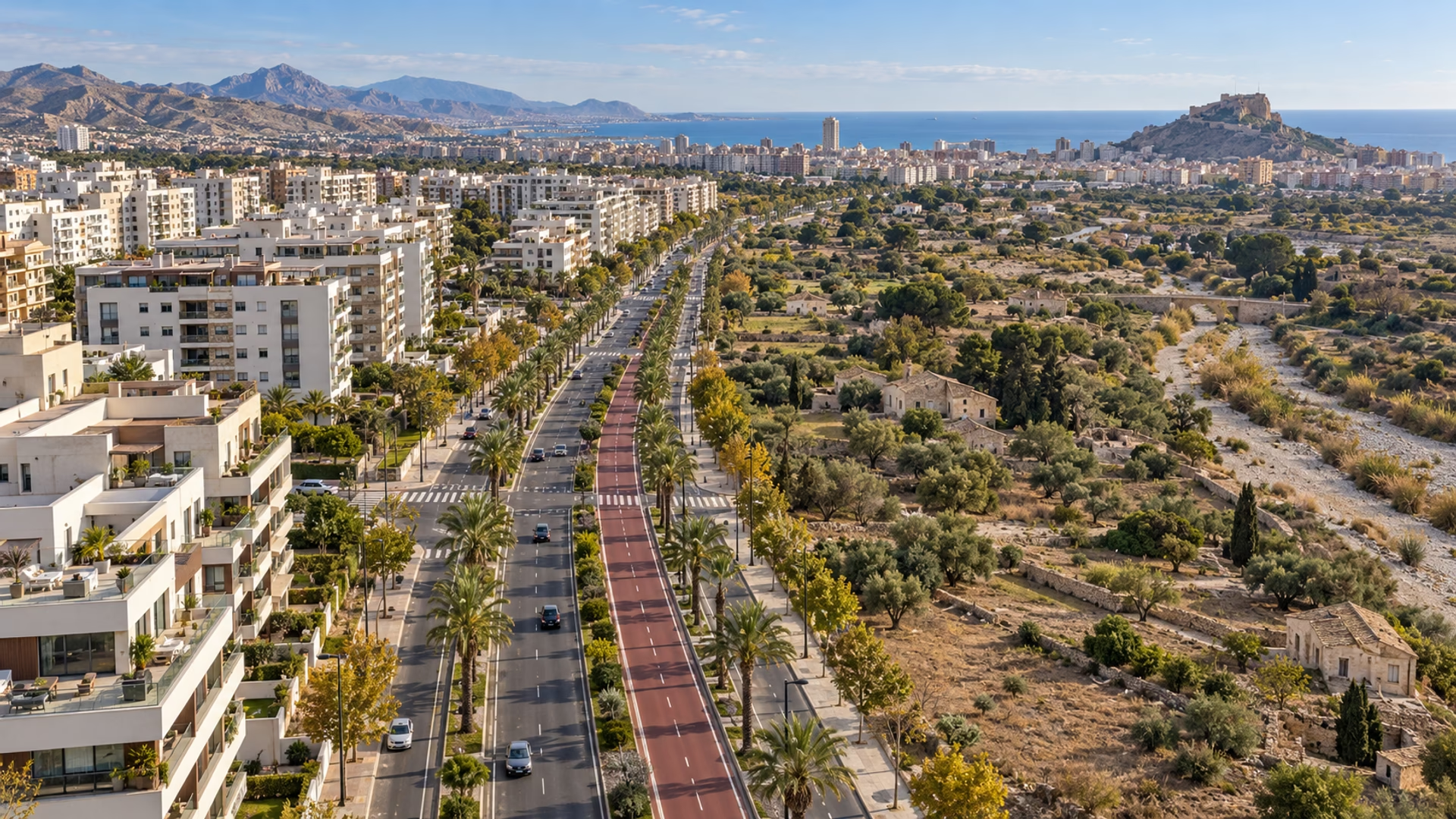
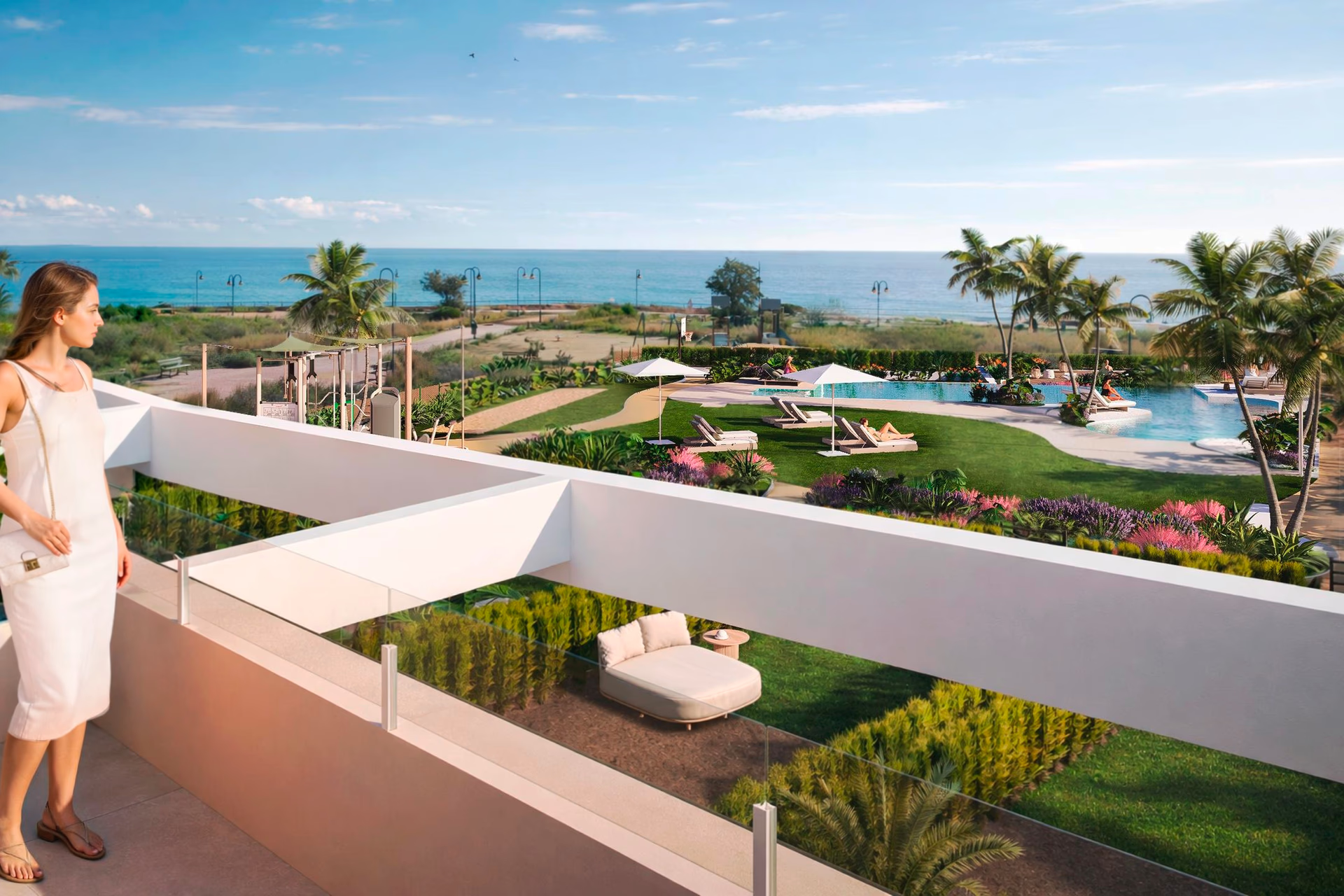
El Campello, just north of Alicante on the Costa Blanca, is a clear example: a working seaside town whose seafront runs almost unbroken from the centre to the marina, yet with the Amerador cove at its northern edge among the last stretches still undeveloped. That is where NJOY SHORE sits — a small enclave of villas on the first line above Playa del Amerador, with the protected shore in front, and one of the very few frontline new-builds on the market on this coast. For the wider area, see our El Campello guide.
"Frontline today is always a one-off. In El Campello especially — the coast here was built up decades ago, and a genuinely new first-line project is a real rarity. NJOY SHORE is exactly that."
— Arseny Berzins, Co-Founder & CMO, Bravos Estate
Three reasons the front row keeps its premium
- Supply cannot grow. The law that protects the shore also freezes how much frontline a given town will ever have.
- The view is permanent. Nothing can be built between a first-line home and the sea, so the outlook cannot be taken away.
- Demand is broad. Holiday buyers, relocators and renters chase the same short list — and that competition underpins both price and resale.
In any established coastal area, frontline is no longer something you stumble onto — it is a deliberate, scarce choice. The rules will not loosen and the coast will not grow, so the few genuine first-line projects available today are likely to stay the reference point for years.