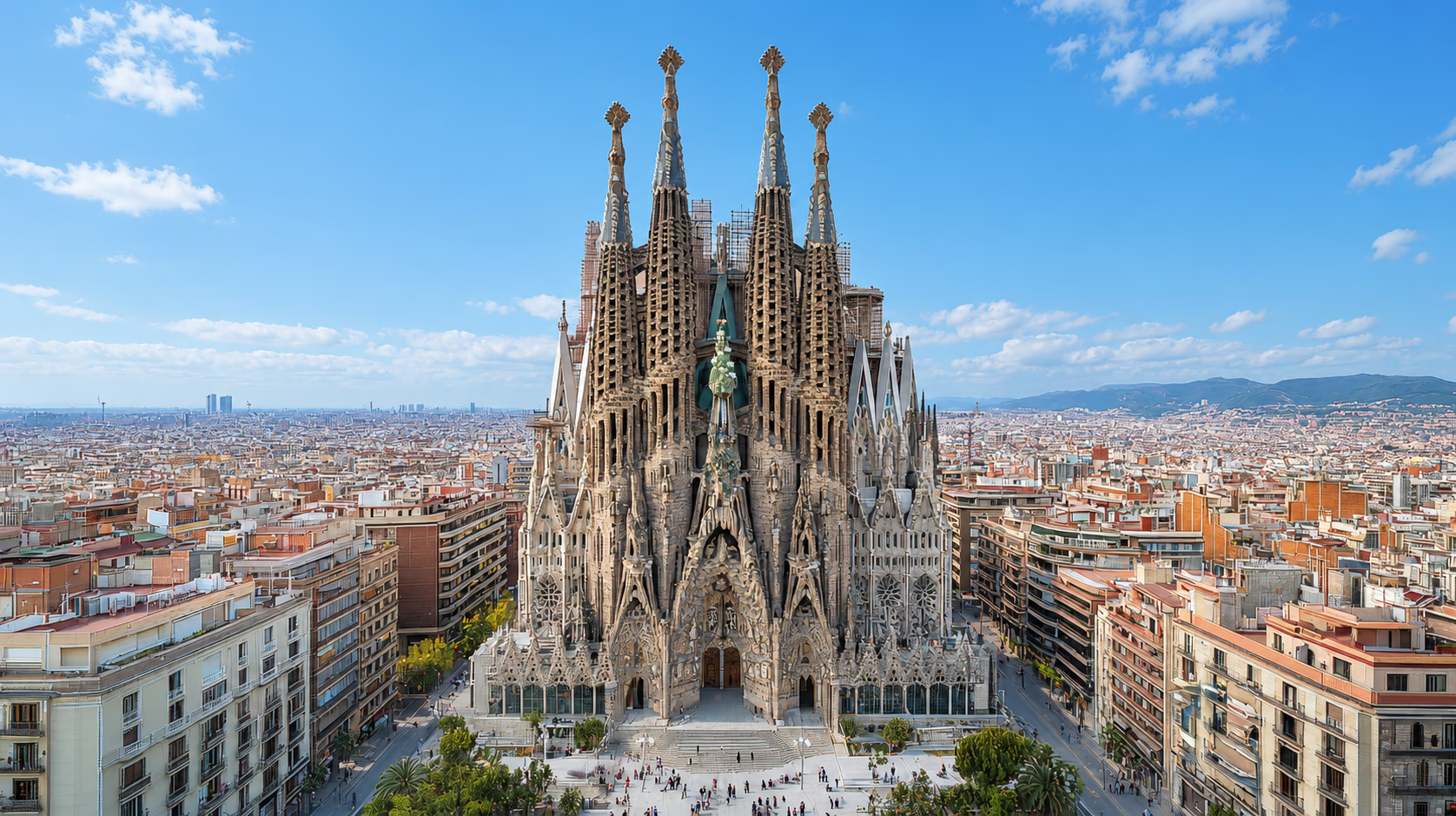
For the first time in 144 years, Barcelona's most ambitious building is whole. On 10 June 2026 — the centennial of Antoni Gaudí's death — Pope Leo XIV celebrated mass at the Sagrada Família and blessed the final spire, the Tower of Jesus Christ. The 172.5-metre central spire, structurally completed back in February, now stands at the heart of the basilica, surrounded by all 17 other towers that mark its silhouette against the Catalan sky.
The day also makes the Sagrada Família the world's tallest church building, surpassing Ulm Minster in Germany by about 11 metres. For a project started by Francisco de Paula del Villar in 1882 and reimagined by Gaudí from 1883 — and continued through civil-war setbacks, four generations of architects, and the deaths of nearly everyone who originally planned it — the silhouette is, at last, complete.
The interior, however, is another matter. The Glory Façade on the southern side will continue construction until around 2034. Decorative sculptural work extends further still. What was inaugurated today is the visual completion of Spain's longest-running construction project, not the absolute end of the chisel.
Sagrada Família in numbers: 18 towers (12 Apostles + 4 Evangelists + Virgin Mary + Jesus Christ); central height 172.5 m (now the world's tallest church); 144 years of construction (1882–2026); 6 generations of stonemasons; Gaudí dedicated 43 of his 73 years to the project before being struck by a tram in 1926.
Today's ceremony
Pope Leo XIV presided over a mass at the basilica attended by Spanish Prime Minister Pedro Sánchez and Catalan civic and religious leaders. The blessing of the Tower of Jesus Christ — structurally completed on 20 February 2026 with the installation of its golden cross — was the symbolic centrepiece. The ceremony was scheduled deliberately for 10 June, the exact anniversary of Gaudí's burial in the basilica's crypt one century ago.
The choice of timing matters. Gaudí himself never expected to see the building finished — when asked about progress, he reportedly said: "My client is in no hurry." That his vision reached its full architectural silhouette on the centennial of his death, neither a year sooner nor later, was the kind of coincidence the basilica's leadership had been working toward for nearly two decades.
144 years in milestones
| Year | Milestone |
|---|---|
| 1882 | Construction begins under Francisco de Paula del Villar |
| 1883 | Gaudí takes over and redesigns the entire project |
| 1926 | Gaudí dies; only ~25% of the structure is built |
| 1936–39 | Spanish Civil War: original plans burned, work halted |
| 2010 | Pope Benedict XVI consecrates the basilica as a place of worship |
| 2021 | Tower of the Virgin Mary completed (138 m) |
| 2023 | Four Evangelist towers completed (135 m each) |
| Feb 2026 | Central Tower of Jesus Christ structurally completed (172.5 m) |
| Jun 2026 | Pope Leo XIV blesses the final spire on Gaudí's centennial |
What's finished — and what isn't
Finished: All 18 towers stand. The Nativity Façade (east) was completed during Gaudí's lifetime; the Passion Façade (west) was completed in the late 20th century. The main nave, the apse, the crypt, and now the central spire are architecturally whole. The silhouette every Barcelona postcard has shown for half a century is finally real, not aspirational.
Still to come: The Glory Façade on the southern side, intended as the principal entrance, is the largest unfinished section — scheduled for completion around 2034, about eight more years. Decorative sculptural elements across the building, including angel figures and bronze doors, extend the timeline further. Interior chapel finishes will likely run into the late 2030s.
Key fact: With its central tower reaching 172.5 metres, the Sagrada Família is now the world's tallest church building, surpassing Germany's Ulm Minster (161.5 m), which had held the record since 1890.
A working basilica, not a finished museum
One nuance often missed in international coverage: the Sagrada Família has been a fully functioning Catholic basilica since Pope Benedict XVI consecrated it in November 2010. Mass is celebrated every Sunday at 9:00, with an international evening mass on Saturdays at 20:00. The crypt holds masses daily — multiple services on Sundays and feast days. In 2024 alone, 52 weddings were celebrated in the basilica.
Today's blessing does not "open" the building for worship — it has been a place of worship for sixteen years. What changes is that the basilica is, for the first time, architecturally whole. The 172.5-metre central spire, topped with its luminous cross, now reigns over Barcelona's skyline. Pilgrims and tourists alike can finally see the silhouette Gaudí drew in 1883 — over 140 years after the first stone was set.
Why this matters beyond Barcelona
For Spain, the symbolic completion is more than an architectural milestone. The Sagrada Família is the country's most-visited paid attraction, drawing close to five million visitors annually. Its symbolic completion on Gaudí's centennial reinforces Spain's position as Europe's leading cultural and tourism destination — a soft-power signal that runs in parallel with the country's recent real-estate momentum, where institutional capital has poured a record €10 billion into Spanish property in the first half of 2026.
Heritage builds confidence. A country that finishes a 144-year cathedral on the symbolic anniversary of its architect's death sends a quiet message about patience, conviction, and follow-through. For the foreign visitor or buyer considering Spain — whether for tourism, lifestyle relocation, or as part of the broader Spanish property market — the country's most ambitious building has just become its most complete.
The chisels are still going. Behind the Glory Façade scaffolding, sculptors are carving figures that won't be in place for another decade. But the silhouette — the postcard, the skyline, the impossible spire — is, at last, finished. Gaudí would have been 174 today. The basilica he handed over to "patience" finally caught up.