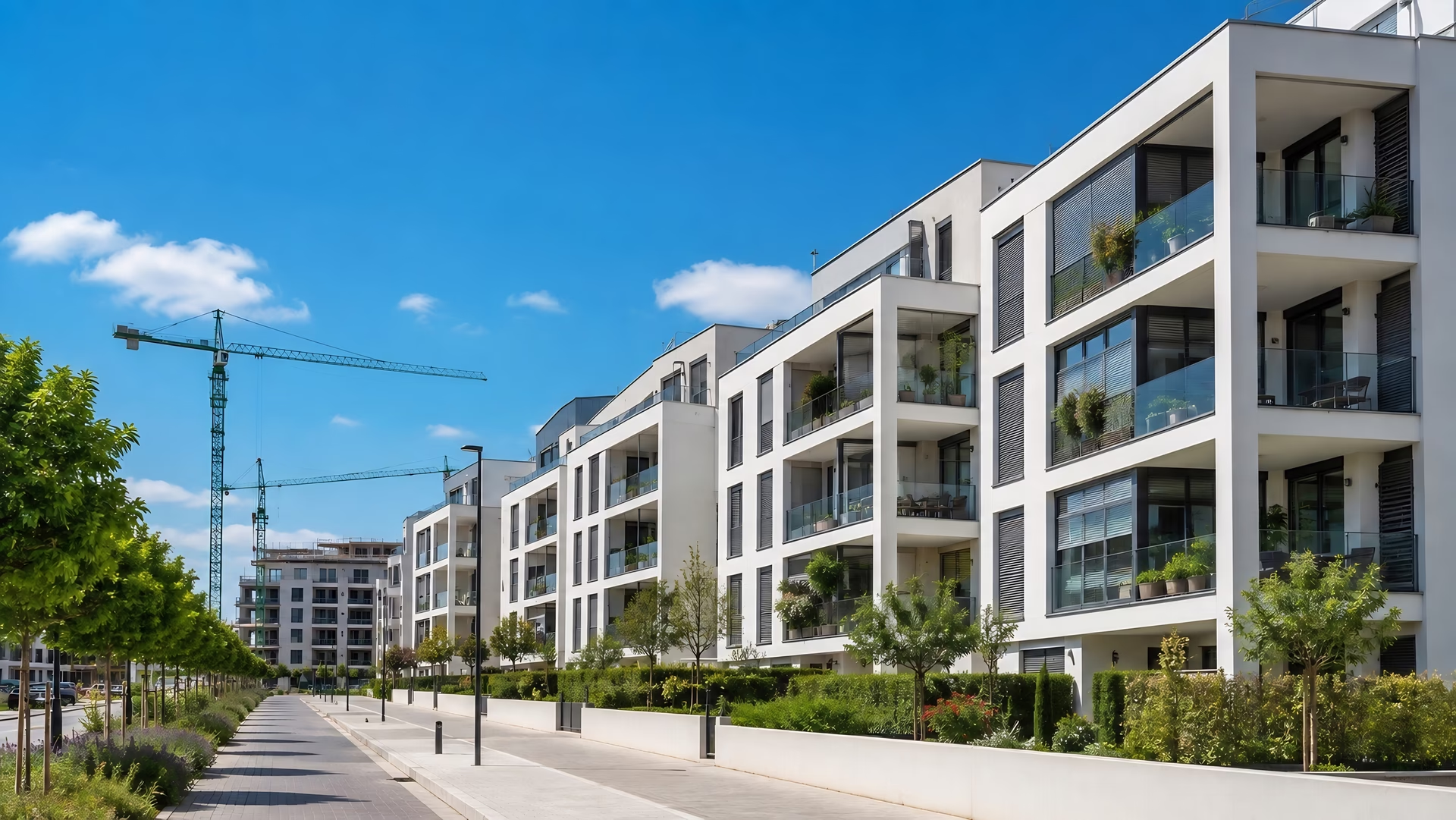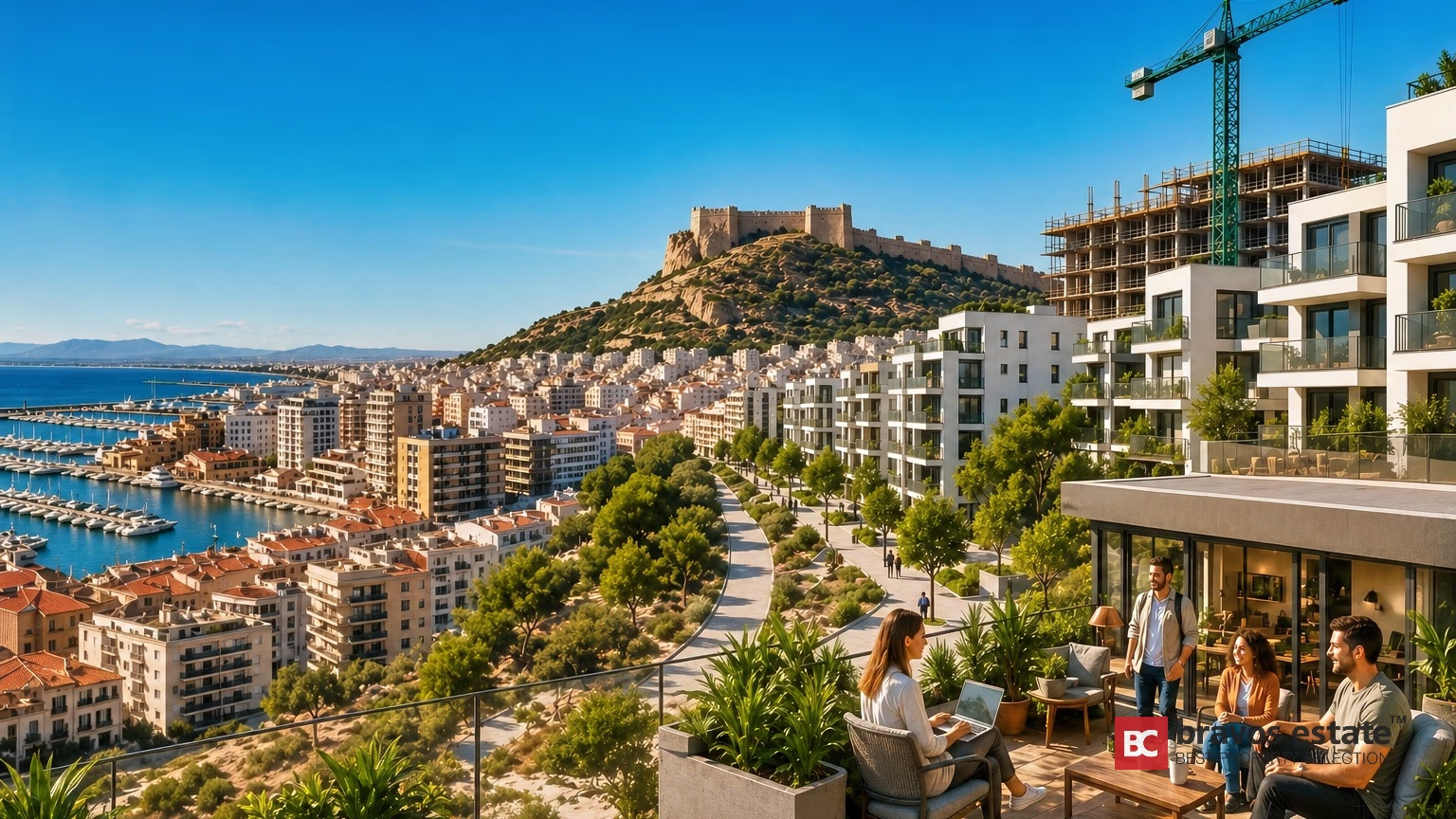
On 22 April 2026, Alicante City Council presented the housing pillar of its draft Plan General Estructural (PGE) — the city's first major urban planning document in 39 years. Headline numbers: more than 40,000 new homes over 25 years, 40% of them protected; a city growing from roughly 366,000 residents today to nearly 466,000 by 2050; and the first city-level regulatory framework in Spain for coliving and flexliving residential models. For buyers and investors active on the Costa Blanca, this is the most consequential piece of municipal news of the year.
This article walks through the actual numbers (the breakdown circulating in international press is slightly off), what is genuinely new in the plan, and — most importantly — what it does and does not mean for someone buying property in Alicante or its coastal neighbourhoods over the next 18-36 months.
The Plan: 40,000+ Homes, Four Sources
The draft PGE breaks total housing supply into four distinct categories. This breakdown matters — most international coverage is missing the fourth line and slightly mischaracterises the third:
| Source | Homes | What it actually is |
|---|---|---|
| New residential neighbourhoods | 22,300 | Greenfield development zones identified and reserved by the city |
| Urban regeneration / industrial-to-residential | 14,300 | Conversion of obsolescent industrial zones to mixed residential use |
| Vacant lots inside consolidated city | 5,000 | Note: these are vacant plots within already-built areas — not vacant homes, as some early reports suggested |
| Dotational social rental homes | 1,300 | Nine parcels of public land reserved specifically for affordable rental housing |
| Total | ~42,900 | Approximately 40% will be vivienda protegida (officially-protected housing) |
That 40% protected share puts Alicante materially above the typical figure for major Spanish cities, where protected housing tends to sit around 20–30% of new development.
The Demographic Pressure Driving It
The justification is straightforward arithmetic. According to the population study underpinning the PGE, Alicante is projected to grow:
- From approximately 366,000 residents today (currently Spain's 10th-largest city)
- To roughly 440,000 by 2045
- To around 466,000 by 2050
That's about 100,000 new residents in 25 years — a 27% increase. Without a meaningful new supply pipeline, that demographic load lands directly on the existing housing stock. Idealista's most recent data already shows the price of housing in Alicante reaching €2,515 per square metre in March 2026, a historic high — up 8.3% year-on-year and 0.6% month-on-month. That is still below the Spanish national average of €2,709/m², but the national average grew faster (+17.2% YoY), suggesting Alicante has structural room to converge upward.
Add to this that Alicante is now the third-most dynamic luxury property market in Spain (April 2026 Idealista report), and the case for a serious supply response becomes obvious.
The Spatial Model: Compact Arc, Not Sprawl
Rather than dispersed peripheral development, the PGE proposes growth in an arc around the consolidated urban core, with two clear principles:
- Medium-to-high density — 50 to 60 homes per hectare, achieved through vertical construction. The criterion is to optimise land use and free more space for green areas, public realm, and services.
- Mixed-use neighbourhoods — residential is combined with economic activity, services and public facilities. The plan explicitly avoids monofunctional "dormitory district" zones in favour of complete, walkable neighbourhoods.
This aligns with the broader European urban planning trend toward proximity and the so-called 15-minute city model. It also affects pricing: existing well-connected, established zones benefit from this kind of plan because new supply is concentrated outside their boundaries.
The Headline Innovation: A Coliving and Flexliving Framework
Beyond the volume numbers, the genuinely novel element of the PGE is regulatory. Alicante is set to become one of the first Spanish cities to give coliving and flexliving formal city-level rules — until now, both have operated in a legal grey area in Spain.
Coliving — a typology based on living in reduced private spaces complemented by extensive shared common areas (kitchens, workspaces, leisure, services). Targeted at younger residents, students, and those in residential transition.
Flexliving — oriented toward medium-term or temporary stays. Profiles include displaced workers, mobile professionals, and people with changing residential needs. Characterised by flexible occupancy periods, shared services, and unified building management.
The PGE will define the rules in the areas that have, so far, made institutional investors hesitant to commit capital in Spain:
- Habitability and design standards
- Maximum density per development
- Required common-space allocation (coworking, laundry, social areas)
- Compatibility with other urban uses
The framework will also cover related typologies: dotational housing for vulnerable groups, work-related temporary residences, and adaptive conventional housing. The city has signalled it may begin implementing parts of this through targeted modifications even before the full PGE is approved.
For institutional investors, family offices, and operators who have been watching Spain's coliving / flexliving sector but waiting for legal clarity, Alicante is now the city to watch.
What This Means for Buyers — Three Scenarios
1. If you already own (or are about to buy) in established Alicante zones
The supply response from this PGE is, by design, slow. Initial approval was planned for summer 2025, a second participatory process ran into early 2026, and the actual building of 40,000 homes will roll out over 25 years. Most of the new supply will not affect the market in 5+ year horizons.
For owners and prospective buyers in Playa de San Juan, the city centre, or zones like Albufereta and Cabo de la Huerta — areas with established connectivity and amenity — the practical implication is that the existing stock remains structurally undersupplied for the foreseeable future. Prices in those zones are unlikely to soften because of the PGE; they're more likely to continue tracking the city-wide upward trend.
2. If you are considering new-build or off-plan
The 22,300 homes in new neighbourhood developments are where most institutional and individual investor opportunity will appear over the next 5–10 years. These developments will combine residential with commercial uses (per the plan's mixed-use principle), which historically produces stronger long-term value than purely residential blocks.
If you are looking at new-build property in Spain, watch for developer announcements tied to the PGE's identified zones once the document is formally approved. Early-stage developments typically come at a discount to comparable later-stage stock.
3. If you are an investor in alternative residential formats
This is the segment for which the PGE is most consequential. With formal coliving and flexliving rules in place, Alicante becomes a credible market for:
- Operators expanding from Madrid and Barcelona who have been blocked by regulatory uncertainty in secondary markets
- Family offices and private investors looking for residential yield without the operational overhead of holiday rentals (which face their own tightening regulation)
- Build-to-rent funds entering Spain for the first time
This is also one of the few asset classes where non-EU investors face no specific Spanish regulatory disadvantage — relevant in light of the stalled 100% non-EU buyer tax, since most coliving and flexliving units are typically held in corporate structures rather than as individual second homes.
What This Plan Will Not Do
To set expectations honestly: the PGE will not bring price relief to Alicante in the short term. Three reasons:
- Timeline — even with summer 2025 initial approval, the first new-neighbourhood homes built under the new plan will likely not reach completion before 2028–2029. The 40,000 figure is a 25-year cumulative target.
- Demographic load — adding ~100,000 residents over the same period absorbs much of the new supply. Net price impact depends on the rate of supply versus demand growth.
- Market segments — the 40% vivienda protegida share serves a domestic Spanish income bracket. International buyer demand competes for the remaining 60%, which is a smaller pool than headline numbers suggest.
For a fuller view of where the Spanish market is heading, see our Spain property market forecast 2026 and our most recent Costa Blanca prices Q1 2026 update.
What We Are Seeing at Bravos Estate
From our Alicante and broader Costa Blanca pipeline over the past quarter, the picture is consistent with the PGE's own demographic assumptions:
Alicante city demand has hardened. Inquiries for properties in Playa de San Juan and the city centre are up roughly 15–20% versus the same quarter last year. Buyer profiles are skewing toward longer-term residential commitment (DNV holders, returning Spaniards, EU professionals) rather than pure investment plays.
Coastal new-build demand is stable but more selective. Buyers are paying close attention to which new developments will benefit from PGE-aligned infrastructure — particularly transport connectivity to the city centre via tram lines L1, L3 and L4.
Coliving and flexliving inquiries are emerging. Until 2025 we received almost no inquiries about residential investment in shared-living formats. Q1 2026 saw the first dozen — primarily from Northern European family offices and a few US-based investors. The PGE announcement will accelerate this.
For our Dutch readers — already the fastest-growing foreign buyer group in Spain — the Alicante market remains structurally attractive: EU exemption from any future foreign-buyer tax, growing stock of new-build options, and a city government with a credible 25-year supply commitment.
What to Watch Next
- Formal PGE approval — expected in the next 12–18 months, after the second participatory process concludes
- First targeted modifications — the city has signalled it may implement coliving/flexliving rules through punctual modifications before full PGE approval. Watch for these in late 2026
- Identification of priority development zones — once specific parcels for the 22,300-home new-neighbourhood pipeline are publicly named, expect land-value movement around those zones
- Regional spillover — if Alicante's coliving/flexliving framework proves workable, expect Valencia and Málaga to follow within 12-24 months
Bottom Line
Alicante is not just adding more housing — it is redesigning its urban model and pioneering a regulatory category that the rest of Spain will likely copy. For buyers active on the Costa Blanca, the combined effect of strong demographic pressure, slow supply response, and a new institutional asset class makes the next 24–36 months one of the more strategically interesting windows in recent memory.
Whether you are looking at apartments in established Alicante zones, considering new-build property, or exploring how Spain's evolving regulatory landscape affects your specific situation, the underlying message of the PGE is the same: Alicante is treating itself as a city with a 25-year future, not a holiday rental. The market will increasingly reflect that.