
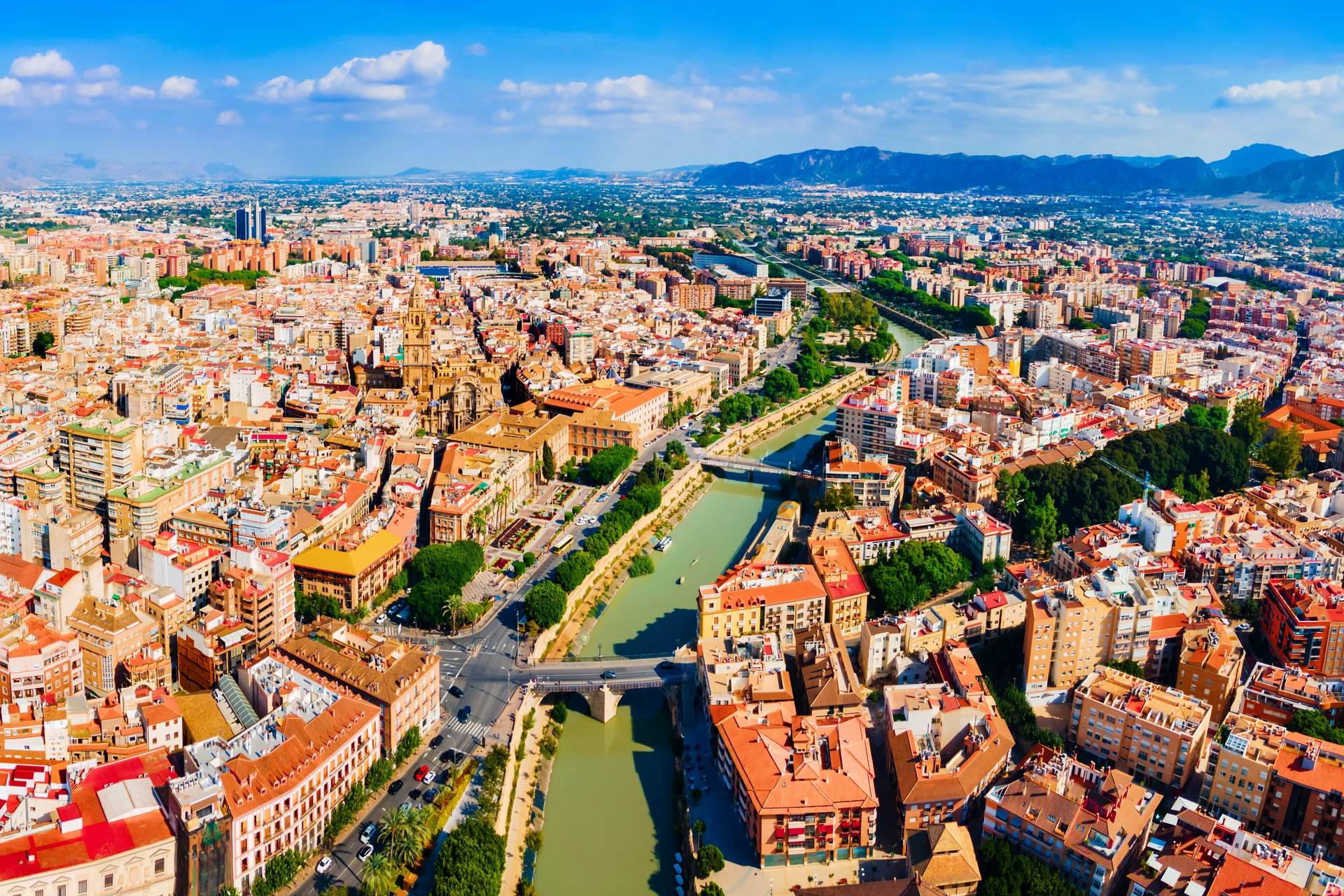
Murcia, Spain
Spain’s seventh city, 480,000 people around a baroque cathedral and the Río Segura — with a university, a high-speed line to Madrid and, twenty minutes south, golf villas at Altaona on the way to the Mar Menor.
About Murcia
Murcia property market 2026 — the regional capital is the one large inland city on our coasts: 480,000 people, a 1915 university and a high-speed line to Madrid, at prices well below the seaside. Asking prices across the municipality averaged €1,733 per square metre in September 2026, up 14.5% year on year (Fotocasa index), and the new-build villas foreign buyers come for stand on the golf courses of the Campo de Murcia, twenty minutes from both the airport and the Mar Menor.
Murcia Market — Prices, Yields, Buyer Profiles
The city districts range from around €1,580 per square metre in the south to €2,241 in the centre and €2,827 in the northern expansion around Nueva Condomina; the rural pedanías of the Huerta sit at €1,100–1,250. The Campo de Murcia — the golf resorts and villages south of the Sierra de Carrascoy — is the most expensive district at €3,027, because almost all of it is new detached housing.
Foreign buyers accounted for 21.4% of purchases across the Region of Murcia in 2025 (Registradores yearbook). In the capital itself they are a minority, and the market is driven by local families, university staff and Madrid buyers on the high-speed line; on the golf courses of the Campo de Murcia they are the majority, mostly British, Belgian, Dutch and Scandinavian.
New supply in the city is apartment blocks in the northern districts and Joven Futura; in the Campo de Murcia it is detached villas on 300–500 m² plots at Altaona Golf and in the villages of Sucina and Avileses, mostly €350,000–750,000 with private pools. Typical buyer profiles:
- Northern European golfers buying a three-bedroom villa with a pool at Altaona, twenty minutes from the airport
- Retirees who want a real city — hospitals, theatre, markets — at inland prices, with the beach as a day trip
- Remote workers and university staff choosing an apartment in the centre or the northern districts
- Madrid families buying a second home reachable in under three hours by train
Sub-Districts and Areas of Murcia
The municipality is one of the largest in Spain: the compact city on the Segura, a ring of huerta villages, and the Campo de Murcia beyond the Sierra de Carrascoy to the south. Each is a different market.
Centro — the old city between the cathedral, Santo Domingo and the Plaza de las Flores: restored 19th-century buildings, the Real Casino, the tapas streets. Almost entirely resale apartments, around €2,241 per square metre.
Norte — Juan Carlos I, Nueva Condomina, Joven Futura — the northern expansion of the last twenty years: new apartment blocks with pools and garages, the shopping centre, the stadium and the university campus at Espinardo on the tram line. Around €2,827 per square metre, the city’s highest.
Sur — El Carmen, Infante, Ronda Sur — the districts across the river around the railway station, now with the high-speed terminus: 1960s–80s blocks and some new infill, around €1,580 per square metre.
Huerta villages — La Alberca, Santo Ángel, El Palmar — the pedanías on the slopes of El Valle, ten minutes from the centre, with the Arrixaca hospital: detached houses in orchards and gardens, the traditional address of Murcia’s professional families. Around €1,100–1,600 per square metre.
Altaona Golf and Baños y Mendigo — the 18-hole course at the foot of the Sierra de Carrascoy, fully open since 2019, with gated villa communities around the fairways and Corvera airport eight kilometres away. The centre of the new-build villa market, around €3,000 per square metre.
Sucina and Avileses — two farming villages in the Campo de Murcia, fifteen minutes from the Mar Menor beaches, where small developers build individual villas and townhouses on village plots at a lower price than the golf resorts.
Living in Murcia
The cathedral and the Segura
Murcia’s centre is a baroque city: the cathedral’s façade by Jaime Bort was finished in 1754 and its tower rises over ninety metres above the Plaza del Cardenal Belluga, with the bishop’s palace and Rafael Moneo’s town hall annex facing it across the square. The Río Segura runs a block south, crossed by the Puente de los Peligros of 1742, and the Malecón embankment walk leads out of the city into the orchards within ten minutes.
Tapas and the Plaza de las Flores
Murcia was Spain’s Capital of Gastronomy in 2020–21, and the everyday version is the bar counter: marineras (Russian salad on a bread ring with an anchovy), zarangollo of courgette and egg, pastel de carne in flaky pastry and paparajotes — lemon leaves fried in batter — for dessert. The Plaza de las Flores and Santa Catalina are the tapas squares, the Mercado de Verónicas the morning market, and the wine is from Jumilla, Yecla and Bullas, an hour inland.
The Huerta
The city sits in the Huerta de Murcia, a plain of orchards and market gardens irrigated by canals the Moors laid out over a thousand years ago and still governed by the Consejo de Hombres Buenos water court. Lemons, oranges, peaches and vegetables come into the city markets from villages ten minutes away, and on the Tuesday after Easter the Bando de la Huerta puts the whole city in traditional dress for a day of parades and open-air eating — a festival of International Tourist Interest.
Semana Santa and Salzillo
Murcia’s Holy Week is built around the 18th-century sculptor Francisco Salzillo, whose polychrome wooden groups leave the Ermita de Jesús at dawn on Good Friday and are carried through the streets in a procession the city has kept since the 1750s. The Salzillo museum holds the rest of the year’s collection, including a nativity of more than five hundred figures, and the Fiestas de Primavera fill the following week with the Bando and the Entierro de la Sardina.
A university city
The Universidad de Murcia, founded in 1915, has around thirty thousand students split between the old La Merced campus in the centre and the Espinardo campus on the tram line; the private UCAM occupies the former Jerónimos monastery in Guadalupe. The result is a city with a working-week evening life, a theatre season at the Romea and the Auditorio Víctor Villegas, and a rental market that runs on the academic year rather than the tourist season.
Golf and the Campo de Murcia
South of the Sierra de Carrascoy, the Campo de Murcia is where the region’s golf resorts stand: Altaona’s 18 holes at Baños y Mendigo, and within half an hour Hacienda del Álamo, the courses of Torre-Pacheco and La Manga Club. The Mar Menor beaches at Los Alcázares and San Javier are twenty-five minutes from Altaona by the RM-19, so a golf villa here is a base for both the fairways and the lagoon.
Getting around
Corvera airport is twenty-five minutes from the centre and ten from Altaona; Alicante airport is an hour and a quarter. The high-speed line from Madrid arrived in December 2022 and puts the capital under three hours away. Tram line 1 links the centre with the university campus and Nueva Condomina, and the Hospital Virgen de la Arrixaca in El Palmar is the reference hospital for the whole region.
Why Murcia?
Hospitals, a university, theatres and markets that run twelve months a year — with the Mar Menor beaches forty minutes away for the weekend.
The municipality averages €1,733 per square metre against €2,000–3,000 on the Costa Blanca and Costa Cálida shore, for the same climate and the same airport.
Altaona’s 18 holes at the foot of the Sierra de Carrascoy are eight kilometres from Corvera airport — the shortest transfer of any golf resort on our coasts.
The high-speed line opened in December 2022, and the tram, the university and a year-round rental market give a city apartment a tenant in every season.
Distances from Murcia

Properties in Murcia
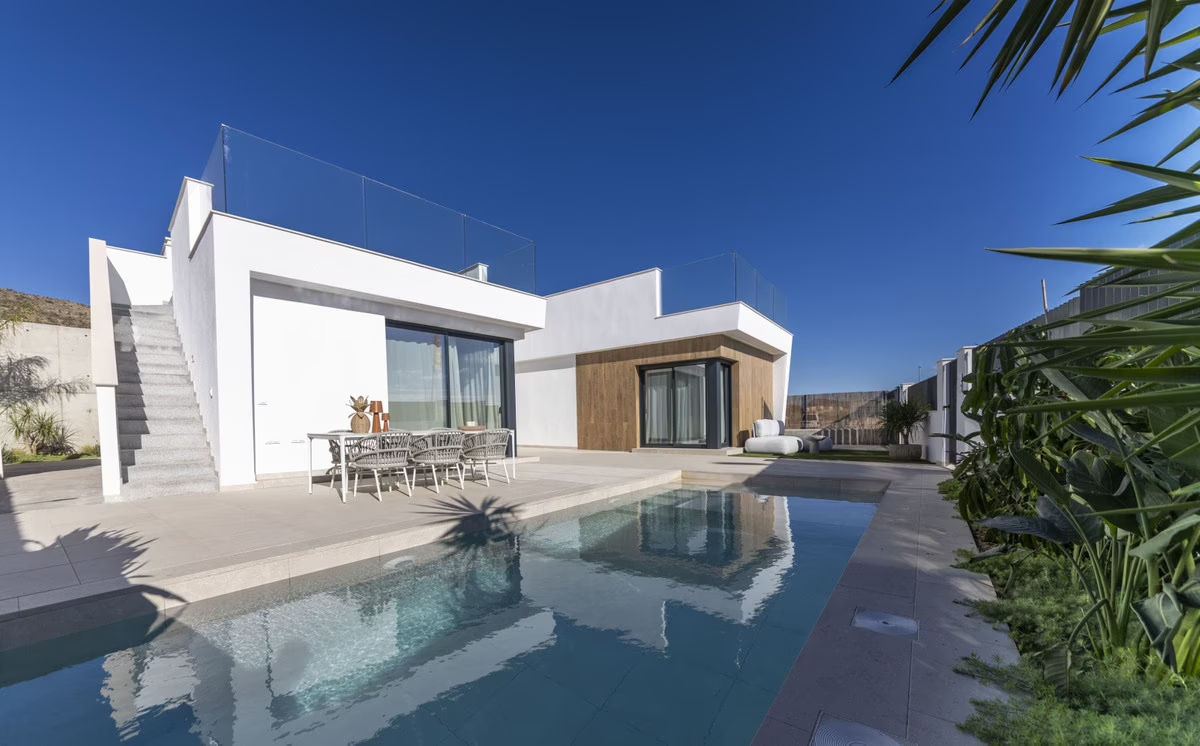
Montemar — Single-Level Villas with Private Pools at Altaona Golf, Murcia
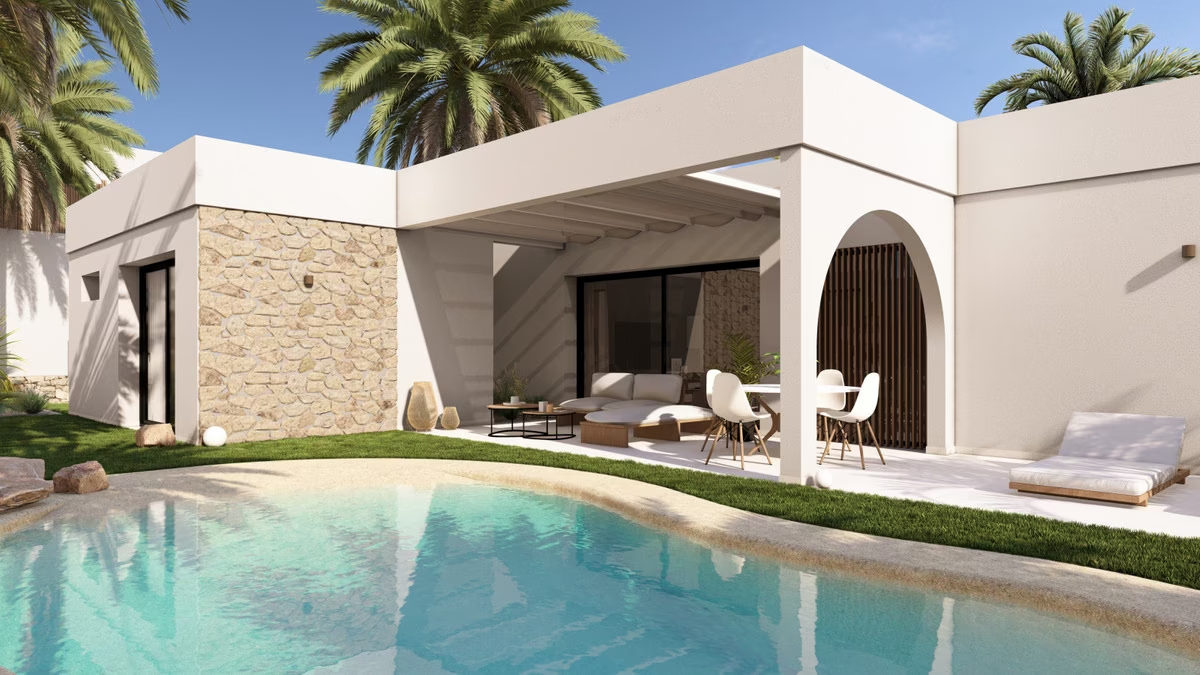
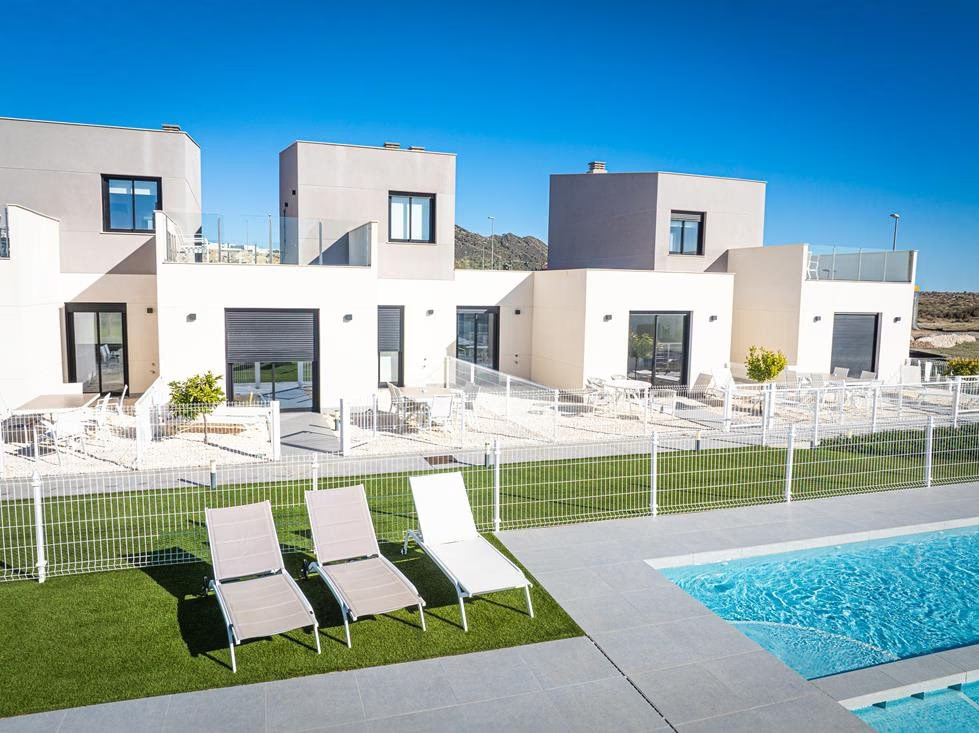
Explore Similar Areas

FAQ — Murcia
Common questions about buying property in Murcia
Both, but for different buyers. In the city, new apartment blocks go up in the northern districts — Juan Carlos I, Nueva Condomina, Joven Futura — and sell mainly to local families. What foreign buyers come for is in the Campo de Murcia, twenty minutes south beyond the Sierra de Carrascoy: detached villas with private pools around Altaona Golf at Baños y Mendigo, and smaller villa schemes in the villages of Sucina and Avileses. Everything in our current selection is in the Campo de Murcia.
In our current selection, key-ready townhouses at Altaona Golf start at €229,000 and detached villas with private pools at €443,500, rising to €744,000 for four bedrooms. Asking prices across the municipality averaged €1,733 per square metre in September 2026 (Fotocasa): around €2,241 in the centre, €2,827 in the northern districts and €3,027 in the Campo de Murcia, where nearly everything is new detached housing. Purchase costs on a new build are 10% VAT plus 1.5% stamp duty — see our <a href="/guide/buying-costs-calculator">buying costs calculator</a>.
Murcia’s own airport at Corvera is twenty-five minutes from the centre and ten from Altaona Golf, which is eight kilometres away; Alicante airport, with the wider choice of routes, is about an hour and a quarter. The nearest beaches are on the Mar Menor at Los Alcázares and San Javier — forty minutes from the city centre and twenty-five from Altaona by the RM-19 — with the open Mediterranean at La Manga and Cabo de Palos another fifteen minutes on.
It is the case where the city is the point. Murcia has 480,000 residents, the region’s reference hospital at the Arrixaca, a university with thirty thousand students, a theatre season, daily markets and a tram — services that run in February as in August. The high-speed line reaches Madrid in under three hours and Corvera airport is twenty-five minutes away. For a permanent move it suits buyers who want a Spanish city with a car-trip to the beach, rather than a beach town that quietens in winter.
Altaona Golf & Country Village is an 18-hole, par-72 course by Stirling & Martin at Baños y Mendigo, on the foothills of the Sierra de Carrascoy, fully open since 2019. The housing around it is gated villa communities on plots of 300–500 m² with private pools, built in phases by several developers, and key-ready townhouses. Buyers are mostly British, Belgian, Dutch and Scandinavian couples who fly into Corvera eight kilometres away, play golf through the winter and drive twenty-five minutes to the Mar Menor in summer. Most homes in our current selection there have three bedrooms.
Buyer Guides
Essential reading before purchasing property in Spain
Interested in Murcia?
Let our experts help you find the perfect property in this area. Get personalized recommendations based on your investment goals.