
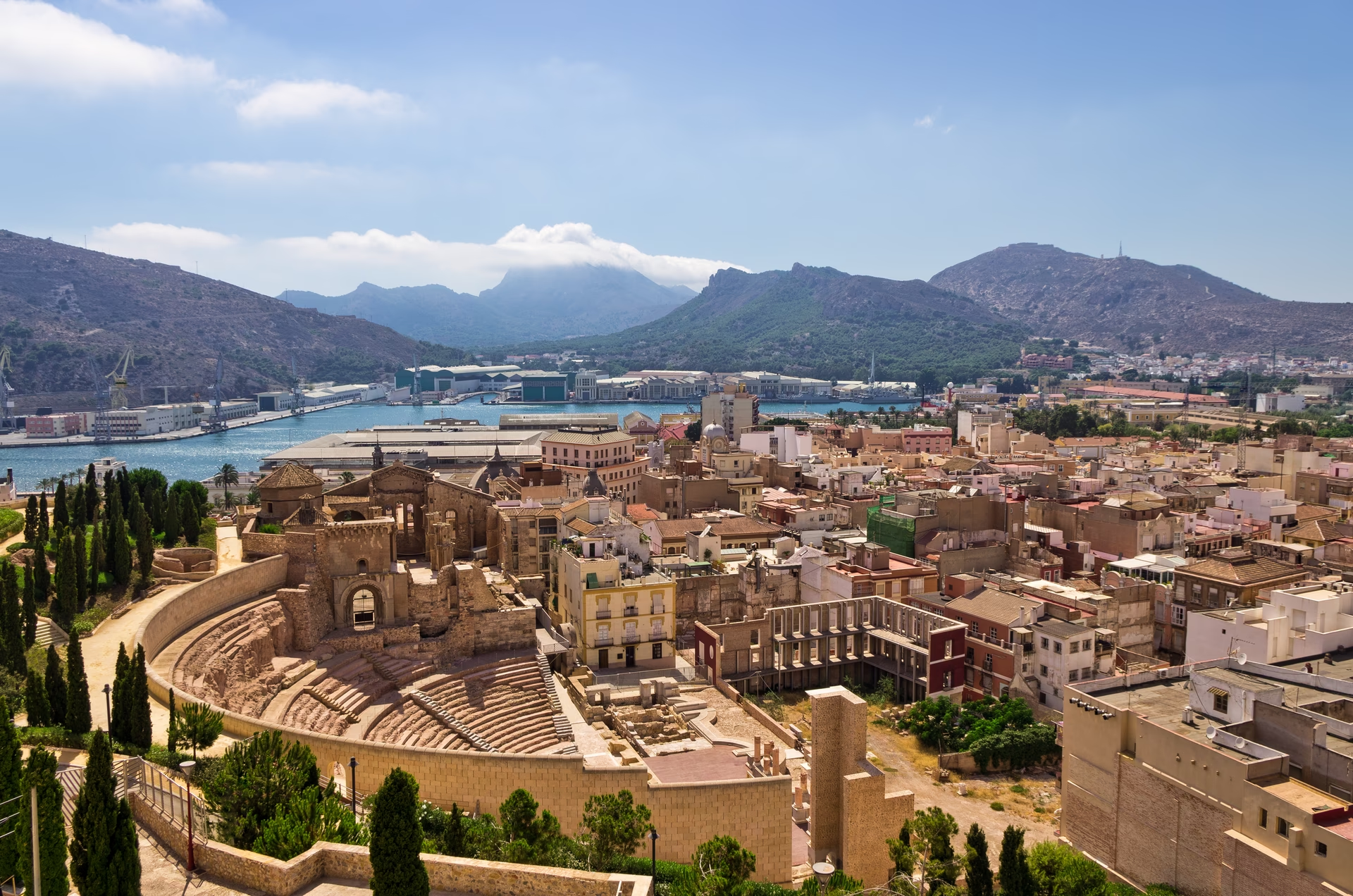
Cartagena, Spain
A working port city of over 215,000 people with a Roman theatre at its centre — and, thirty kilometres east, the quiet southern shore of the Mar Menor where the new-build actually is.
About Cartagena
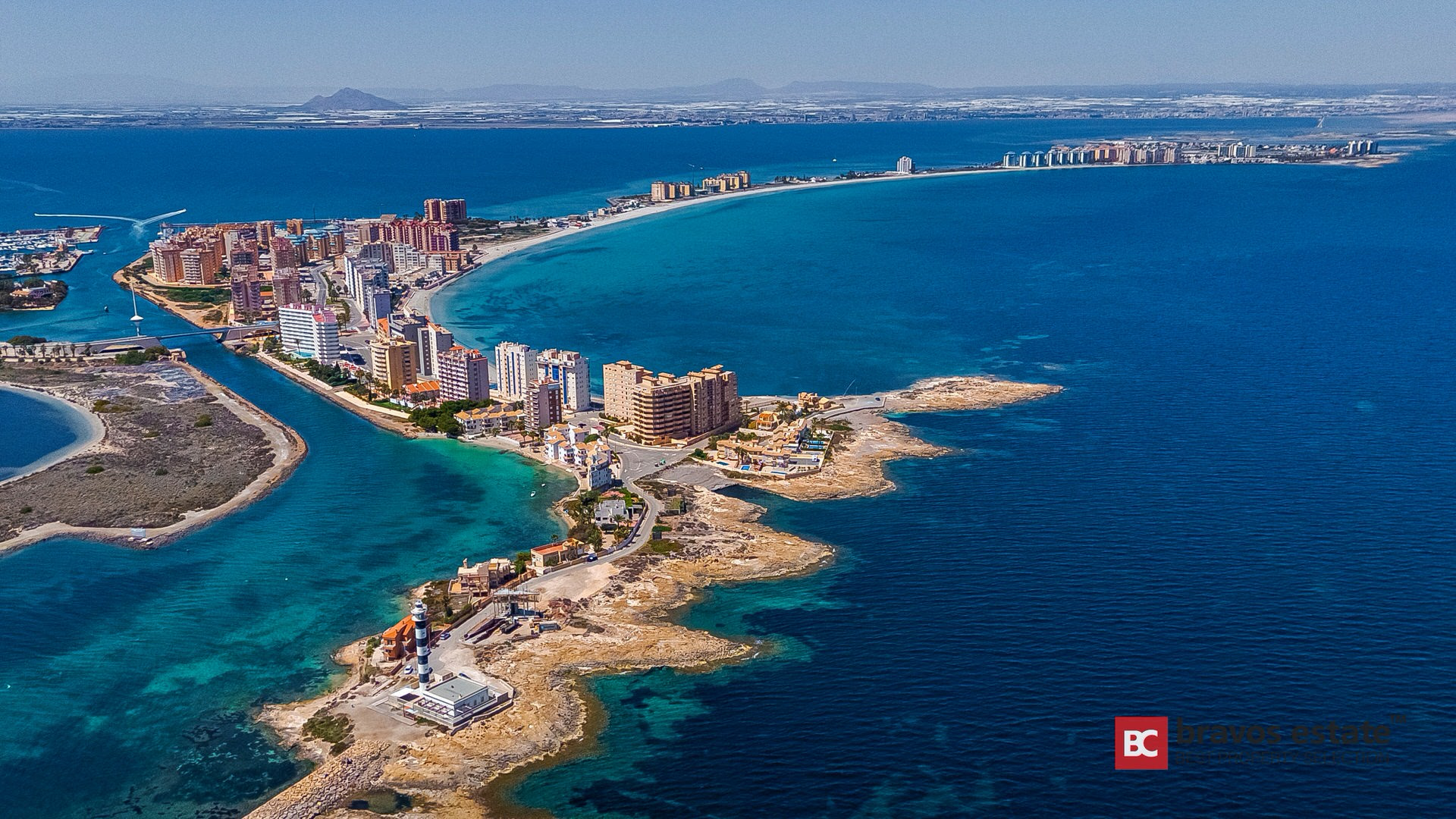
Cartagena property market 2026 — the second city of the Region of Murcia is really two markets under one municipal name. The city itself, with its naval harbour, Roman theatre and university campus, trades at around €1,500 per square metre. The municipality's Mar Menor shore — Los Urrutias, Mar de Cristal, Playa Honda, Cabo de Palos — sits at nearly twice that and is where almost all new construction is happening.
Cartagena Market — Prices, Yields, Buyer Profiles
Asking prices across the municipality averaged €2,027 per square metre in September 2026, up 17.8% year on year (Fotocasa index). The city district averages around €1,500, the inland pedanías €1,200–1,600, while the Mar Menor district averages €2,935 — from roughly €1,550 in Los Nietos and €2,400 in Los Urrutias to €3,850 in Playa Honda–Playa Paraíso and a thin, expensive market at Cabo de Palos.
Foreign buyers accounted for 21.4% of purchases across the Region of Murcia in 2025 (Registradores yearbook), the fourth-highest share of any Spanish region. On this stretch of coast they are mostly British, Belgian, Dutch, Scandinavian and, increasingly, Polish — buying two-bedroom apartments and three-bedroom villas between €280,000 and €800,000, a band the Costa del Sol left behind years ago.
New supply is small and scattered: a dozen schemes with a handful of homes each, with the largest concentration at Mar de Cristal. There is no large-scale development pipeline comparable to Los Alcázares or Torre-Pacheco further north, which keeps resale liquidity healthy for well-located homes.
Typical buyer profiles:
- Northern European couples buying a holiday home near the Mar Menor within a €300,000–450,000 budget
- Retirees choosing a year-round villa in Playa Honda or Los Urrutias over the busier Costa Blanca
- Divers and sailors drawn to Cabo de Palos and the Islas Hormigas marine reserve
- Spanish families from Murcia and Madrid keeping a second home on the lagoon
Sub-Districts and Areas of Cartagena
The municipality stretches from the western coves at La Azohía to the southern half of La Manga, with the city in the middle and the lagoon shore to the east. Each part is a distinct sub-market.
Cartagena centro and Ensanche — the historic city around the harbour: the Roman theatre, the Calle Mayor, the Modernista façades and the Navantia shipyards. Almost entirely resale, apartments in restored 19th-century buildings and 1970s blocks, around €1,500 per square metre.
Los Urrutias and El Carmolí — the first villages on the lagoon's south-western shore, twenty minutes from the city. Low-rise, with small villa schemes on quiet streets a few hundred metres from the water; around €2,400 per square metre.
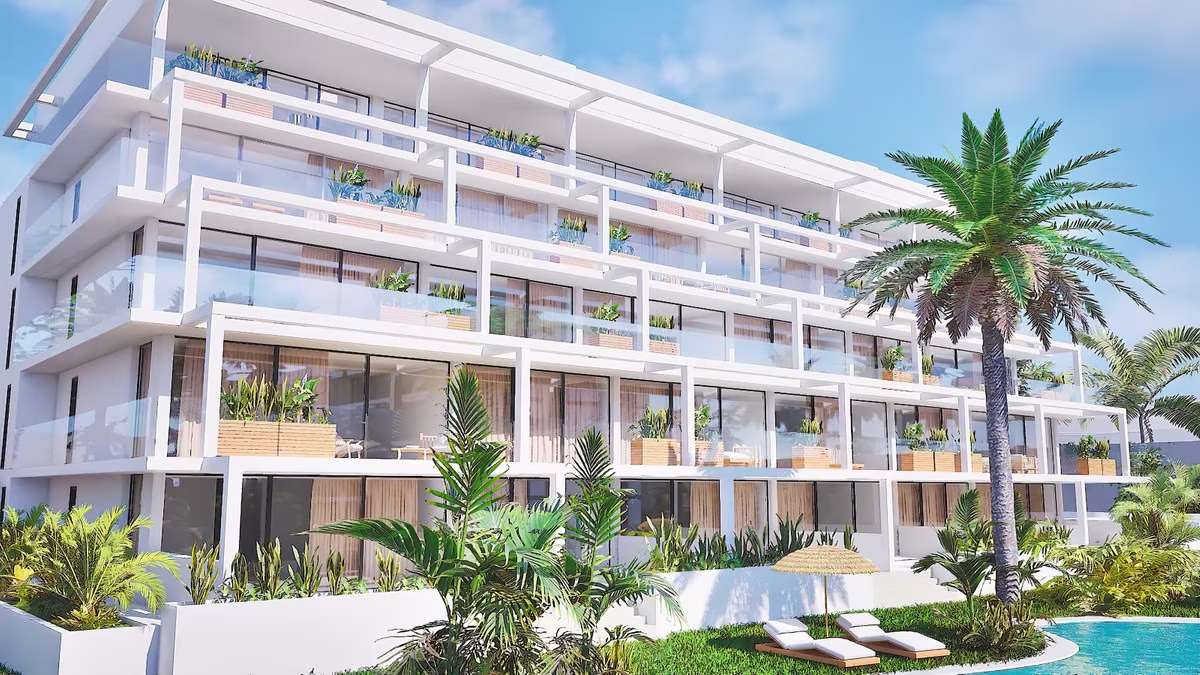
Mar de Cristal and Islas Menores — the centre of new-build activity on the southern shore: apartment communities with gardens and pools, sandy lagoon beaches and the road to Cabo de Palos ten minutes away. Around €2,850 per square metre.
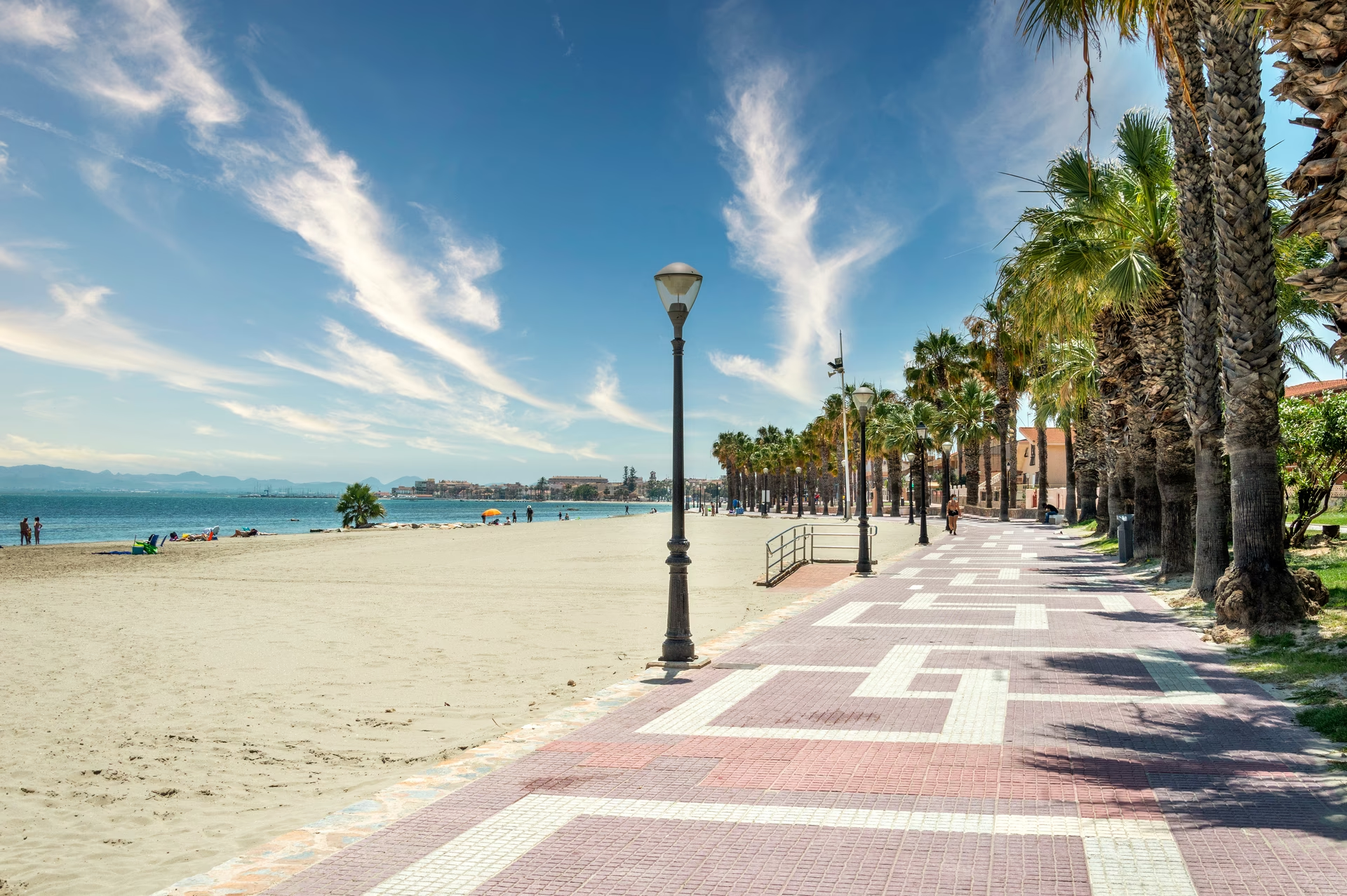
Playa Honda and Playa Paraíso — the last lagoon beaches before La Manga, with a long promenade and detached villas on 400–800 m² plots. Around €3,850 per square metre, the highest of the mainland shore.
Cabo de Palos — a fishing village around a small harbour and an 1865 lighthouse, with the Islas Hormigas marine reserve offshore. Very little for sale at any time, and priced accordingly.
La Azohía and Isla Plana — the opposite side of the municipality, on the open Mediterranean west of the city: coves, a 16th-century watchtower and a handful of villa plots. A different coast entirely from the lagoon.
Living in Cartagena
The Roman theatre and the harbour
Cartagena's centre was rebuilt on top of itself for two thousand years, and the proof surfaced in 1988 when work behind the cathedral ruins uncovered a Roman theatre for seven thousand spectators. Rafael Moneo's museum now leads visitors up through the layers to the stands. Below it, the harbour is still a working one: the Navantia yards, the Spanish Navy's Arsenal behind its 18th-century walls, cruise ships at the quay and the Peral submarine of 1888 on the waterfront.
Calle Mayor and the Modernista city
The mining boom of the late 19th century left the centre a set of Modernista façades — the Casa Cervantes, the Gran Hotel, the Palacio Consistorial by the port. The Calle Mayor is pedestrian and the evening walk from the town hall to the Plaza de San Francisco is where the city meets. It is a Spanish city first: the tapas bars fill on a Tuesday, and English is a second language rather than the default.
Two seas from one address
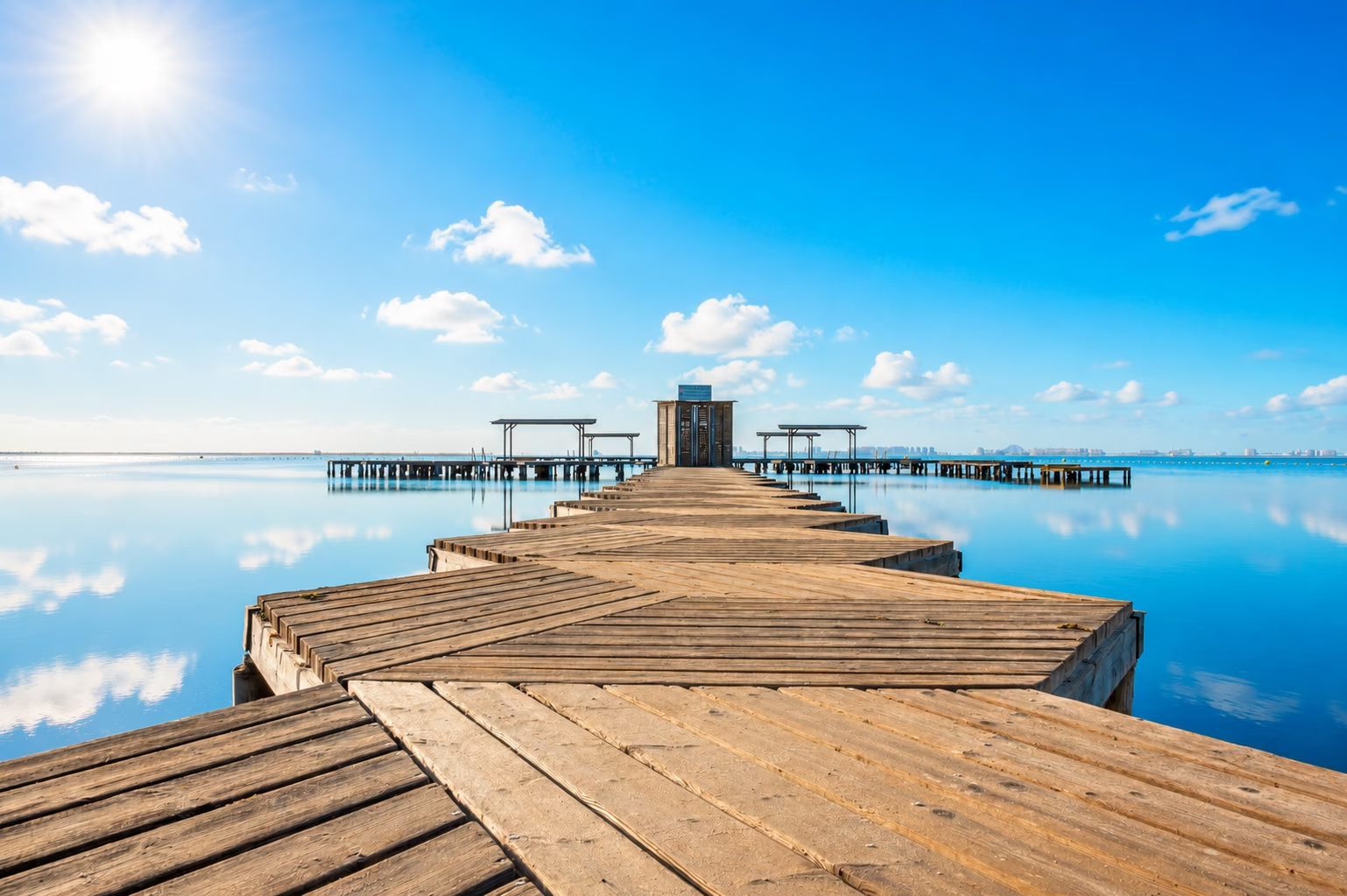
Thirty kilometres east, the municipality reaches the Mar Menor, a saltwater lagoon warm enough to swim in from May to October, with shallow sandy beaches at Los Urrutias, Mar de Cristal and Playa Honda. Ten minutes further is the open Mediterranean at Cabo de Palos and the Calblanque regional park — undeveloped coves and dunes that remain one of the least built stretches of the Spanish coast.
Diving at the Islas Hormigas
Off Cabo de Palos lies the Islas Hormigas marine reserve, protected since 1995 and regularly ranked among the best diving in Europe for its groupers, barracuda and wrecks. The village keeps half a dozen dive centres, a small harbour and a lighthouse from 1865, and the Friday fish restaurants on the quay are a reason in themselves to live nearby.
Caldero and the local table
The dish of the lagoon is caldero del Mar Menor — rice cooked in a stock of rockfish and ñora peppers, eaten in the shoreline restaurants of Los Nietos and Cabo de Palos. In the city it is michirones, marineras at the bar and the café asiático, a Cartagena invention of coffee, condensed milk, brandy and Licor 43 served in its own glass. The Sunday paella is at home, not in a restaurant.
Semana Santa and the Carthaginians
Cartagena's Holy Week is declared of International Tourist Interest and is unlike Andalusia's: military in precision, processions in perfect step to drums, and the Californios and Marrajos brotherhoods in friendly rivalry since the 18th century. In the second half of September the city stages Carthaginians and Romans, ten days of re-enacted Punic Wars with a festival camp by the port.
Getting around
The city is walkable; the coast is not, so a car is part of life on the lagoon. Corvera airport is about thirty-five minutes, Alicante about an hour and a quarter, and the narrow-gauge train from the city still runs out to Los Nietos on the lagoon shore. The Hospital Santa Lucía, opened in 2011, is the reference hospital for the whole municipality.
Why Cartagena?
The warm, shallow Mar Menor on one side of the Cabo de Palos road and the open Mediterranean on the other, ten minutes apart.
New two-bedroom apartments from under €300,000 and villas with private pools under €400,000, a few hundred metres from the lagoon.
Over 215,000 residents, a university, a naval base, a reference hospital and a Roman theatre — the calendar does not empty in November.
The Islas Hormigas marine reserve off Cabo de Palos and the flat, sheltered lagoon for sailing schools and paddle boards.
Distances from Cartagena

Properties in Cartagena
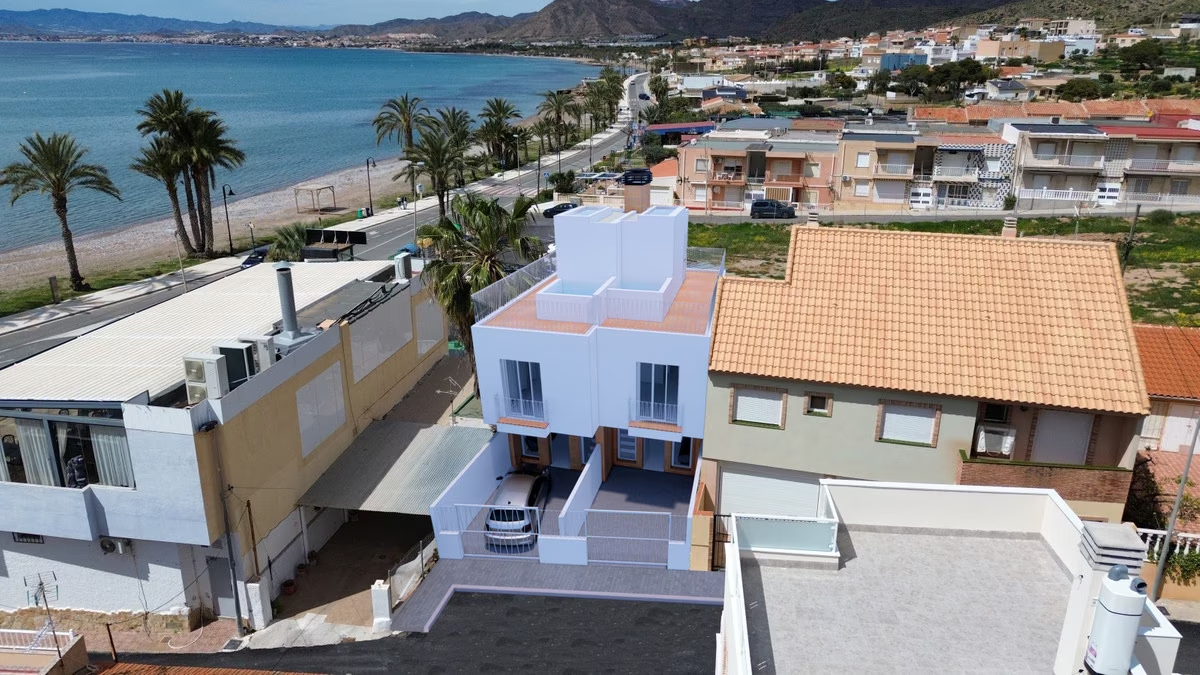
La Azohía — 2- and 3-Bedroom Townhouses on the Bay of Mazarrón, Cartagena
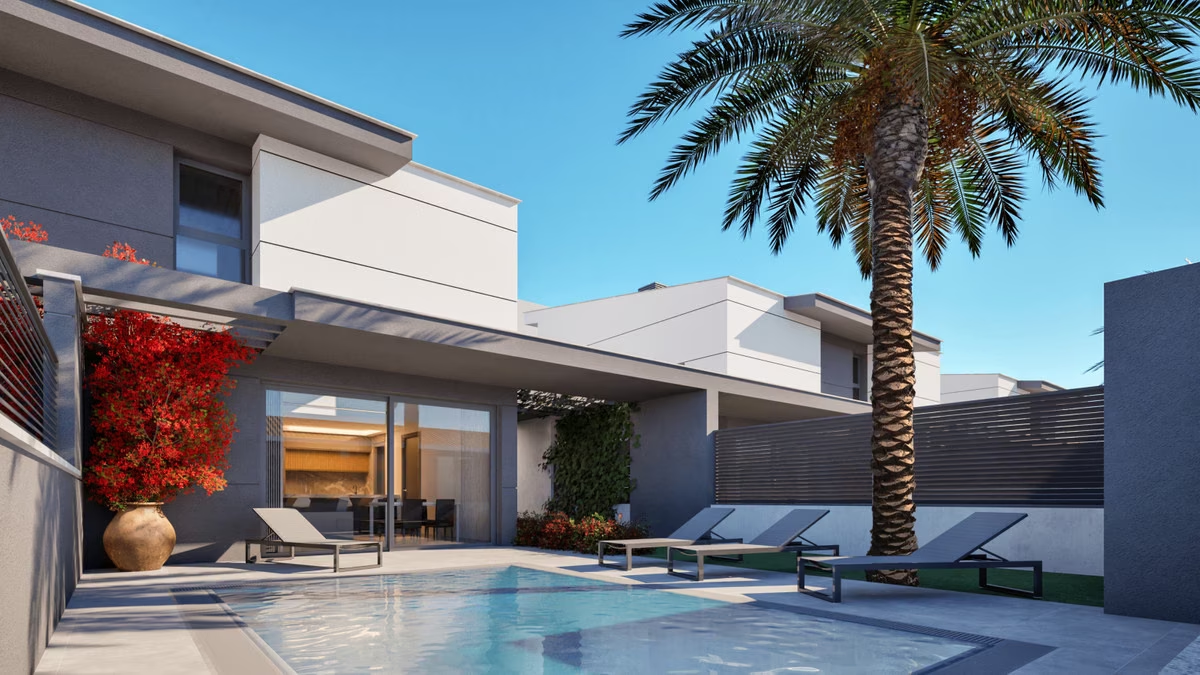
Carrizo Beach — Semi-Detached Villas with Solariums in Los Nietos, Cartagena
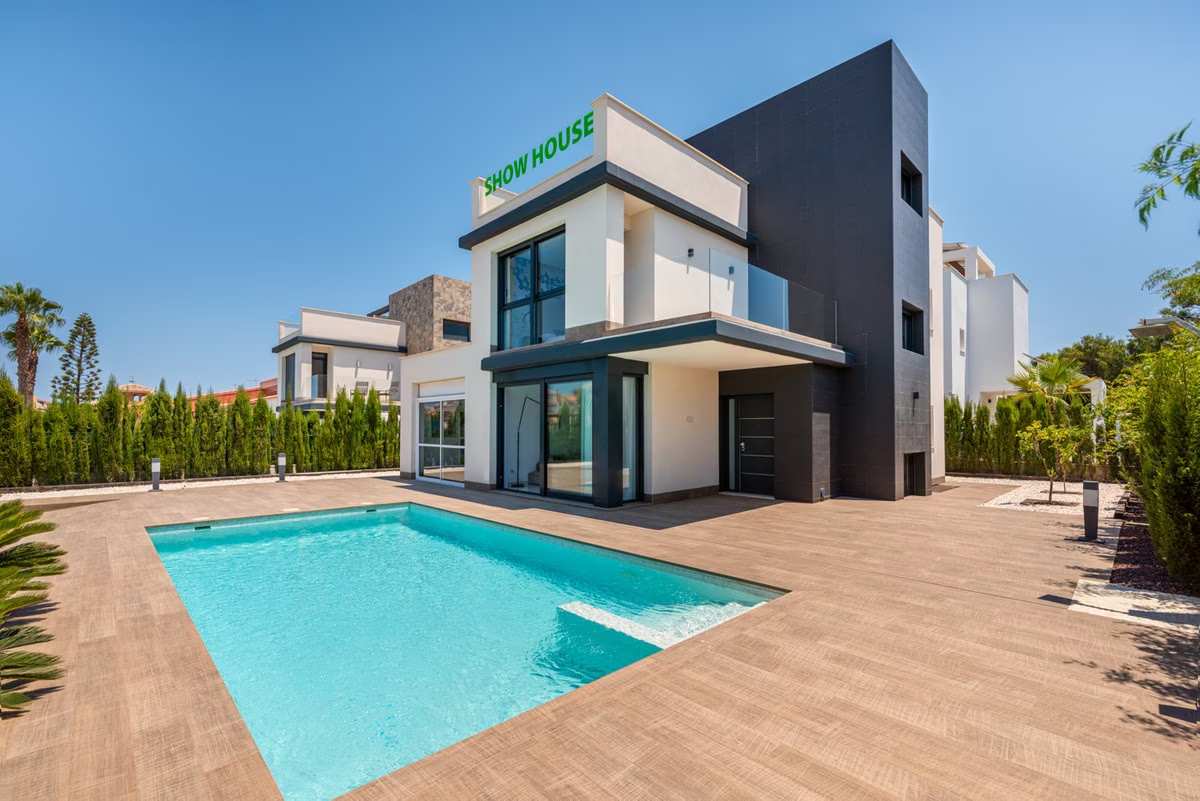
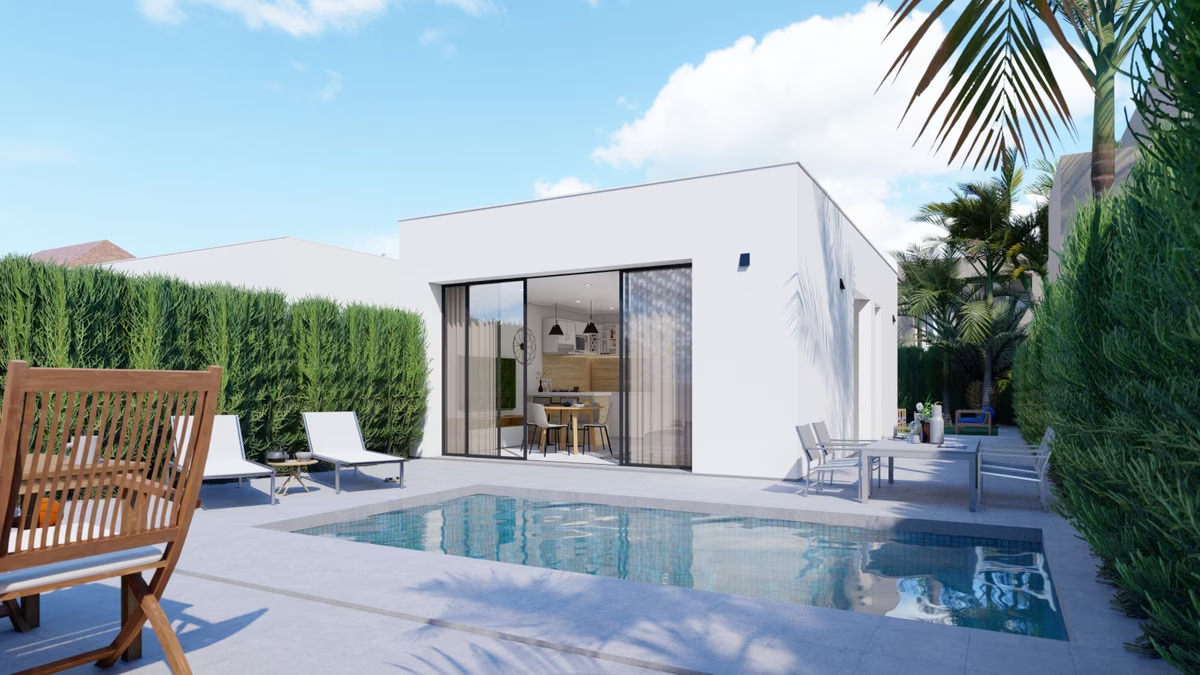
Villas de Mar II — Detached Villas on 400–800 m² Plots in Playa Honda
Explore Similar Areas
FAQ — Cartagena
Common questions about buying property in Cartagena
Almost entirely on the coast. The city centre is a resale market of restored 19th-century buildings and 1970s blocks; the schemes on sale in September 2026 are all on the municipality's Mar Menor shore — Mar de Cristal, Los Urrutias, Playa Honda, Los Nietos — thirty kilometres east of the centre, plus a handful of villa plots at La Azohía on the western coast.
In our current selection, two-bedroom apartments at Mar de Cristal start at €280,000, semi-detached villas with private pools in Los Nietos at €374,900, detached villas in Los Urrutias at €384,000 and key-ready villas in Playa Honda at €580,000, with the top of the range at €790,000. Asking prices per square metre vary sharply by zone: around €1,550 in Los Nietos, €2,400 in Los Urrutias, €2,850 in Mar de Cristal and €3,850 in Playa Honda (Fotocasa index, September 2026). Add 10% IVA and around 1.5% AJD on a new build — see the <a href="/guide/buying-costs-calculator">buying costs calculator</a>.
They are ten minutes apart, so the choice is about daily life rather than distance. The lagoon side — Los Urrutias, Mar de Cristal, Playa Honda — has warm, shallow, flat water, long promenades and nearly all the new-build; it suits families with small children and anyone who swims every morning. Cabo de Palos and Calblanque on the open sea have coves, diving and surf, but very little for sale. Most buyers in our current selection live on the lagoon and drive to the Mediterranean.
Murcia airport at Corvera is about thirty-five minutes from the city and forty-five from the Mar Menor shore, with a seasonal schedule mostly to the UK, Ireland and Belgium. Alicante, about an hour and a quarter away, has far more year-round routes and is what most owners actually use. The city itself is walkable and the narrow-gauge train reaches Los Nietos, but on the coast a car is part of daily life: shops, the hospital and the Mediterranean beaches are all a drive away.
The city is a year-round place by any measure: over 215,000 residents, a polytechnic university, the navy and Navantia shipyards, the Santa Lucía reference hospital and a cruise port. The lagoon villages are quieter from November to March — Mar de Cristal and Los Urrutias keep their shops and bars open but at a lower tempo, while Playa Honda has a growing year-round community of Northern European owners. Buyers who want city services and the coast usually choose the lagoon side and treat the city, twenty-five minutes away, as their town.
Buyer Guides
Essential reading before purchasing property in Spain
Interested in Cartagena?
Let our experts help you find the perfect property in this area. Get personalized recommendations based on your investment goals.